Triumph Bonneville T120: The Modern Classic That Still Knows What It Is
The Short Line
- Character before numbers: The Bonneville T120 is not trying to win a specification sheet. Its appeal is the way the 1200cc twin delivers its power, the easy road manners, and the sense of occasion at ordinary speeds.
- Modern where it matters: ABS, traction control, ride-by-wire electronics and contemporary brakes sit quietly behind a motorcycle that still feels convincingly traditional from the saddle.
- Still knows its purpose: The T120 works because Triumph has resisted turning it into something sharper, lighter or more aggressive than it needs to be. It remains a road motorcycle built around comfort, rhythm and character.
The first thing the Bonneville T120 asks of you is not speed.
It asks for recognition.
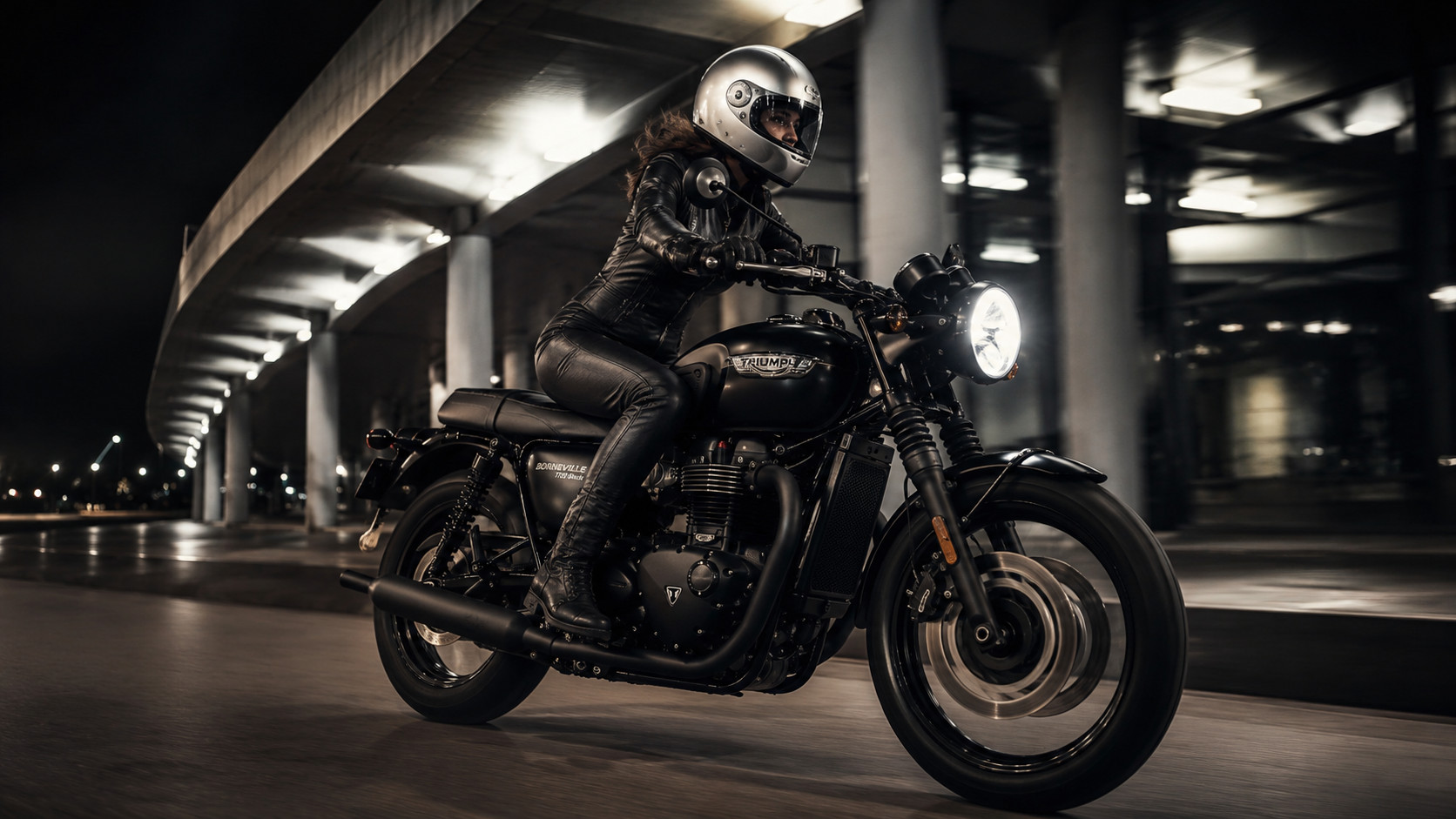
The tank line, the peashooter exhausts, the twin clocks, the bench seat, the way the engine sits in the frame with just enough theatre and just enough restraint — all of it belongs to a shape riders have been carrying in their heads since long before “modern classic” became a showroom category.
But the 2026 Triumph Bonneville T120 is not a museum piece with fuel injection. That would be too easy, and not nearly interesting enough. What Triumph has built is something subtler: a motorcycle that looks backwards only because it knows exactly where it came from.
Underneath, it is quietly current.
For 2026, Triumph keeps the T120’s 1200cc High Torque parallel twin at the centre of the experience, with official figures of 79 hp at 6,550 rpm and 77.4 lb-ft of torque at 3,500 rpm. The more important number is the second one. The Bonneville has always been less about chasing revs than leaning into the swell of torque, and this motor continues to make its case low in the rev range, where real roads tend to happen.
What Changed for 2026
Triumph has not tried to make the T120 visually futuristic, which is exactly the point.
The larger update is hidden in the motorcycle’s behaviour. Across the 2026 Bonneville range, Triumph added lean-sensitive Optimised Cornering ABS and Traction Control, controlled by an IMU, along with cruise control, USB-C charging, full LED lighting with DRLs, and new hand-finished paint and coachline details on the T100, T120, and T120 Black.
That matters because the T120’s appeal depends on discretion.
This is not a bike that should announce its electronics like a dashboard demo. The technology has to live in the background, there when needed and almost invisible when not. In Triumph’s own language, that is exactly the intention: modern rider-focused systems integrated without disturbing the Bonneville’s minimalist design.
The result is a motorcycle that looks almost defiantly familiar, but has become a little safer, a little more useful, and a little more complete.
The Engine Is Still the Argument
The T120’s 1200cc parallel twin is the bike’s centre of gravity in every sense.
It does not have the manic hunger of a naked sportbike, nor the lazy thump of a cruiser. It sits somewhere more civilised and, in many ways, more usable. The throttle is clean, the torque arrives early, and the engine gives the rider permission not to hurry.
That is not the same as being slow.
Rider Magazine found that the 2026 T120’s extra displacement over the T100 is immediately felt, with peak torque arriving at 3,500 rpm and giving the bike strong roll-on power. Their phrase that the T120 “builds a head of steam fast” captures the experience well without overstating the machine.
Visordown came away with a similar impression, calling the engine the heart of the experience and noting how smooth and linear the torque delivery feels on the road.
That is the T120’s gift. It does not need to perform drama to feel alive.
It just pulls.
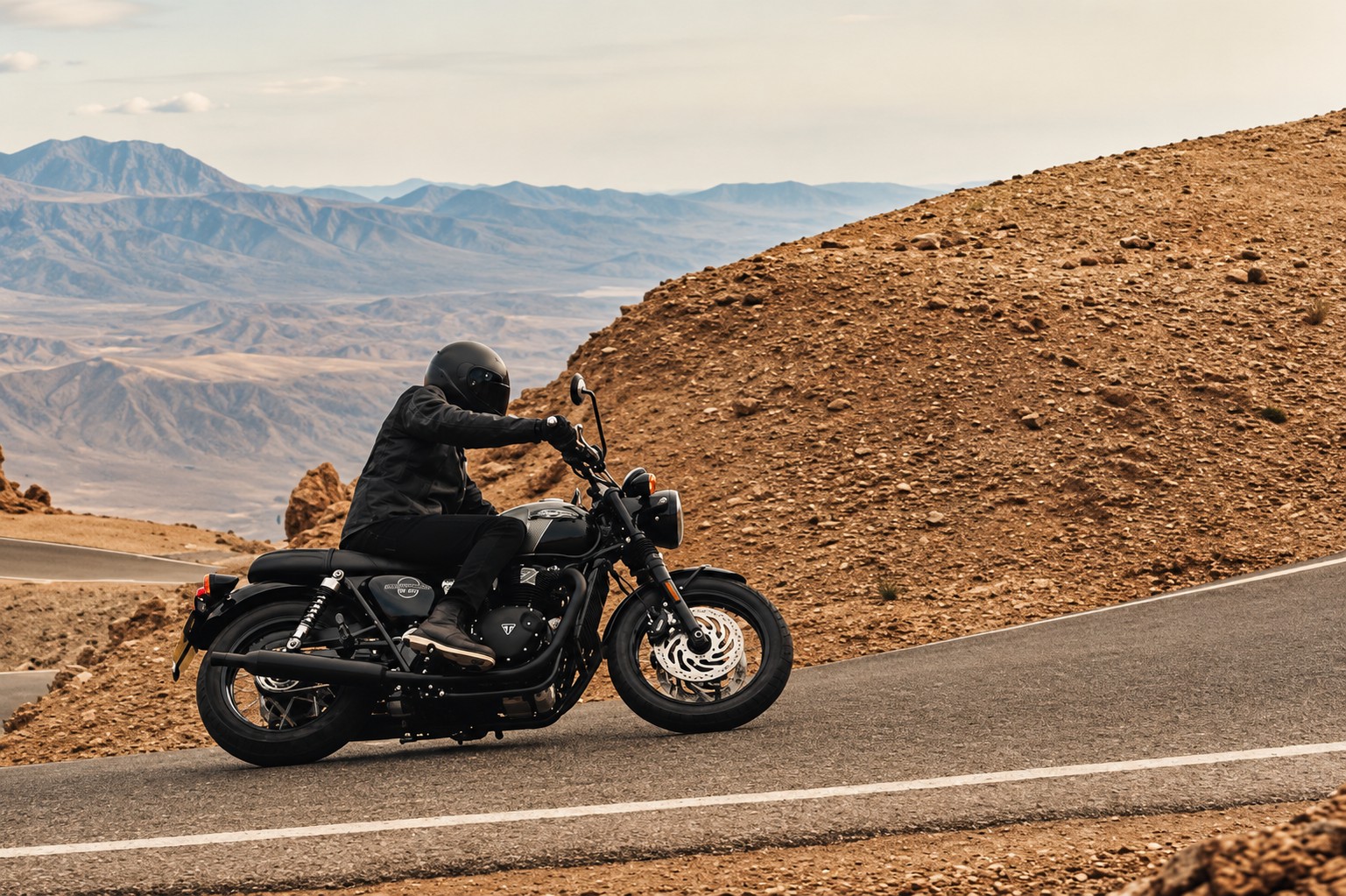
From low speed, from a village exit, from a bend where you have rolled off and then opened the throttle again, the engine answers with a kind of old-fashioned confidence. Not crude. Not sleepy. Just broad-shouldered and unflustered.
Review notes
Across the field
Rider Magazine found the 2026 T120’s extra torque immediately apparent, praising its roll-on strength and the improvement brought by the second front brake disc.
Rider Magazine — Review weight: 9/10
Visordown focused on the T120’s smooth, linear power delivery, describing the engine as the centre of the motorcycle’s appeal.
Visordown — Review weight: 9/10
RevZilla noted that the T120 feels more refined than the T100, with direct but approachable power, Brembo braking, and suspension that finds a usable middle ground.
RevZilla — Review weight: 8.5/10
MCNews described the T120 as composed rather than sharp-edged, with KYB suspension that keeps the bike planted and predictable through real roads.
MCNews — Review weight: 8/10
BRM highlighted the 2026 update as a careful blend of classic styling and modern rider aids, including the new IMU-based cornering ABS and traction control.
BikeReview — Review weight: 7.5/10
Cycle World’s broader Bonneville coverage helps place the T120 within the modern classic lineage, especially the long-running appeal of comfort, intuitive steering, and garage presence.
Cycle World — Review weight: 7/10
Handling: Planted, Not Playful
The T120 is not trying to be a sportbike in a waistcoat.
That matters.
Some modern classics get this wrong. They borrow retro styling, then try to compensate with nervous steering, aggressive suspension, or a riding position that suggests the bike is secretly embarrassed by its own category. The Bonneville does not make that mistake.
It feels settled.
At 233 kg wet in several launch reports, the T120 is not light, and it does not magically disappear beneath you. But the weight is carried honestly. The bike rolls into bends with calm rather than urgency, holds a line without fuss, and rewards a rider who stops trying to extract something it was never built to give.
MCNews described the 2026 T120’s handling as composed, noting that the KYB suspension soaks up imperfections while keeping the bike planted and balanced through curves.
That aligns with the T120’s character. It is a motorcycle for riders who enjoy rhythm more than attack.
There is a difference.
On the right road, the Bonneville does not ask you to prove anything. It invites you to settle into a pace where the engine, chassis, and view ahead all begin speaking the same language.
Brakes and Rider Aids
This is one of the places where the T120 quietly moves away from pure nostalgia.
The twin front discs and Brembo calipers matter. They give the larger Bonneville the stopping authority its engine and weight deserve. Rider Magazine specifically noted the second front disc’s improvement to stopping power, while RevZilla found the Brembo setup matched the T120’s energy with enough bite, even if brake feel was not the sharpest part of the package.
That feels about right.
The T120 is not a razor. It is a confident roadster with classic proportions and modern expectations. The braking should be strong, not theatrical. The ABS and traction control should be present, not performative.
For 2026, the new IMU-based cornering systems add a layer of modern safety without changing the bike’s essential feel. RevZilla noted that the rider aids worked in the background and did not interfere with the ride — probably the highest compliment one can give to electronics on a motorcycle that trades so heavily on mechanical character.
Design: The Discipline of Not Overdoing It
Triumph understands something many manufacturers forget: retro design is easy to imitate and difficult to restrain.
The T120 works because it does not feel like a costume.
The sculpted tank, bench seat, twin clocks, wire-spoke wheels, polished finishes, and classic exhaust line are all familiar pieces, but the composition is disciplined. The radiator is not beautiful, but it is integrated well enough to stop bothering the eye. The electronics are present, but not shouting. The clocks remain round. The silhouette remains upright. The motorcycle still looks like something you could draw from memory.
For 2026, Triumph added new hand-finished paint schemes, coachline detailing, and updated side-panel graphics across the T100, T120, and T120 Black.
The T120 Black carries the same essential Bonneville manners with a darker visual register: less chrome, more shadow, and a moodier road presence. It does not change the motorcycle’s core argument, but it gives the Bonnie silhouette a sharper, more urban edge.
This is where the T120 earns its modern classic title.
It does not look old because Triumph forgot to move forward. It looks old because Triumph chose which parts of the past were worth carrying.
For riders drawn to the same Bonneville silhouette but in a lighter, more approachable form, our Triumph Bonneville T100 retrospective looks at how the smaller Bonneville has changed from the air-cooled 2013 model to today’s modern 900cc version.
Comfort and the Long Road
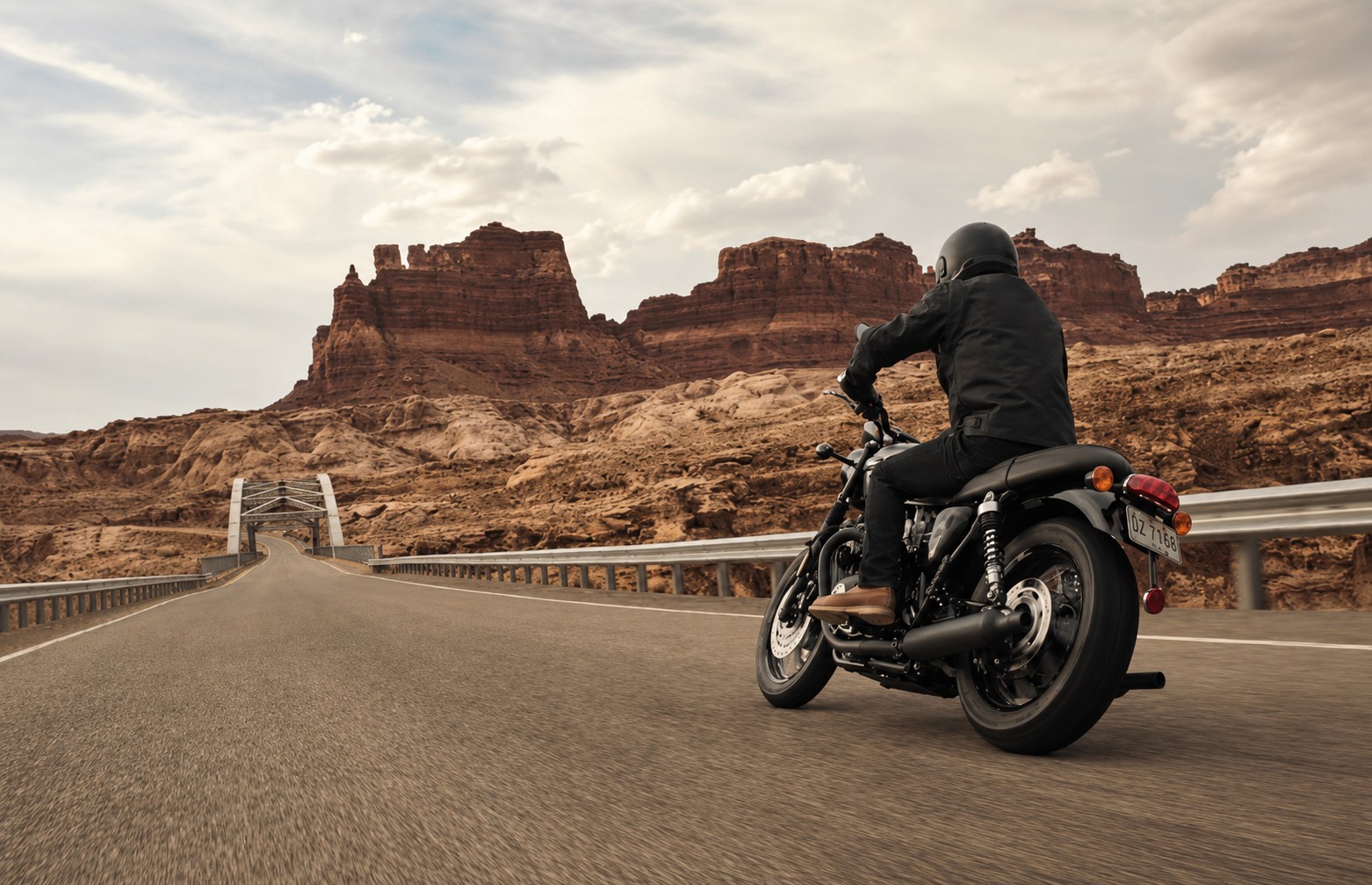
The T120’s ergonomics are one of its great quiet strengths.
The seat is low enough to feel approachable. The bars fall naturally. The pegs are neutral. Nothing about the position tries to turn the rider into a caricature of a café racer or cruiser pilot.
Visordown noted how at home the T120 feels in urban settings, helped by its conventional riding position and balanced centre of gravity.
That matters more than it sounds.
A motorcycle like this has to work in the small parts of life: traffic, errands, cold starts, short rides that become long ones, and the unplanned detour that only happens because the bike made leaving feel easy.
Cruise control now being standard on the T120 also changes the ownership equation. It is the kind of feature no one needed on an old Bonneville, but plenty of modern riders will appreciate after an hour of open road. Triumph’s 10,000-mile service interval also helps reinforce the idea that this is a classic you can actually use, rather than one that requires classic-bike patience.
Where It Falls Short
The T120 is not perfect.
It is heavier than some riders will want. It is not the sharpest-handling machine in the modern classic space. It does not deliver the raw mechanical mischief of the Bobber, the lighter immediacy of a smaller roadster, or the focused aggression of something like a Speed Twin.
And depending on the market, the 2026 price rise may make some riders look carefully at lightly used previous-generation T120s.
RevZilla makes that point plainly: if cornering ABS and lean-sensitive traction control are not on your wish list, an earlier T120 may still satisfy the brief.
That is fair.
But it also clarifies the 2026 bike’s purpose. Triumph has not rebuilt the T120 for people who wanted a different motorcycle. It has refined it for riders who already understood the appeal and wanted it brought a little more fully into the present.
The VivaMoto Read
The Bonneville T120 is not the most exciting motorcycle Triumph makes.
It may be something better: one of the most settled.
There is a kind of confidence in a motorcycle that does not need to explain itself at every traffic light. The T120 has that. It knows the weight of its own name. It knows the risk of becoming too nostalgic, too polished, too careful. And for the most part, it avoids the trap.
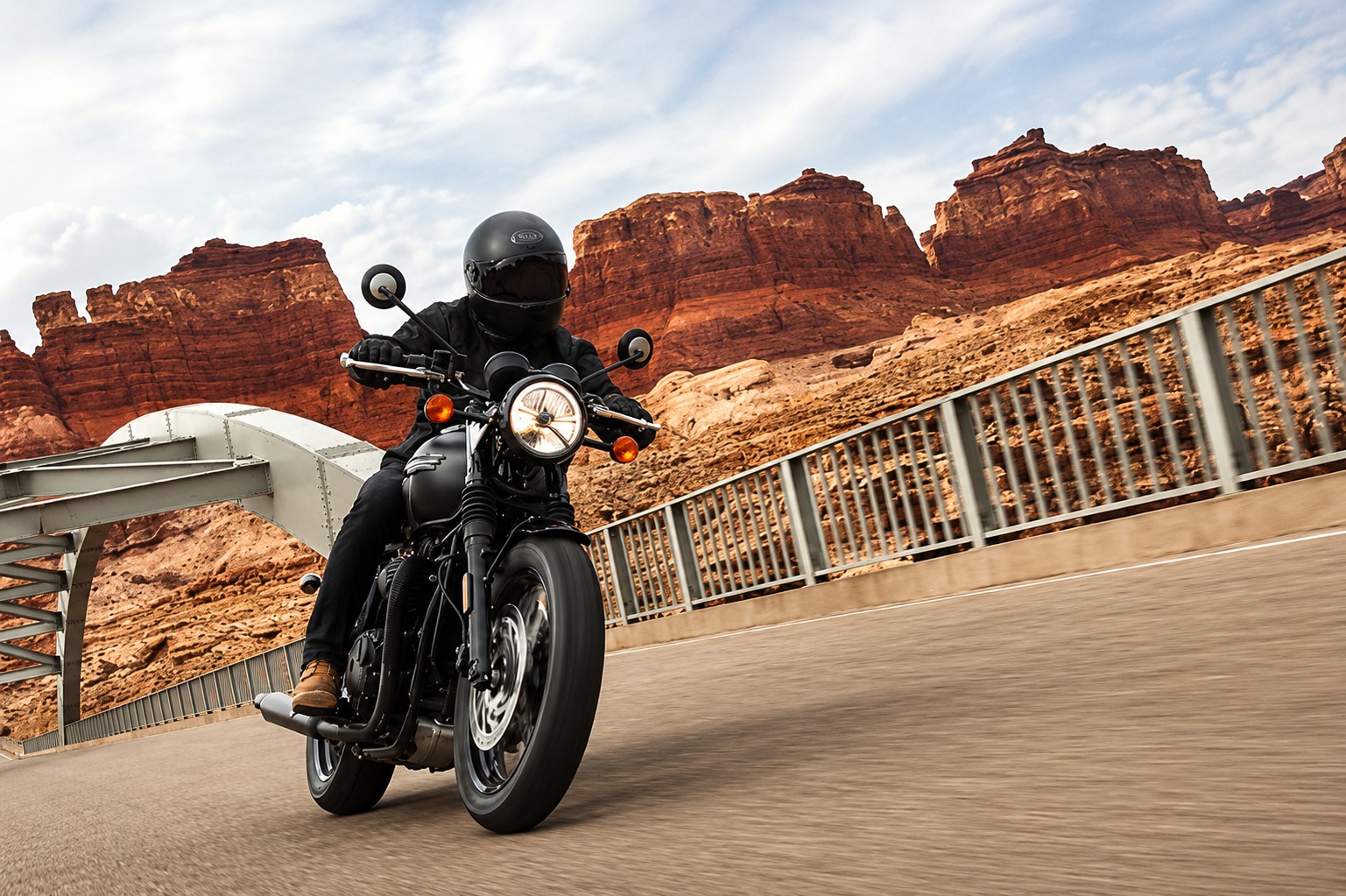
The 2026 updates make sense because they do not disturb the ritual. You still look across the tank and see a Bonneville. You still roll on the throttle and feel the engine answer from low down. You still sit upright, hear the twin working beneath you, and understand why this shape has lasted.
The difference is that now, behind the old silhouette, there is a little more intelligence watching the edges.
That may not sound romantic.
But on a wet road, two-up, heading home late, it probably will.
Verdict: Still the Right Kind of Classic
The 2026 Triumph Bonneville T120 does not need to be faster, louder, or more radical to justify itself.
Its strength is proportion.
Enough engine to feel generous.
Enough chassis to feel composed.
Enough technology to feel current.
Enough restraint to still feel like a Bonneville.
This is not a motorcycle built to impress riders who only read spec sheets. It is built for the rider who wants the machine to feel familiar after five minutes and worth keeping after five years.
That is harder to achieve than it looks.
The T120 endures because Triumph has learned when to change it and, just as importantly, when to leave it alone.