Ducati DesertX V2 — The Italian Off‑Road Revolution Evolves
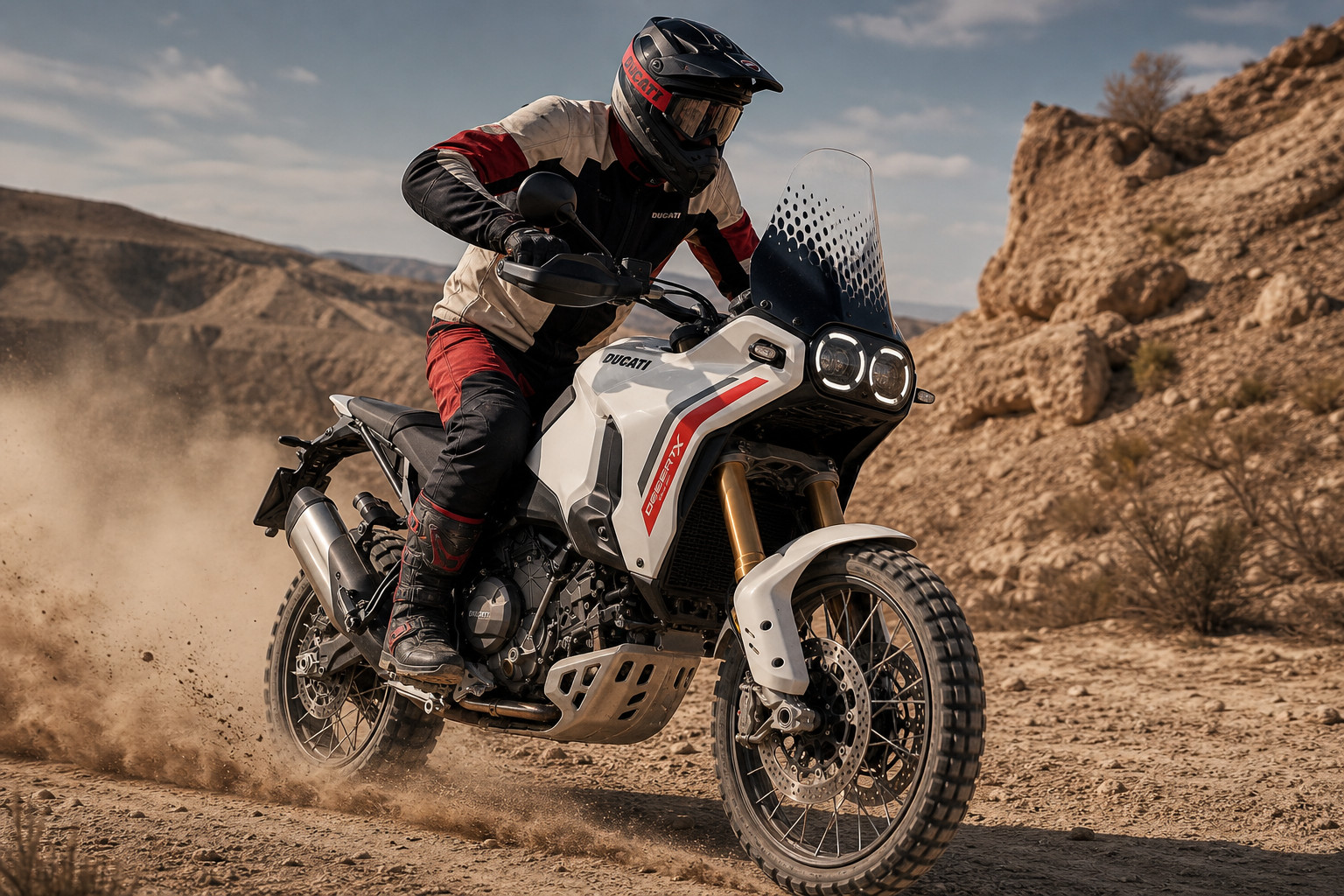
Dust hangs differently when a motorcycle is built with intent.
The Short Line
- Lighter by design: Ducati’s new V2 platform trims weight and gives the DesertX a sharper, more manageable feel off-road.
- Built with more intent: Revised chassis architecture and suspension geometry move the bike closer to true dirt capability, not just adventure styling.
- Still unmistakably Ducati: The DesertX V2 keeps the rally silhouette, Italian character, and long-distance confidence that made the original stand apart.
Not the polished sort kicked up outside a café, but the fine, suspended haze of gravel roads, dry switchbacks, and the kind of places where a machine’s spec sheet finally gives way to truth. Ducati’s original DesertX was already an unexpected declaration from Bologna—a motorcycle that proved the red marque could do more than superbikes and Sunday asphalt. It could build something willing to disappear beyond pavement.
Now comes the DesertX V2, or X2 as many have begun calling it, and the shift feels less like a revision than a sharpening of purpose.
Ducati hasn’t merely updated its Dakar-inspired explorer. It has stripped weight, rethought architecture, and leaned harder into what adventure riders quietly ask for once the marketing fades: less complication, better balance, and genuine off-road composure.
At the center of that evolution is Ducati’s new 890cc V2 platform, replacing the outgoing 937cc Testastretta. On paper, the numbers appear conservative. In practice, the philosophy has changed entirely.
This is an engine designed not simply to perform, but to travel better—lighter internals, smoother delivery, reduced maintenance intervals, and a more responsive character where it matters most: uneven terrain, technical climbs, and long days far from dealerships. As Cycle World noted, the transition should bring significant weight savings across the platform, something every serious rider understands before the first trail turns loose.
And that reduction is not theoretical.
Ducati reports roughly nine pounds shed from wet weight, bringing the DesertX V2 closer to the kind of mass that matters when terrain deteriorates and control becomes currency. MCN described it as a genuine next-generation shift, with revised suspension geometry, reduced weight, and broader off-road ambition.
Nine pounds may seem modest in a brochure.
On a rocky descent or sand wash, it becomes something else entirely.
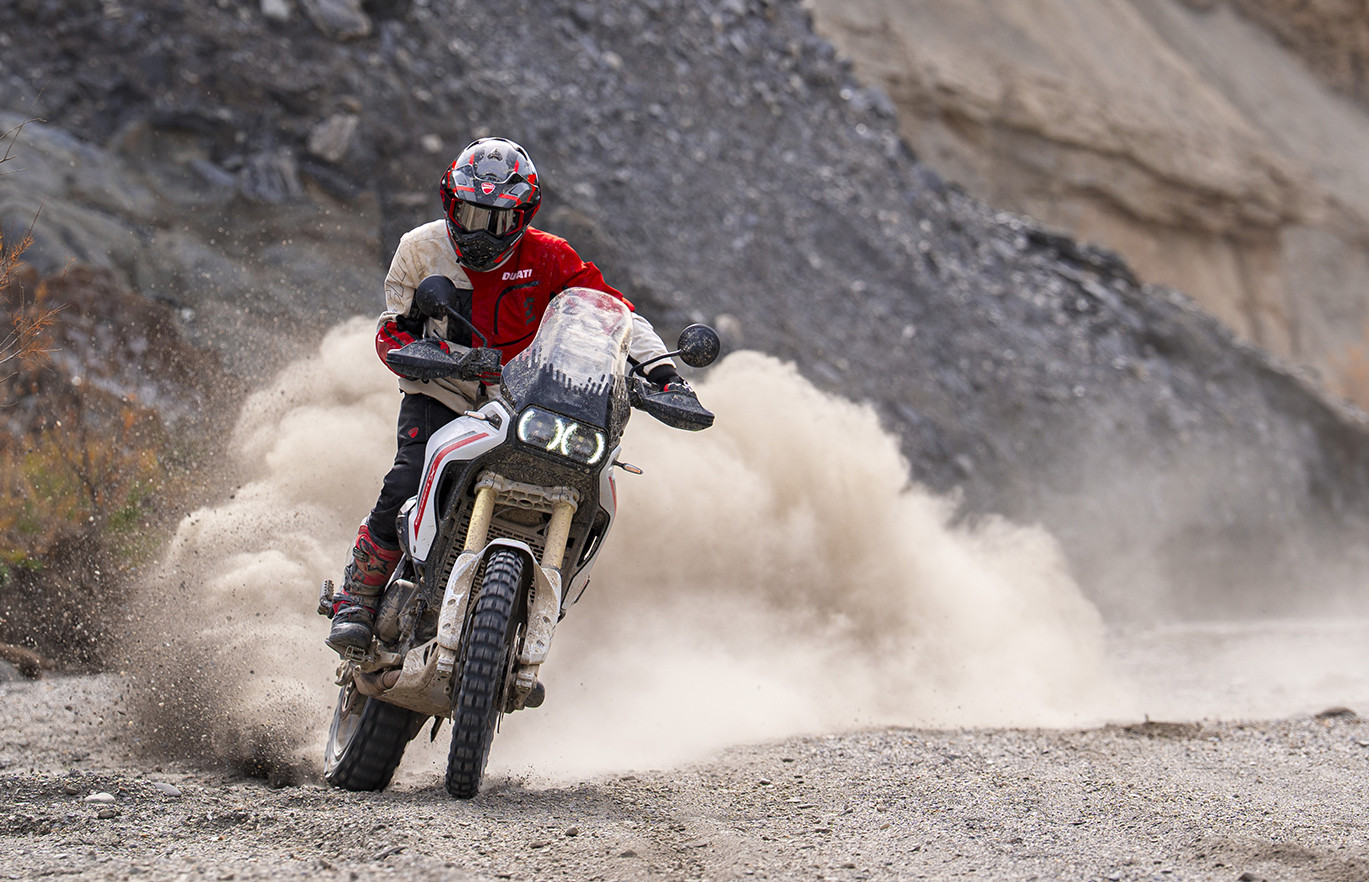
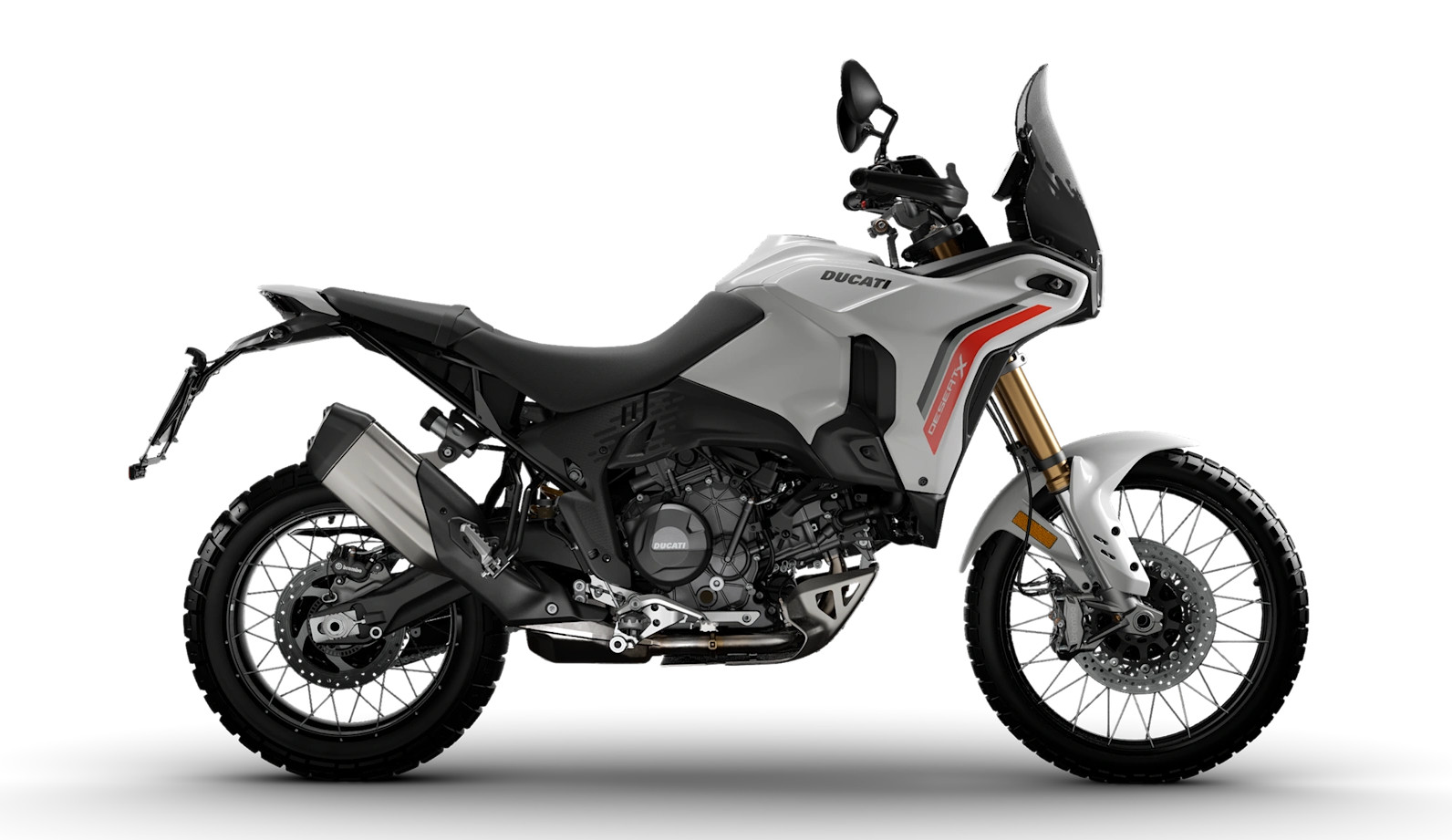
The chassis tells a similar story. Beneath bodywork that still carries the unmistakable silhouette of the original DesertX lies a fundamentally re-engineered machine. The engine now functions as a stressed member, eliminating the traditional trellis architecture in favor of greater torsional rigidity and a cleaner structural philosophy.
In simpler terms: fewer compromises, sharper response.
A revised progressive rear linkage further refines the package, improving traction and predictability when surfaces loosen beneath the tires. The DesertX was already credible. The V2 appears determined to become genuinely formidable.
What remains refreshing is that Ducati has resisted the temptation to dilute the formula. The 21-inch front and 18-inch rear wheel combination remains intact. This is not an “adventure” bike softened for brochures. It retains proper geometry, proper proportions, and the visual confidence of something built for horizons rather than image.
That matters.
Because in an era where many manufacturers continue to blur the line between touring and true off-road capability, Ducati seems increasingly comfortable choosing a side.
Even early reactions from EICMA suggested the same. The DesertX V2 was less incremental update than strategic signal—a statement that Ducati’s ambitions beyond asphalt are no longer experimental.
They are structural.
DesertX vs. DesertX V2 — The Real Shift
| Category | Previous DesertX | DesertX V2 | Real-World Impact |
|---|---|---|---|
| Engine | 937cc Testastretta 11° | 890cc V2 | Lighter, smoother, easier ownership |
| Power | ~110 hp | ~108–110 hp | Comparable performance |
| Torque | ~68 lb-ft | ~68 lb-ft | Midrange preserved |
| Wet Weight | ~463 lbs | ~454 lbs | Improved agility |
| Chassis | Steel trellis | Engine stressed member | Greater rigidity |
| Suspension | Standard | Progressive linkage | Better off-road response |
| Wheels | 21” / 18” | 21” / 18” | Serious ADV credentials maintained |
| Maintenance | Higher | Reduced | More practical for distance |
Across the field
“As proven by every other model that received Ducati’s V2 engine, weight on the DesertX V2 should be significantly less.”
“Four years after they first entered the world of dirt-focused adventure bikes, Ducati have previewed the next generation…”
“Under bodywork that’s clearly similar in style… there’s a completely new bike.”
Additional reporting and impressions referenced throughout the feature.
Dust settles fast on a trail like this.
What matters shows up a few kilometres later—how the bike carries itself when the line disappears, how it reacts when the surface moves under it, how little you think about it when you’re tired.
The new V2 engine changes the tone more than the numbers suggest—smoother, lighter in feel, easier to live with when the terrain turns slow and technical.
The DesertX V2 feels lighter in those moments. More balanced. Less work.
Out here, the details fade. What remains is whether the machine still feels right when everything else falls away.