Small Wheels, Long Roads: The Enduring Culture of Scooter Rallies
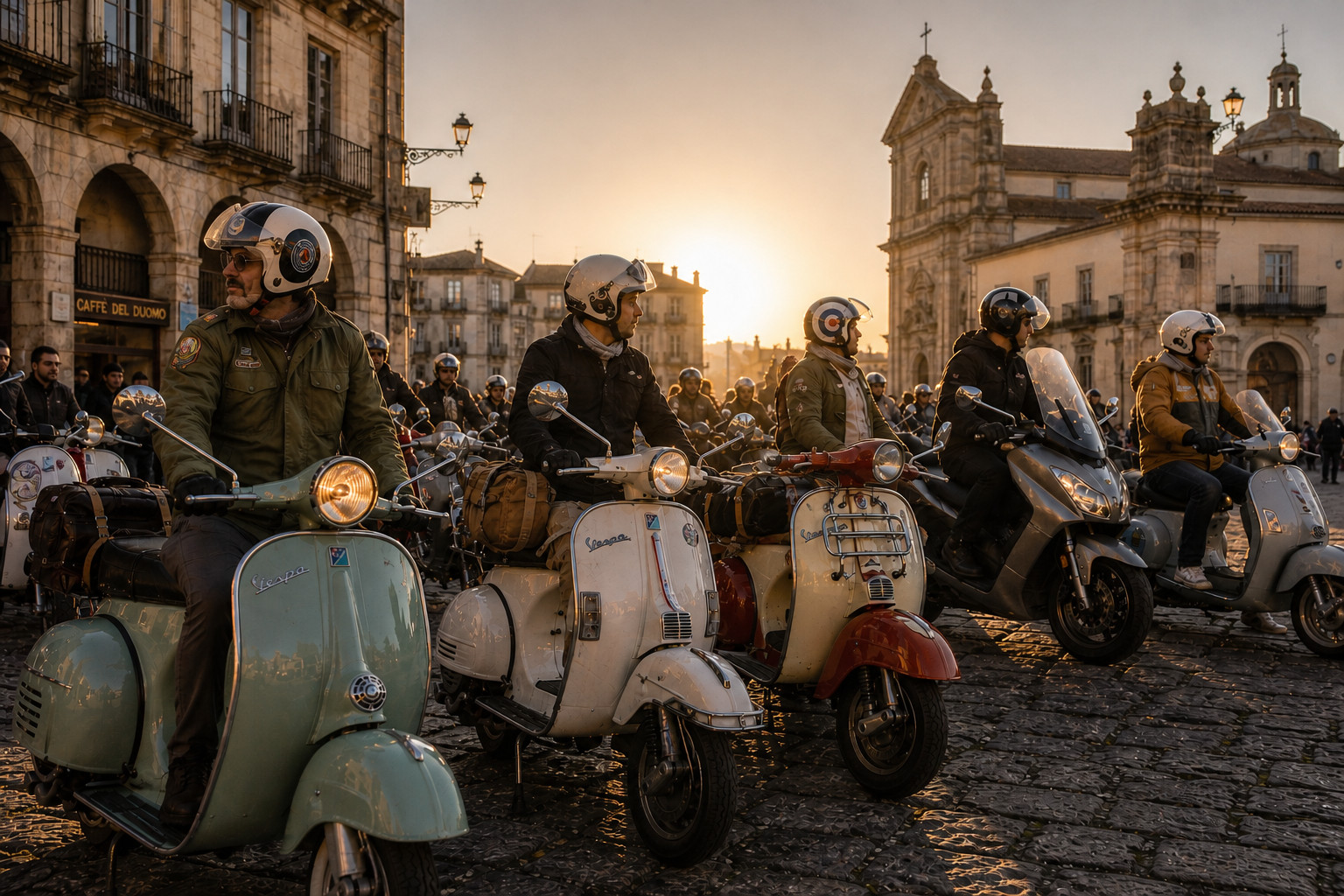
The sound is a layered chorus—modern four-strokes idling beside the sharper note of vintage two-strokes, both equally at home in the square before sunrise.
I stand in the cool morning air with espresso warming my hands as chrome mirrors catch the first pale light. Around me, dozens of scooters—some polished to concours perfection, others carrying weathered luggage racks and decades of road scars—wait beneath old stone facades. Parkas, fishtails, patched jackets, and open-face helmets move through the square with the familiar rhythm of people who understand that rallies begin long before the road itself.
What strikes me most is how easily past and present coexist here. Vintage scooters may still shape the visual poetry of these gatherings, but modern machines stand beside them just as naturally, proving the culture continues to evolve without abandoning its roots.
This is not nostalgia alone.
It is movement.
For more than half a century, scooter rallies have endured as one of motorcycling’s most distinct subcultures, and standing among them, I’m reminded how practical machines became vessels for something far larger: a culture that is practical yet romantic, urban yet unexpectedly adventurous, modest in engine size yet often vast in spirit.
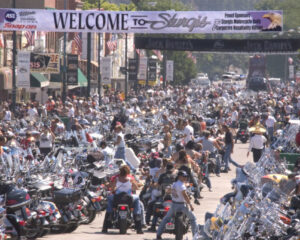
While larger motorcycle rallies often celebrate displacement, horsepower, or outlaw mythology, scooter rallies have always occupied a different lane—one shaped by style, community, mechanical intimacy, and the peculiar joy of taking small machines much farther than logic might suggest.
Born in Cities, Proven on Open Roads
Scooters were designed, first and foremost, for utility.
Postwar Europe needed affordable, efficient mobility. In 1946, Vespa answered with simplicity wrapped in elegance. Lambretta soon followed with sharper lines and a slightly more rebellious edge. These machines were never conceived as grand touring motorcycles.
Yet riders, predictably, had other ideas.
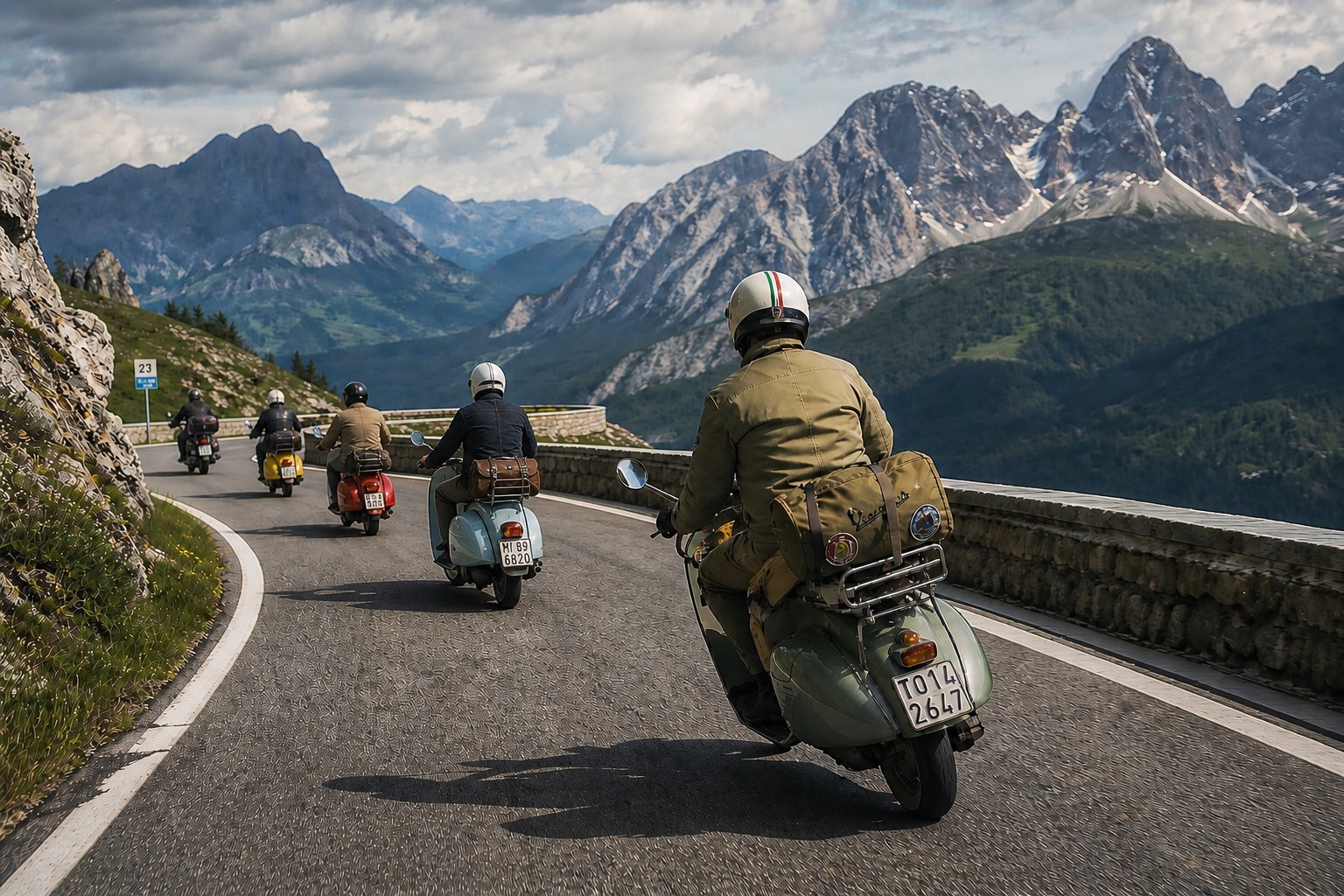
What began as practical urban transportation evolved into something larger: a culture where city commuters transformed into long-distance travelers, crossing countries and mountain ranges on machines originally built for narrow streets and daily errands.
This contrast remains central to scooter rally culture.
The scooter is perhaps the ultimate underdog of rallying—small wheels, limited power, often underestimated—but therein lies its charm. Riding hundreds of kilometers on a Vespa or Lambretta demands patience, resilience, mechanical understanding, and an entirely different relationship with speed.
Having spent time on both motorcycles and scooters, the contrast feels immediate. A scooter’s upright posture, step-through simplicity, and measured pace alter the rider’s relationship with the road itself. You do not attack distance in quite the same way. Instead, landscapes unfold more gradually. Villages invite pauses. Roads become less about velocity and more about presence.
The journey slows.
And in slowing, it often deepens.
Vespa: Elegance in Motion
No discussion of scooter rallies can begin anywhere else.
Vespa’s global identity extends far beyond transportation. It became a symbol of postwar optimism, Italian design, and democratic freedom. Over decades, Vespa rallies expanded from local club rides into international gatherings attracting thousands.
Events such as EuroVespa and Vespa World Days transformed scooters into passports for cultural exchange, drawing riders from across Europe, Asia, and the Americas. These gatherings are not merely festivals but living proof that scooter culture can sustain the same pilgrimage instinct often associated with larger motorcycles—only with its own distinct cadence.
What distinguishes Vespa rally culture is its unusual fusion of style and endurance.
A pristine vintage GS parked beside a heavily traveled PX loaded with camping gear tells the same story differently: these machines are simultaneously collectible artifacts and functioning companions.
Scooterists often embrace this duality. They care deeply about aesthetics, but equally about the road.
Lambretta: The Rebel Counterpoint
Where Vespa often represented polished continental elegance, Lambretta carved out a sharper social identity.
Particularly in Britain, Lambretta became inseparable from Mod culture—tailored suits, all-night rides, seaside rallies, and a soundtrack of soul, ska, and rebellion.
Its silhouette became iconic not merely as transportation, but as declaration.
Even today, Lambretta rallies retain traces of that spirit. They are often more tribal, more rooted in heritage, and more fiercely connected to identity.
For many riders, Lambretta is not simply a scooter. It is lineage.
The Rally as Social Geography
Scooter rallies differ from many traditional motorcycle events in atmosphere.
They often feel more communal than confrontational, more playful than performative.
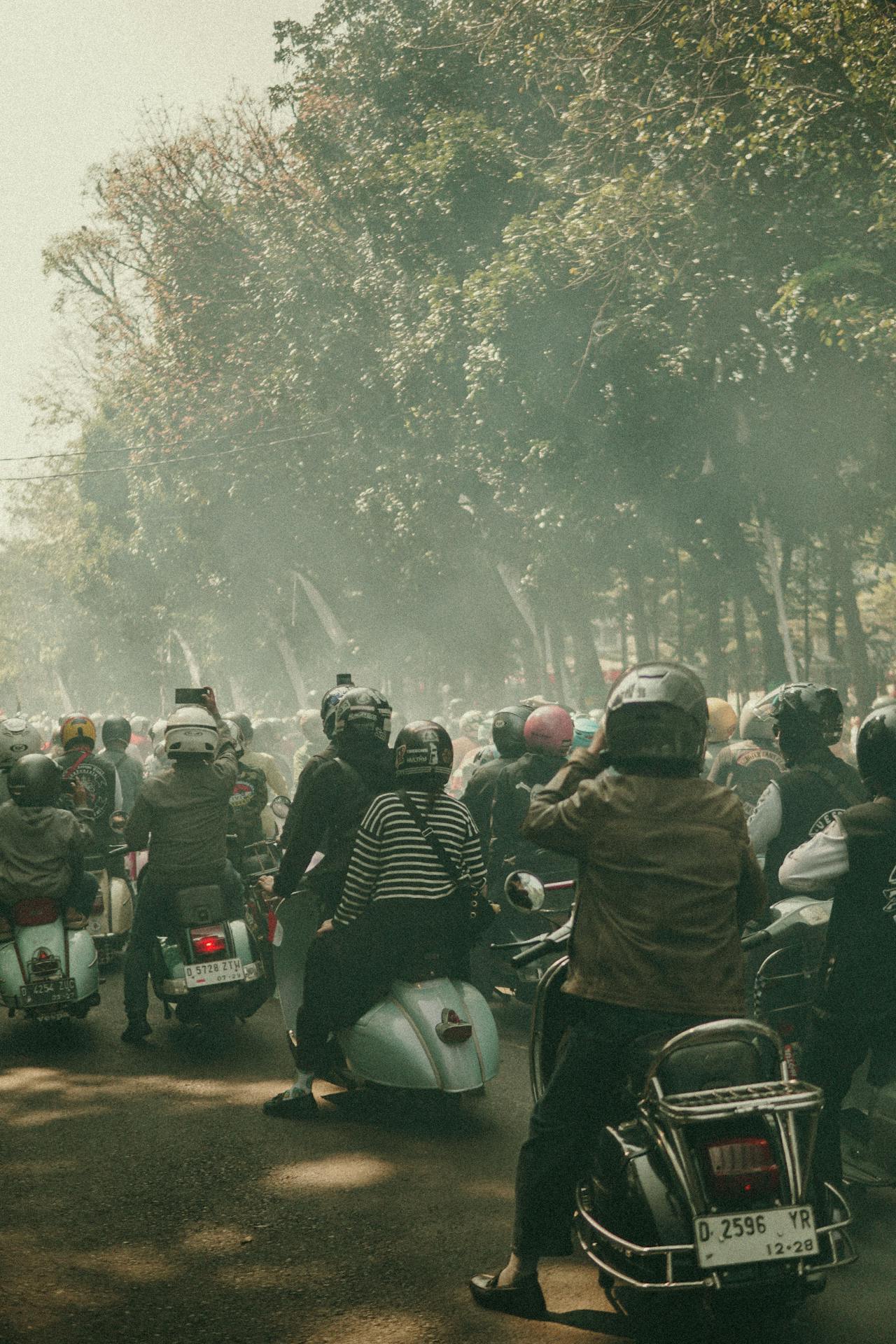
Yes, there are custom builds, restoration showcases, and technical competitions. But there is also a notable emphasis on social architecture: group rides, city parades, shared meals, campsite camaraderie, roadside repairs, and intergenerational exchange.
The machines themselves encourage this.
At scooter pace, roads are experienced differently. Landscapes linger. Villages invite stops. Mechanical issues become communal rituals rather than private frustrations.
Riders often describe scooter touring less as conquest and more as participation.
This distinction matters.
Urban Machines, Grand Journeys
What continues to fascinate me most about scooter rally culture is its persistent contradiction.
Scooters remain fundamentally urban inventions—compact, maneuverable, economical.
Yet their rally traditions repeatedly reject urban limitation.
From Alpine crossings to pan-European tours, from coastal endurance rides to island rallies, scooterists continually stretch the intended boundaries of their machines.
The small wheel becomes an unlikely symbol of persistence.
In this way, scooter rallies echo the earliest romanticism of motor travel itself: not domination through power, but discovery through determination.
A 125cc scooter climbing a mountain pass may be objectively slower than nearly everything else on the road.
But culturally, that ascent often feels larger.
Why Scooter Rallies Still Matter
Modern mobility increasingly emphasizes convenience, automation, and digital insulation.
Scooter rallies resist this trend.
They preserve analog travel.
They celebrate machines simple enough to understand, maintain, and personalize.
They foster communities where style and substance coexist without irony.
And perhaps most importantly, they remind riders that adventure has never depended solely on engine size.
In many ways, scooter rally culture may be more relevant now than ever—offering a slower, more tactile, more socially connected alternative to increasingly homogenized motorcycling experiences.
Small Wheels Still Turning
Long after sunrise, I watch the square slowly empty.
Engines buzz outward into winding roads, coastal routes, and distant borderlines. The sound is lighter than that of large motorcycles, but no less committed.
Small wheels continue turning.
And standing there, notebook in pocket and exhaust lingering in the air, I’m reminded that for those who understand this culture, that has always been enough.
Scooter rallies endure not because they mimic larger motorcycle traditions, but because they preserve something uniquely their own: the belief that freedom is measured less by displacement than by willingness to ride.