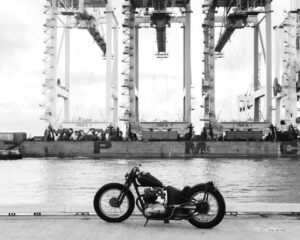
Get in Shape for the First Ride
Before the first throttle twist of spring, there’s quieter work to be done. Strength, balance, and endurance don’t just improve comfort—they shape how you respond when the road asks something of you.

A Season Begins in the Body
There’s a particular kind of morning that belongs to riders alone. The light is still soft, the road still undecided, and the bike—fresh from its long winter silence—waits without judgment.
But the first ride has a way of telling the truth.
It shows up in your wrists mid-corner, in your neck against the wind, in your hips when the bike leans and asks you to follow. Riding, despite its romance, is physical work. Not in the way of a gym session, but in the quiet, sustained way that demands coordination, endurance, and control.
And after a winter off the bike, most riders are not where they think they are.
What the Research Suggests
There’s no shortage of instinct in riding, but there is also evidence worth paying attention to. A study published in Experimental Gerontology found that muscle strength, postural balance, and cognitive function are associated with braking time—a relationship that speaks directly to how the body supports reaction and control.
In broader exercise science, moderate physical activity has been shown to improve reaction time and attention, both of which sit at the core of safe riding. Fatigue, on the other hand, degrades decision-making and slows response—something the Motorcycle Safety Foundation addresses plainly:
“Don’t ride when you are tired.”
It’s a simple warning, but it carries weight. Because fatigue doesn’t announce itself. It accumulates quietly—through weak posture, poor conditioning, and a body that isn’t ready to stay sharp for the duration of a ride.
Where Riders Lose It (and Don’t Realise)
The early rides of the season are rarely limited by skill. They’re limited by the body underneath it.
A stiff thoracic spine makes it harder to turn your head fully.
Tight hips reduce your ability to move with the bike.
Weak legs shift the burden to your hands.
A tired core pulls you into the bars.
None of it feels dramatic. But all of it adds up.
And when something unexpected happens—because it always does—it’s not just skill that responds. It’s whatever your body is capable of delivering in that moment.
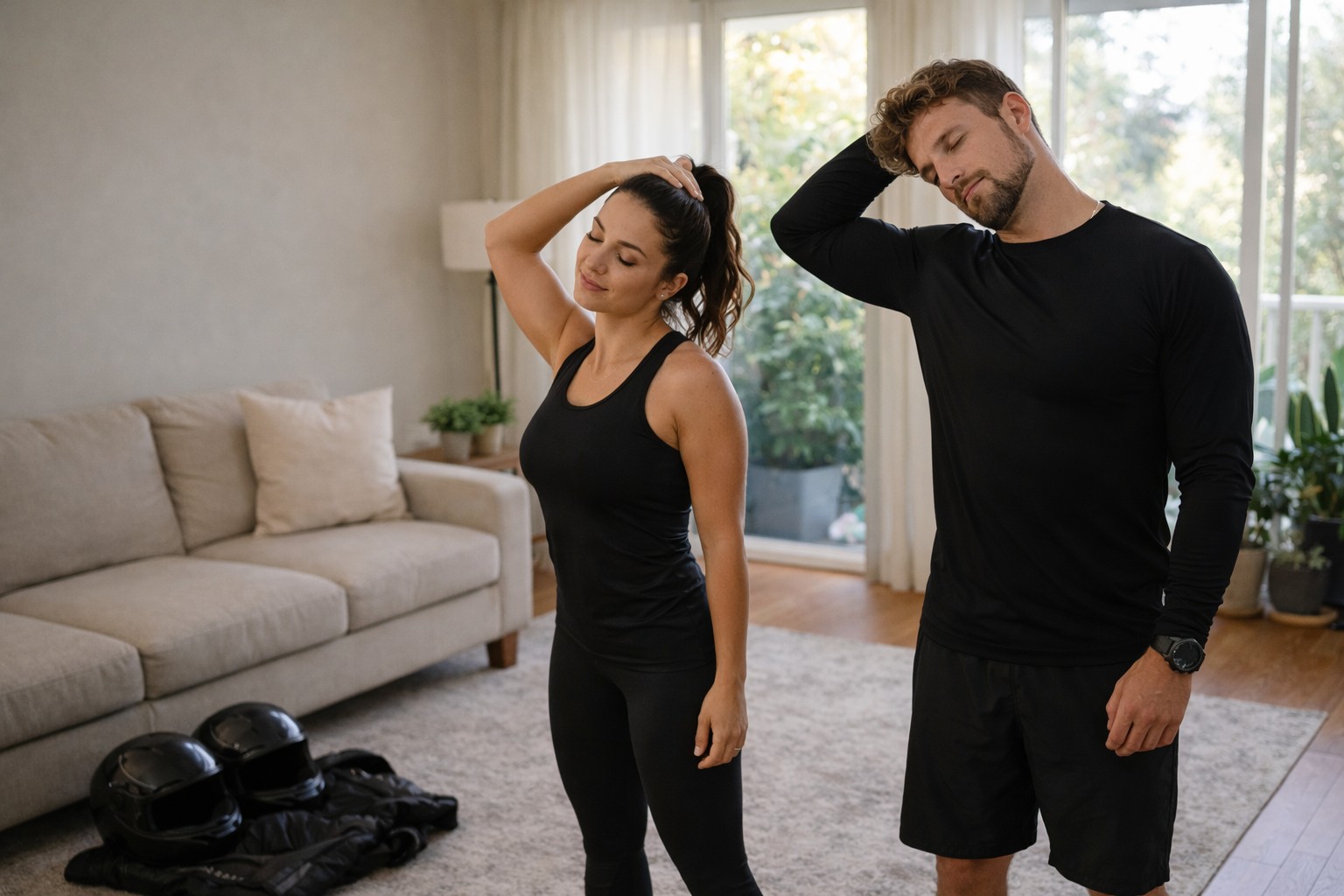
The Work Before the Ride
This isn’t about training like an athlete. It’s about restoring the baseline your riding depends on.
Think of it as rebuilding the quiet systems: mobility, stability, balance, and endurance.
Mobility — Loosen What Winter Locked
Focus on:
- Neck rotations (slow, controlled)
- Shoulder circles
- Thoracic spine rotations
- Hip openers
Ten minutes a day is enough. The goal is not flexibility for its own sake, but freedom of movement on the bike.
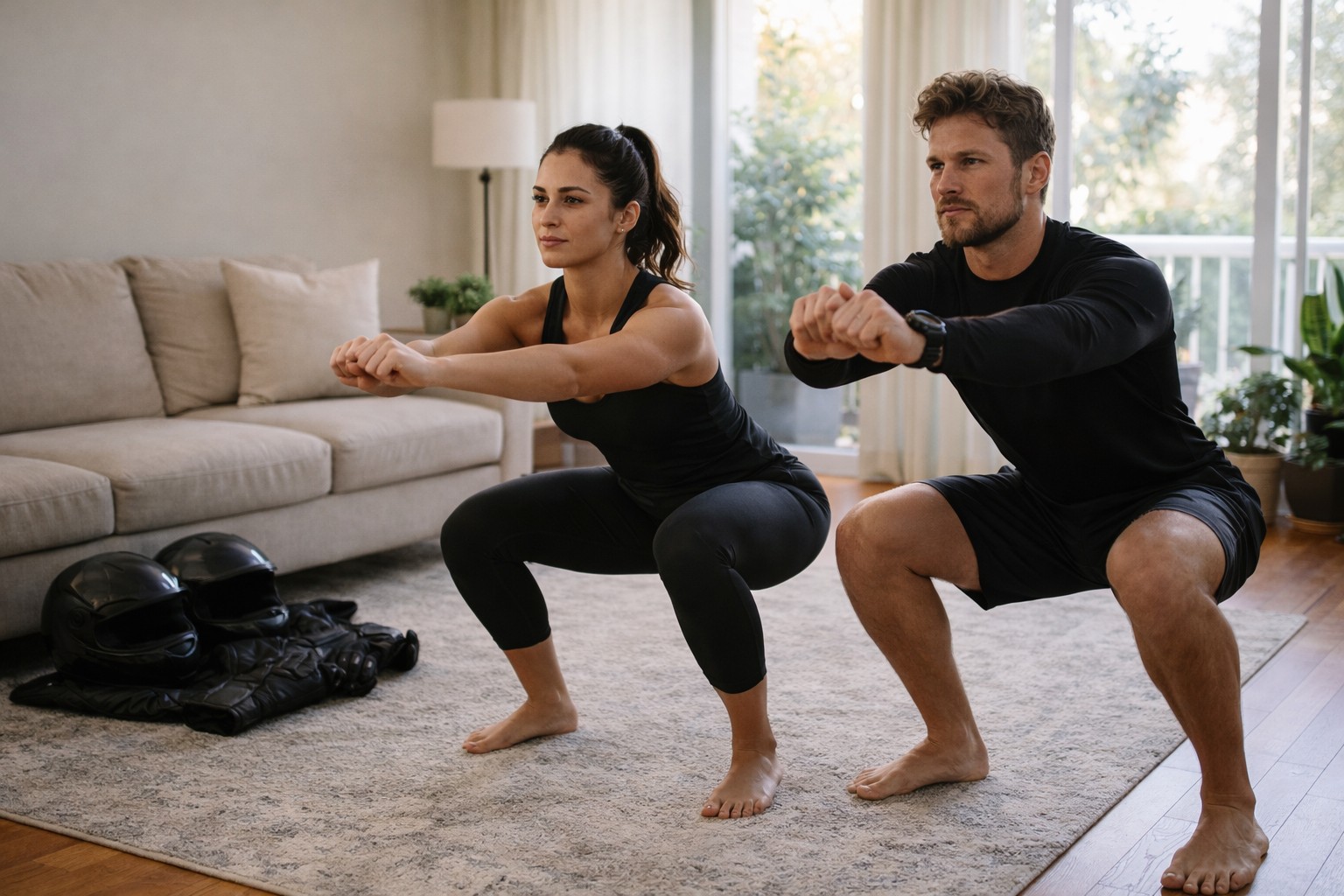
Strength — Support the Machine Without Fighting It
Focus on:
- Bodyweight squats
- Split squats (or lunges)
- Step-ups
- Calf raises
Your legs stabilize the bike. Strong legs mean lighter hands.
Core Endurance — Stay Off the Bars
Focus on:
- Front plank
- Side plank
- Bird dog
- Dead bug
This is not about visible abs. It’s about holding position without fatigue.
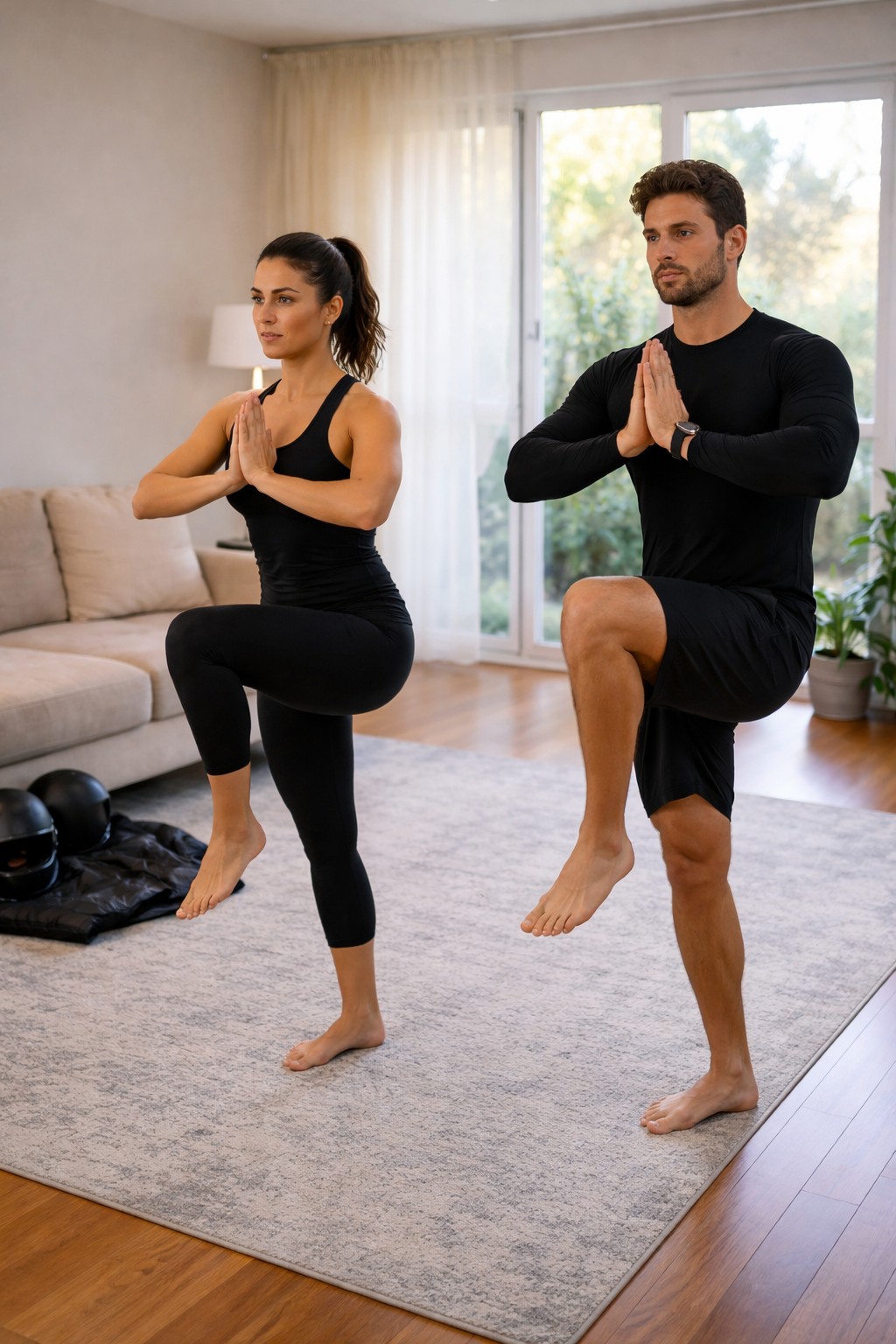
Balance — The Quiet Skill
Focus on:
- Single-leg stands
- Slow lunges
- Heel-to-toe walking
Balance sharpens control in ways riders feel immediately—especially at low speed and on imperfect surfaces.
Cardio — Stay Sharp Longer
Focus on:
- Brisk walking
- Cycling
- Light circuits
You don’t need exhaustion. You need the ability to ride for an hour without fading.
A Simple 2-Week Pre-Ride Routine
Frequency: 5 days per week
Duration: 20–30 minutes
Day A (Strength + Core)
- Squats — 3 × 12
- Split squats — 3 × 8 each leg
- Plank — 3 × 30–45 sec
- Side plank — 2 × 20 sec each side
- Single-leg balance — 2 × 30 sec each leg
Day B (Mobility + Cardio)
- Full mobility sequence — 10 minutes
- Brisk walk or cycle — 20 minutes
Weekly Structure
- Monday: Day A
- Tuesday: Day B
- Wednesday: Day A
- Thursday: Rest or light mobility
- Friday: Day B
- Weekend: Optional short ride + mobility
Easing Back Into Riding
Before your first long ride:
- Take 2–3 shorter rides (30–45 minutes)
- Focus on smoothness, not distance
- Pay attention to tension—especially in hands and shoulders
The goal is not to prove anything. It’s to return gradually.
Before You Begin
Before starting any new exercise routine—especially after a period of inactivity—consult your physician or a qualified healthcare professional, particularly if you have pre-existing conditions, injuries, or concerns about cardiovascular health.
Disclaimer
This article is for informational purposes only and does not constitute medical advice. Always seek guidance from a qualified professional before beginning any new fitness or training program. Riding a motorcycle carries inherent risks, and physical preparation does not eliminate them—it helps you manage them more effectively.
Closing Line
Spring doesn’t begin when the engine turns over.
It begins when the rider is ready to meet the road with a body that can answer back.