Wheels and Waves: Four Days Between Biarritz, the Coast, and the Roads Beyond
Each June, the Basque coast fills gradually—first the roads, then the shoreline, then the spaces in between—as riders, surfers, and skaters move through a festival that never settles in one place for long.
The approach into Biarritz is uneven. Traffic builds in short stretches—motorcycles appearing in small groups, then disappearing again along the coastal roads that lead into town. At fuel stations and roadside stops, bikes pull in briefly before heading back out toward the same network of routes.
Wheels and Waves has been held here since 2008, organized by the Southsiders Motorcycle Club—Jérôme Allé, Julen Azé, and Vincent Prat—who began with informal gatherings built around riding, surfing, and custom motorcycles. The event now runs over four to five days each June, centered around Biarritz but extending well beyond it, across the French and Spanish Basque coast.
There is no single entry point and no fixed perimeter. Activity spreads across multiple locations, with riders moving continuously between them.
The Festival Grounds and the Road
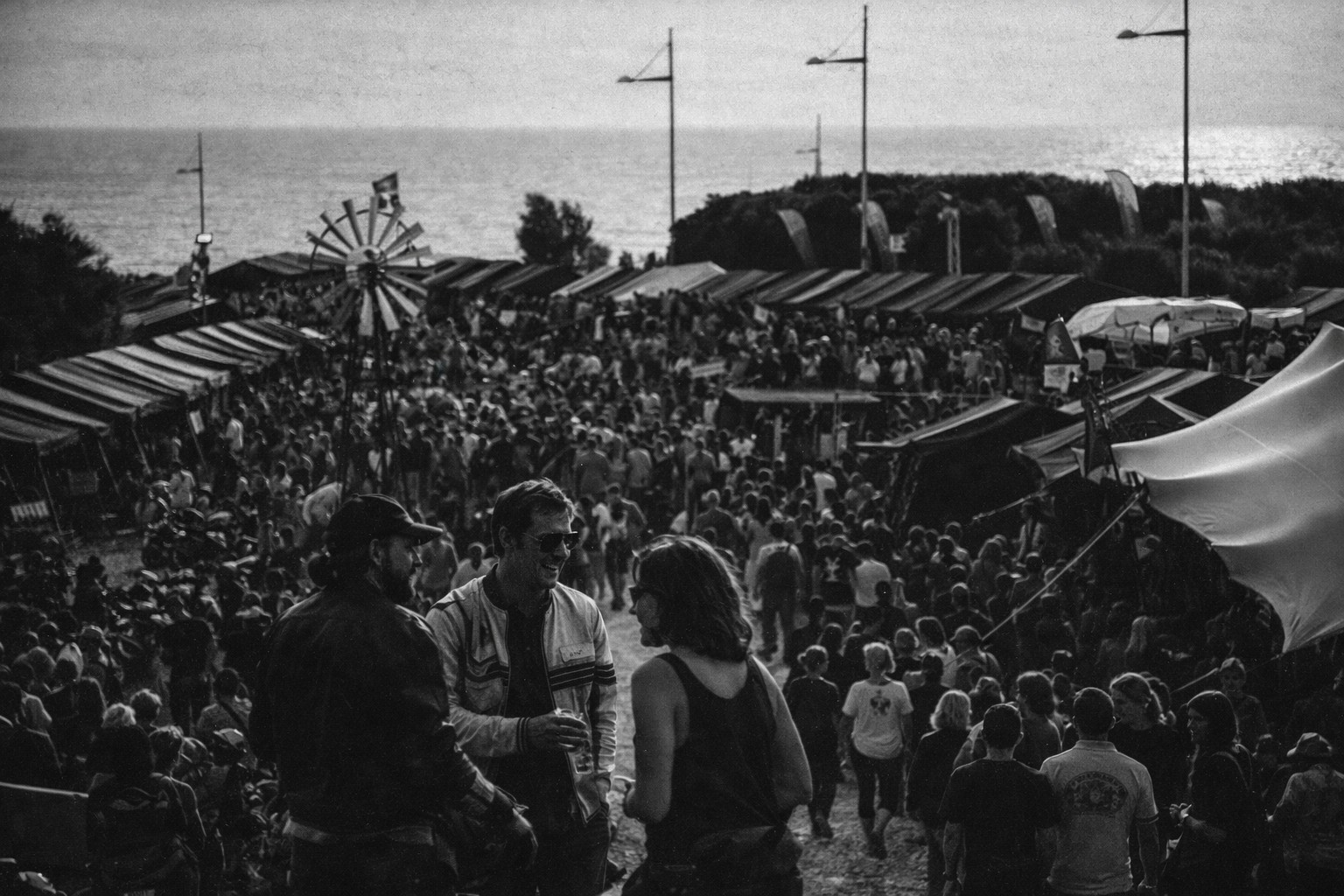
The closest thing to a central hub is the Cité de l’Océan, just south of Biarritz. Over the course of the event, the space fills with motorcycles, vendor tents, food stands, and temporary structures that serve as meeting points rather than destinations.
Through the day, the grounds remain in constant motion. Riders arrive, park, walk through, then leave again. Lines of bikes form along access roads, then thin out within an hour. Engines start and stop throughout the day, creating a continuous background of movement rather than a fixed crowd.
From there, most riders return to the road.
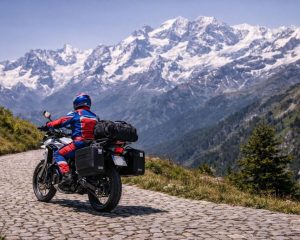
Routes run inland toward low hills and wooded sections, or follow the coastline toward smaller towns and surf spots. Traffic patterns shift quickly. One stretch of road carries a steady flow of bikes, while another, only a few kilometers away, remains nearly empty.
There is no single route that defines the event.
El Rollo: Flat Track at the Hippodrome
The first major gathering takes place at the San Sebastián Hippodrome, just across the Spanish border, where El Rollo opens the event with a flat track race on a dirt oval.
Riders line up in small groups, accelerating into tight corners and kicking up dust as they circle the track. The field includes a mix of experienced racers and amateur participants, many riding custom-built or lightly modified machines.
Before the races begin, the paddock fills with bikes that draw as much attention as the competition itself—older builds, experimental frames, and one-off machines assembled with a mix of technical precision and improvised detail. Riders move between them, stopping to look, ask questions, and compare setups.
When the racing starts, the focus shifts quickly. Engines rise, the track fills with dust, and the crowd presses closer to the fence line.
Punk’s Peak: The Hill Climb
Later in the week, attention moves to the slopes of Mount Jaizkibel, where Punk’s Peak takes place on a short uphill road overlooking the Cantabrian Sea.
The course runs roughly 800 meters, but the setting draws as much attention as the race itself. Spectators line the roadside, standing along the incline as riders accelerate uphill in timed runs.
Conditions change quickly. Fog can roll in from the coast, reducing visibility and forcing delays or cancellations. In some years, riders and spectators gather at the starting area without a race taking place at all, waiting in shifting weather before the road clears—or doesn’t.
Even without a full run, the site remains active. Bikes idle, riders test short stretches of road, and groups form and dissolve along the hillside.
The Bikes
Throughout the event, the motorcycles themselves remain central, but not in a formal display setting.
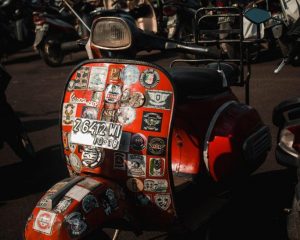
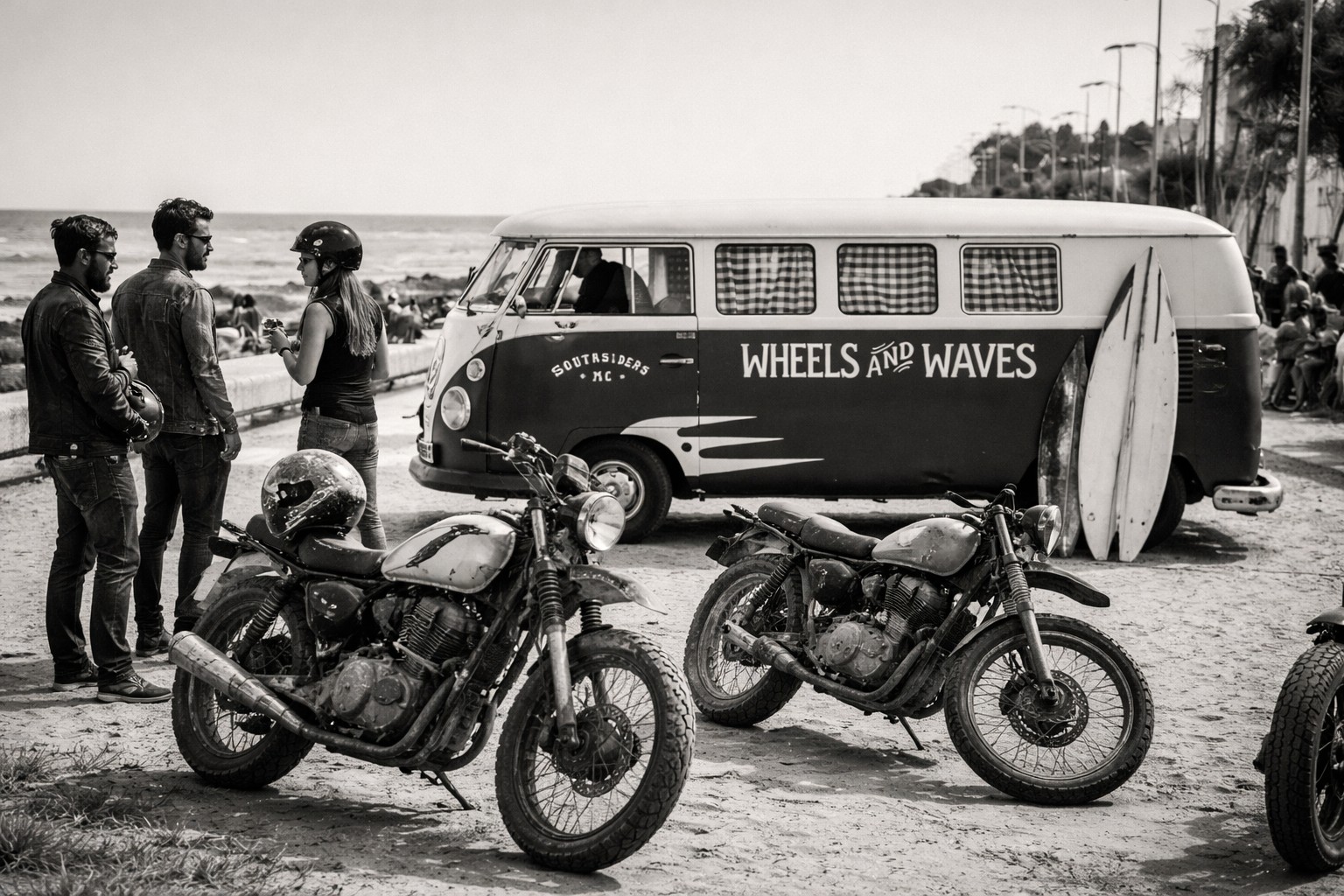
Custom café racers, vintage builds, and modern interpretations appear across the grounds and along the roads. Many are built specifically for the event or for the season, reflecting a mix of craftsmanship and experimentation. Others are long-used machines, marked by distance rather than presentation.
There is no separation between “show” and “use.” The same bikes seen in the paddock or parked near the Cité de l’Océan are ridden across the same roads that connect the event’s locations.
Details stand out: improvised luggage setups, worn surfaces, modifications made for longer travel or specific terrain. Riders move between bikes, stopping briefly before continuing on.
Surf, Skate, and Shoreline
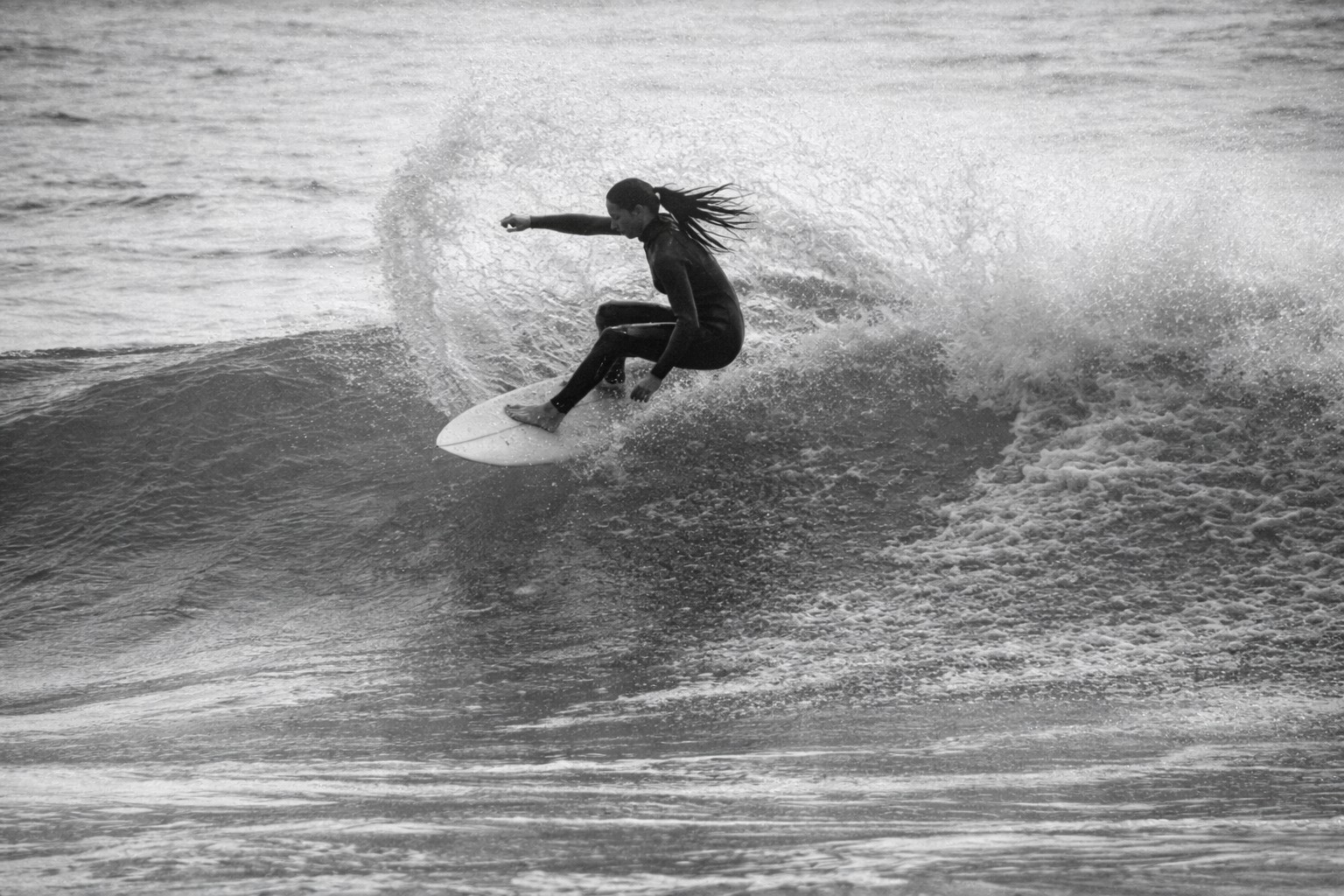
At Plage de la Milady, just below the main festival grounds, the focus shifts toward the water. Surf competitions run alongside the event, drawing a steady crowd throughout the day. Boards are stacked along the sand or carried across the road from parked vans and bikes.
Nearby, skate ramps and temporary installations host sessions that run intermittently, with riders and spectators moving between activities without a fixed schedule.
The mix is consistent: motorcycles, surf, skate, and music occupying the same space without a strict separation between them.
Evenings
As the day fades, activity returns toward the main grounds. Live music, DJ sets, and outdoor screenings extend into the evening, with crowds forming and dispersing across the site.
The atmosphere shifts but does not stop. Some riders remain near the stages and installations, while others leave again for late rides along the coast or inland roads.
The movement continues into the night.
Across the Basque Coast
One of the defining aspects of Wheels and Waves is its geography. The event extends across the Basque region, crossing the border between France and Spain with little distinction beyond the road signs and traffic flow.
Riders move between Biarritz, San Sebastián, and smaller towns along the coast, following routes that curve between the sea and the hills. The distances are short enough to cover multiple locations in a day, but varied enough to change the rhythm of the ride.
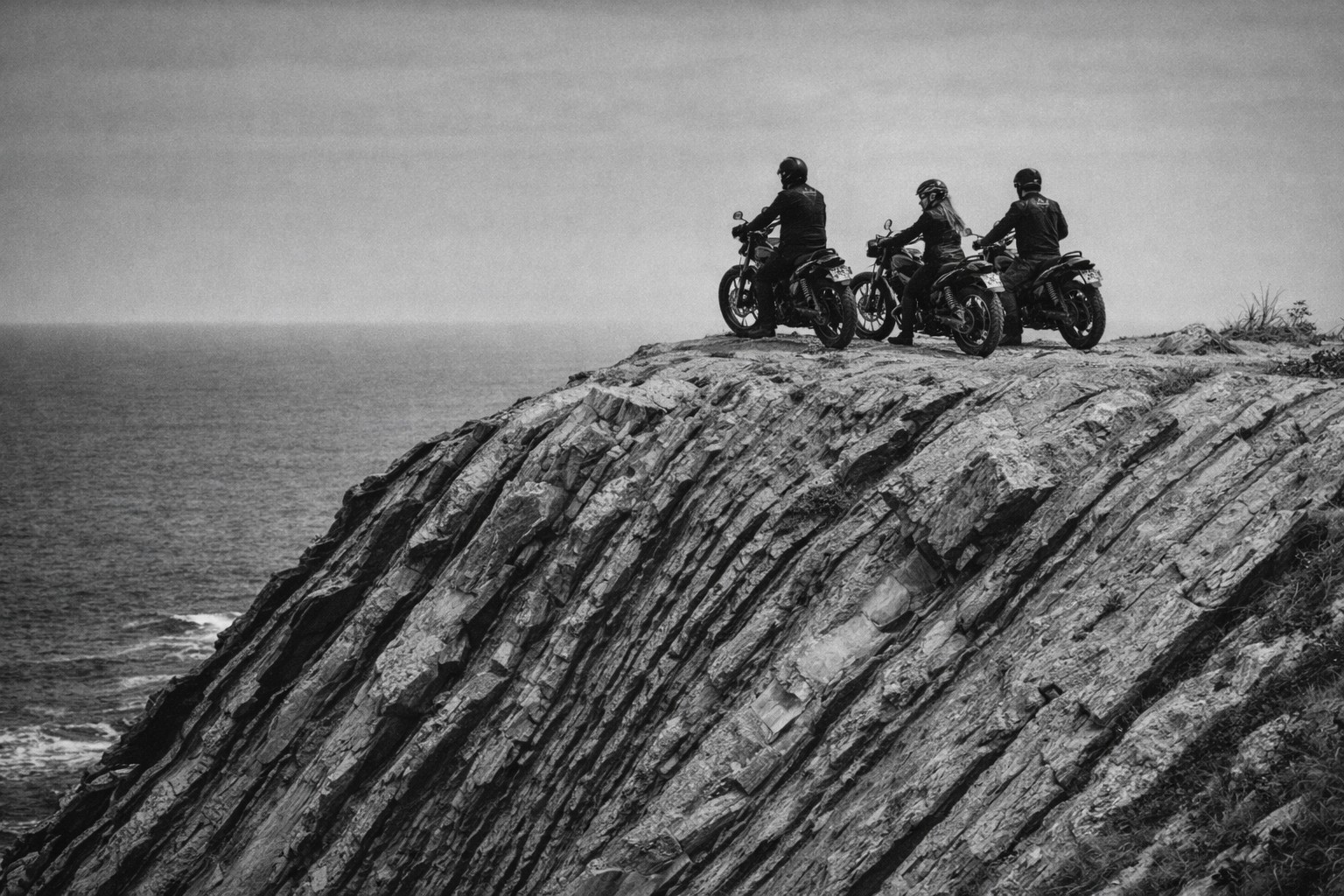
Some stretches run close to the water, with abrupt drops toward the sea. Others cut inland through wooded sections and open hills, where traffic thins out and the pace changes again.
Over Four Days
Across four days, the structure remains fluid.
Certain events draw larger crowds at specific times—El Rollo, Punk’s Peak, surf competitions—but between them, the experience is defined by movement rather than schedule. Riders circulate between locations, often without a fixed plan, returning to the same roads more than once under different conditions.
Weather plays a role. Wind, fog, and shifting light alter the timing and flow of activity. What feels active in the morning may be quiet by late afternoon, while another area fills without warning.
The pattern changes, but the movement remains constant.
Leaving Biarritz
By the final day, the roads begin to thin.
Traffic still builds in short stretches, but the density drops quickly outside the main routes. Riders leave in different directions—some heading inland, others following the coast north or south.
At fuel stops and roadside cafés, the same mix appears briefly one last time before dispersing.
By the time the roads open up again, the event has already spread back out into distance.
For more information visit Wheels and Waves