Riding Green: The Electric Motorcycle Builders Still Shaping the Future
Electric motorcycles—and the builders still willing to endure what comes after combustion. First published in April 2023 and revisited in February 2026, this piece considers a landscape that has narrowed as much as it has matured: some manufacturers have delivered, others remain in waiting, and a few have slipped quietly from view. What follows is not a census of machines, but an examination of who stayed, who stalled, and what it takes to last.
Earth Day is less about optimism than accountability. It asks what we are building, who is building it, and whether those ideas are meant to last.
Electric motorcycles did not arrive as a unified movement. They emerged from race paddocks, design studios, venture decks, and engineering labs — each builder carrying a different answer to the same question: what replaces combustion when noise, heat, and excess are no longer acceptable?
Some companies answered with pragmatism. Others with ambition. A few with audacity that bordered on risk. This is not a ranking of the fastest machines, but a look at the builders — the people, places, and philosophies still defining electric motorcycling today.
This piece first appeared in April 2023, at a moment when electric motorcycling still felt broadly aspirational. In the years since, some of that optimism has hardened into production, while other ambitions have stalled or vanished altogether. What follows reflects that passage of time — the builders who delivered, those still waiting, and those whose ideas outpaced their ability to endure.
Active Producers – Bikes in Production or Limited Series
Some builders endure by refining rather than chasing. Their motorcycles leave the factory, reach riders, and return to the road day after day.
Scale and philosophy vary, but production is no longer hypothetical. The machines exist. They run. They last.
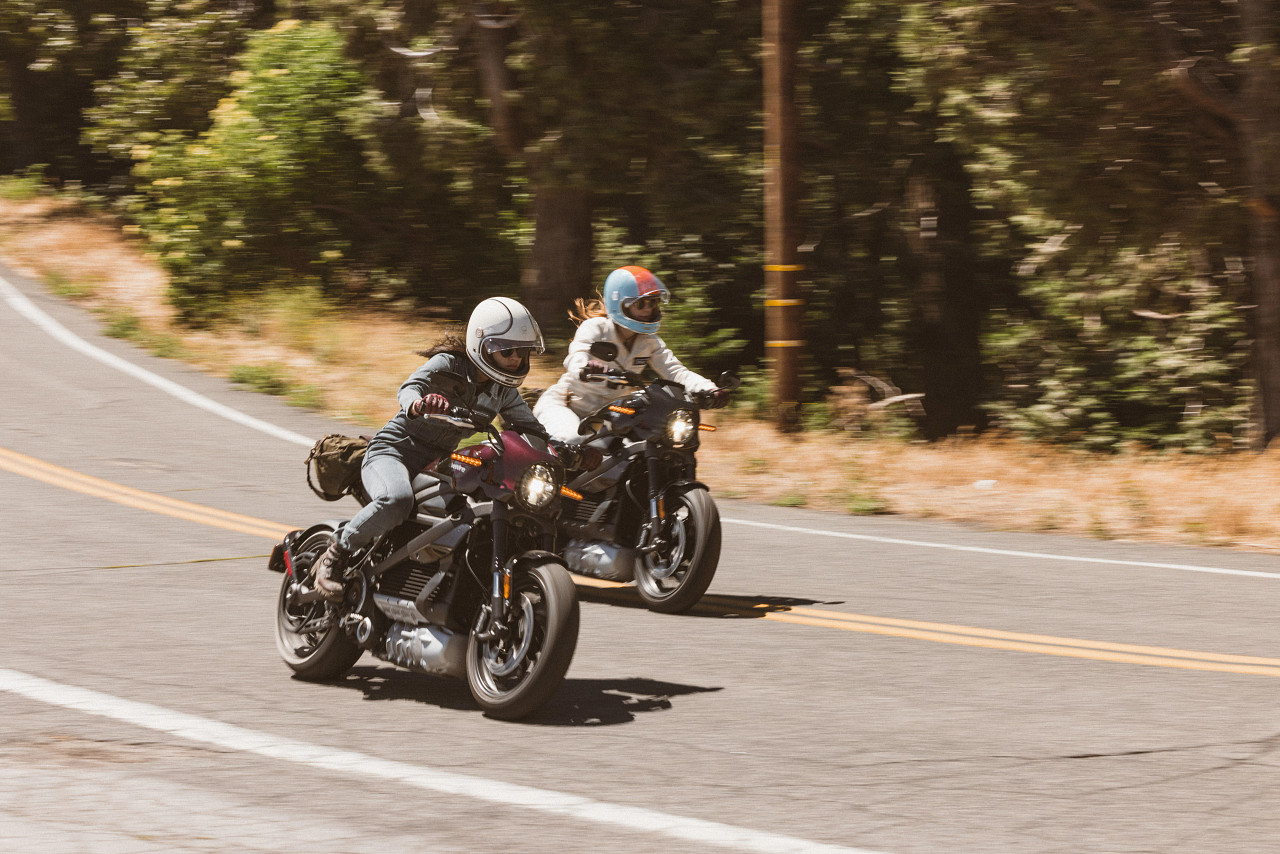
LiveWire
Learning to Build Without Inheritance
LiveWire began life inside Harley-Davidson, and it has spent much of its existence learning how to leave.
What started as an internal electric program was eventually spun out into a separate, publicly traded company — a move that was less about accounting than identity. The question was never whether Harley-Davidson could build an electric motorcycle. It was whether an electric motorcycle could exist without inheriting the cultural gravity of American V-twin mythology.
LiveWire’s separation was therefore philosophical before it was structural. Early leadership drew from both traditional motorcycle manufacturing and the technology sector, tasked with navigating a difficult middle ground: respecting legacy without being bound by it. Public messaging has consistently emphasized independence over nostalgia, framing LiveWire as an experiment still underway rather than a finished brand.
That uncertainty is visible in the machines themselves — and not as a flaw. LiveWire’s motorcycles are compact, urban in posture, and defined more by software and packaging than by mechanical theater. Frames are tight. Ergonomics are city-scaled. The experience prioritizes immediacy and integration over spectacle. These are motorcycles designed to exist in traffic, not to dominate it.
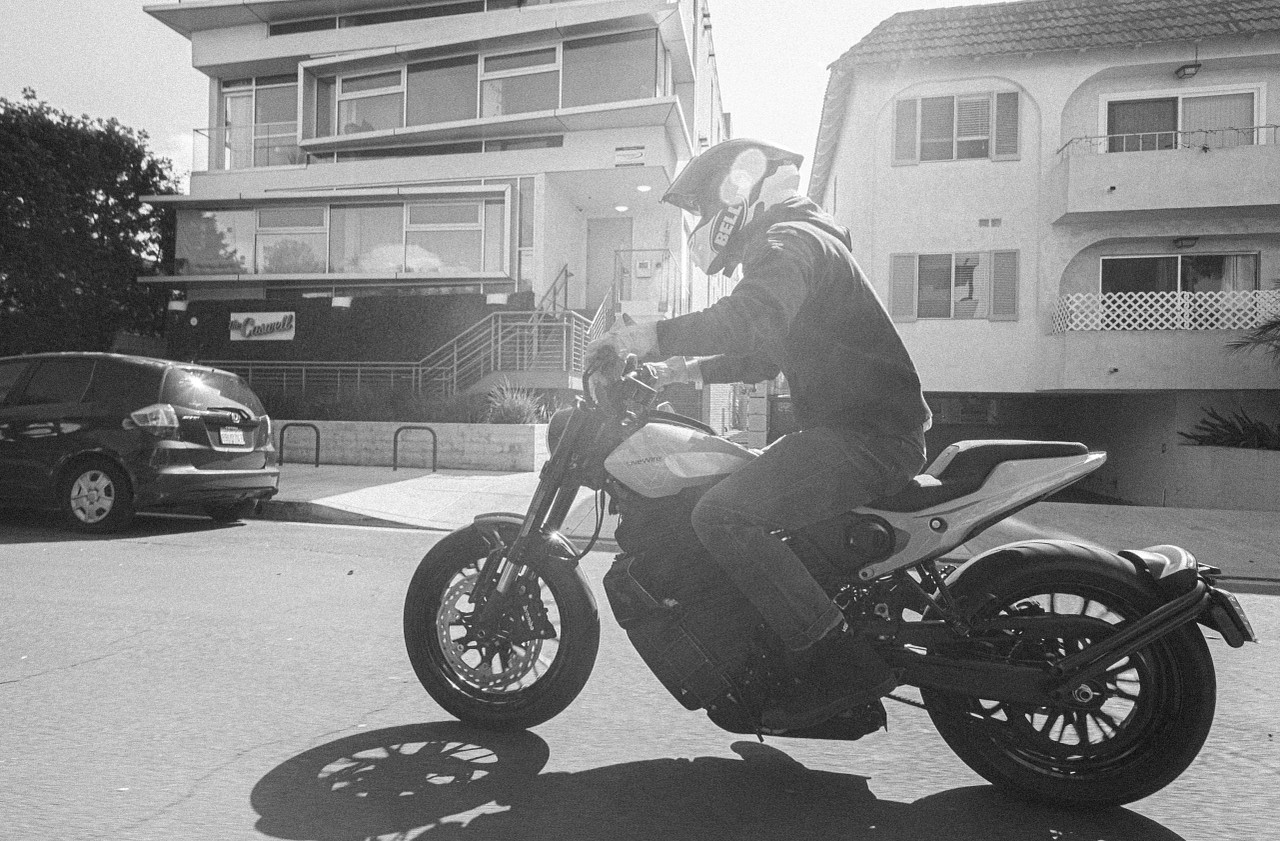
At the same time, LiveWire has not severed its connection to Harley-Davidson entirely. Manufacturing and engineering continue to benefit from Harley’s industrial depth — a quiet advantage in a category where scale and quality control remain existential challenges. What LiveWire has changed is not how motorcycles are built, but how they are spoken about.
Range has evolved meaningfully since the earliest LiveWire efforts. Newer platforms deliver practical urban mileage that supports daily use rather than occasional novelty. These gains arrived not through grand announcements, but through steady engineering refinement — a signal that the company is beginning to settle into its work.
LiveWire’s significance lies in its position between worlds. It is neither a startup unburdened by history nor an incumbent clinging to it. Instead, it occupies a narrow and difficult space: learning how to build electric motorcycles without leaning on inheritance, while still acknowledging where its tools came from.
That tension remains unresolved. But it is also what makes LiveWire worth watching — not as a declaration, but as a process.
Zero Motorcycles
Engineers First, Evangelists Second
If electric motorcycles have a backbone, it is Zero.
Founded in 2006 by Neal Saiki, a former NASA engineer, Zero began not with branding ambitions but with a problem set: how to build a motorcycle around batteries without asking riders to accept fragility, inconvenience, or constant explanation. Early prototypes were assembled in a Santa Cruz garage, shaped by aerospace habits—modularity, iteration, and a distrust of unnecessary complexity.
Zero’s progress has been incremental by design. Where other builders chased dramatic inflection points, Zero refined quietly: battery chemistry improved step by step; thermal management became more consistent; firmware updates smoothed power delivery and extended usable range. Much of this work was invisible on spec sheets, but unmistakable over time. Owners noticed it in reliability, in charging predictability, in machines that aged without drama.
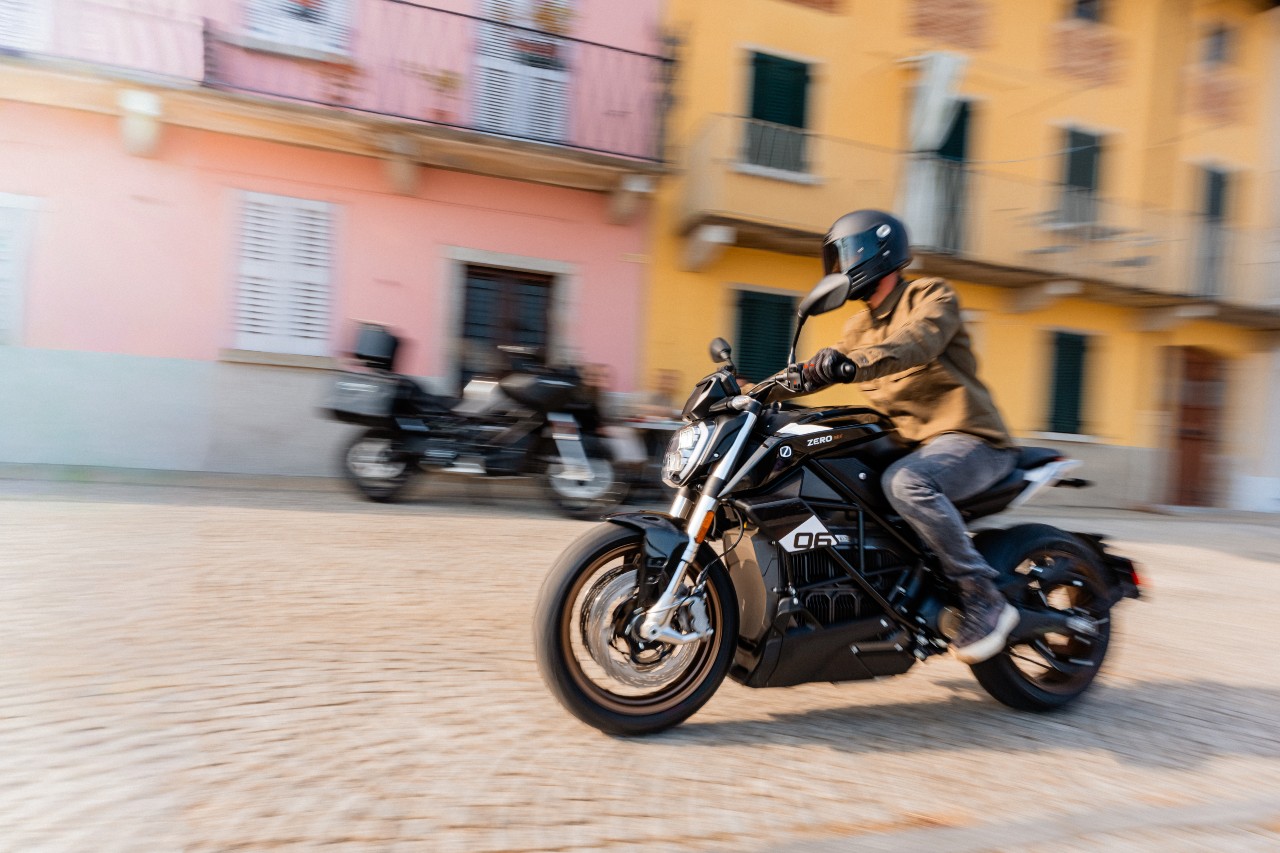
This approach produced motorcycles that behaved like motorcycles. They started every morning. They commuted. They toured. They accumulated miles rather than attention. Zero resisted the temptation to aestheticize electrification, allowing familiarity to do the heavy lifting.
The SR/F represents the mature end of that philosophy. It is not futuristic in posture, nor radical in appearance. Instead, it feels resolved—an electric motorcycle comfortable with its own normalcy. Performance is immediate but measured; technology is present but not theatrical. Nothing demands interpretation.
Zero’s significance lies not in novelty, but in duration. Over nearly two decades, the company demonstrated that electric motorcycles could be built, sold, serviced, and lived with at scale. In a category often defined by announcements and attrition, Zero’s most radical act was persistence.
“Zero didn’t try to reinvent the motorcycle.
It tried to make one that still worked tomorrow.”
Energica
Racing Informs Everything
Energica did not approach electrification as a trend. It arrived through competition.
Born out of Italy’s CRP Group, a firm rooted in advanced manufacturing and motorsport engineering, Energica’s early development unfolded under race conditions rather than showroom lighting. Long before electric motorcycles were discussed in lifestyle terms, Energica’s prototypes were being pushed at speed, subjected to heat, stress, and the unforgiving logic of lap times.
Under the leadership of Livia Cevolini, the company treated racing not as spectacle but as research. When Energica became the sole supplier for the MotoE World Cup, the arrangement was not merely symbolic. It forced rapid iteration — battery durability under sustained load, thermal management at high speeds, charging logistics between sessions. Weaknesses were exposed publicly and corrected quickly.
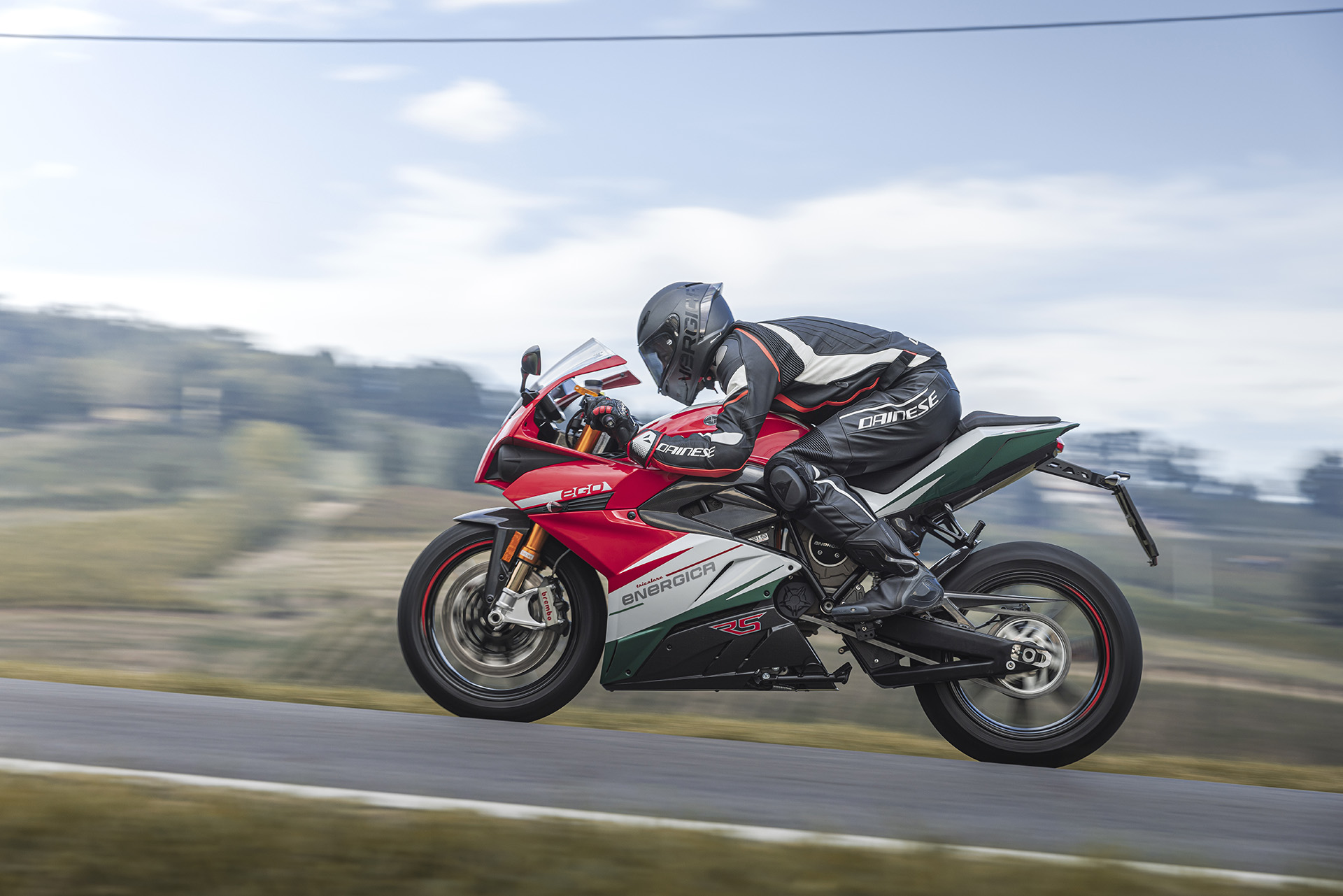
That discipline translated into production motorcycles defined less by novelty than by refinement. Range increased not simply through larger battery packs, but through efficiency gains at speed. Power delivery became smoother, more predictable. Fast-charging capability evolved alongside real-world usability. Energica’s road machines carried a sense of having been tested somewhere that did not forgive mistakes.
Yet racing pedigree does not insulate a manufacturer from economics.
In recent years, Energica has faced financial strain, including restructuring efforts and insolvency proceedings within its parent structure. Production continuity has become uncertain. What once appeared to be one of the most technically mature electric motorcycle programs now stands at a crossroads.
Still, Energica’s influence remains visible. It proved that electric motorcycles could endure sustained competition at the highest level. It demonstrated that performance and electrification were not opposing ideas. And it showed that credibility in this category is earned not through projection, but through repetition under pressure.
Energica’s legacy may ultimately be measured less in units sold than in what it normalized: electric motorcycles at speed, on real circuits, under real scrutiny.
“Racing didn’t make Energica louder.
It made it smarter.”
Maeving
Small Scale, Human Scale
Maeving builds electric motorcycles as if the city were the brief — not the afterthought. Its machines feel intentionally unhurried, shaped less by performance benchmarks than by the realities of short rides, frequent stops, and places where space is shared rather than conquered.
Founded in the UK by William Stirrup and Tarun Mehta, Maeving emerged from backgrounds in engineering, design, and urban mobility rather than traditional motorcycle culture. From the outset, the company resisted the temptation to frame electrification as reinvention. Instead, it focused on friction — how little of it could be left between rider and routine use.
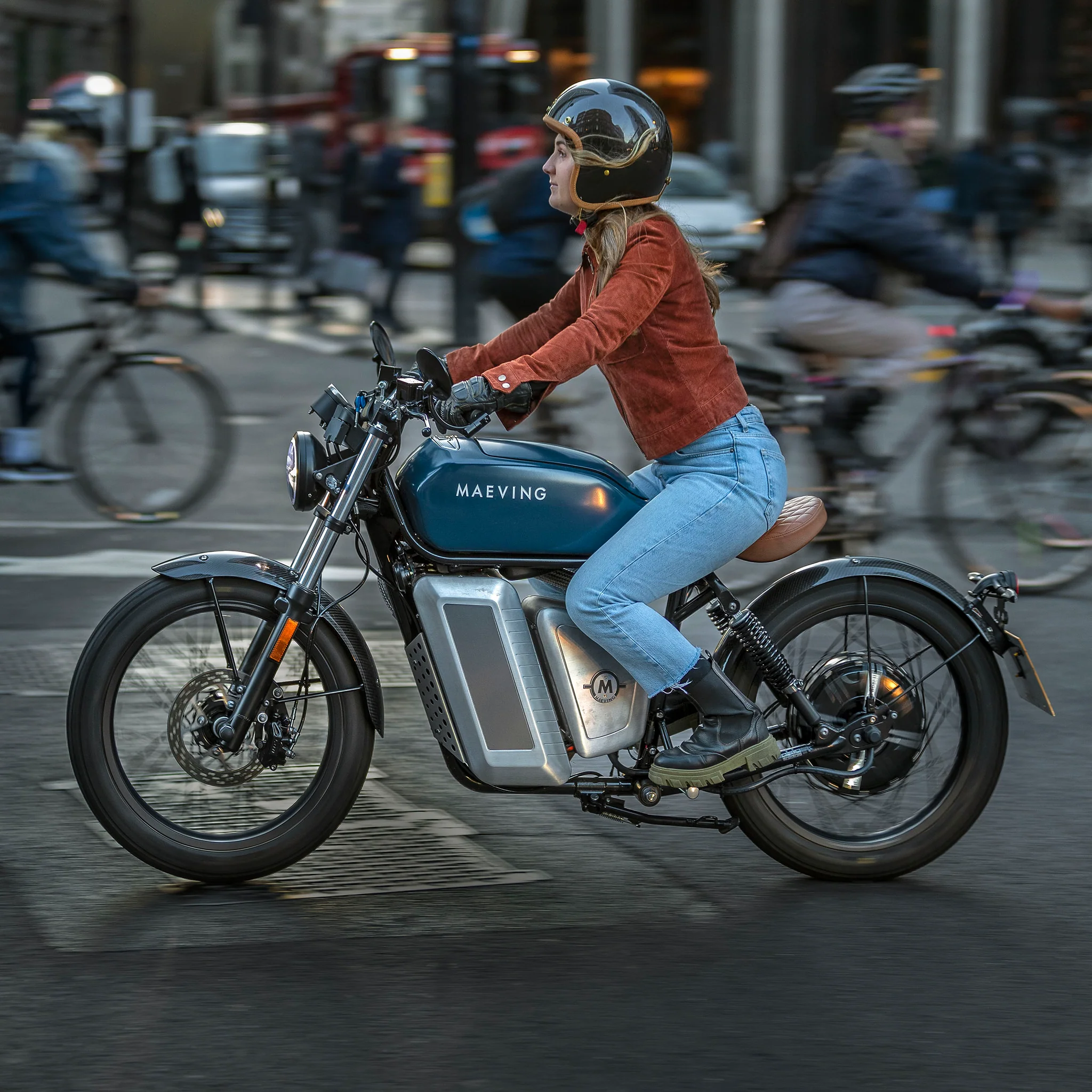
The RM1’s removable batteries were not conceived as a technical flourish, but as a social solution. Charging infrastructure, Maeving understood early, is uneven and often unavailable to riders living in dense cities. By allowing batteries to be carried indoors and charged from ordinary sockets, the company prioritized access over abstraction.
Range improvements arrived incrementally through battery refinement and energy management, but Maeving resisted altering the bike’s intent. The motorcycles remain light, narrow, and deliberately modest in output — tuned for repeat use rather than occasional extremes. In this context, restraint becomes a form of reliability.
Maeving’s decision to sell direct and service remotely followed the same logic. By bypassing traditional dealership structures, the company kept scale manageable and feedback immediate. Growth, in Maeving’s world, is something to be earned slowly, not assumed.
What Maeving offers is not a vision of the electric future at large, but a clear proposal for one kind of life within it: short distances, frequent rides, and machines that ask little in return. In an industry often preoccupied with what comes next, Maeving remains focused on what works now.
Lightning Motorcycles
The Record as Business Plan
Lightning is the outlier that refuses to behave like a lifestyle brand. Where others lead with aesthetics, community, or futurism, Lightning leads with a number. The LS-218 is named not for a design language or aspiration, but for a result — a top speed recorded on pavement, measured, verified, and repeatable.
The company was founded by Richard Hatfield, whose background in engineering and motorsport shaped Lightning’s singular focus. From the outset, Hatfield positioned the LS-218 not as a concept of what electric motorcycles might become, but as evidence of what they could already do. Records at Pikes Peak and Bonneville were not marketing flourishes; they were the business case.
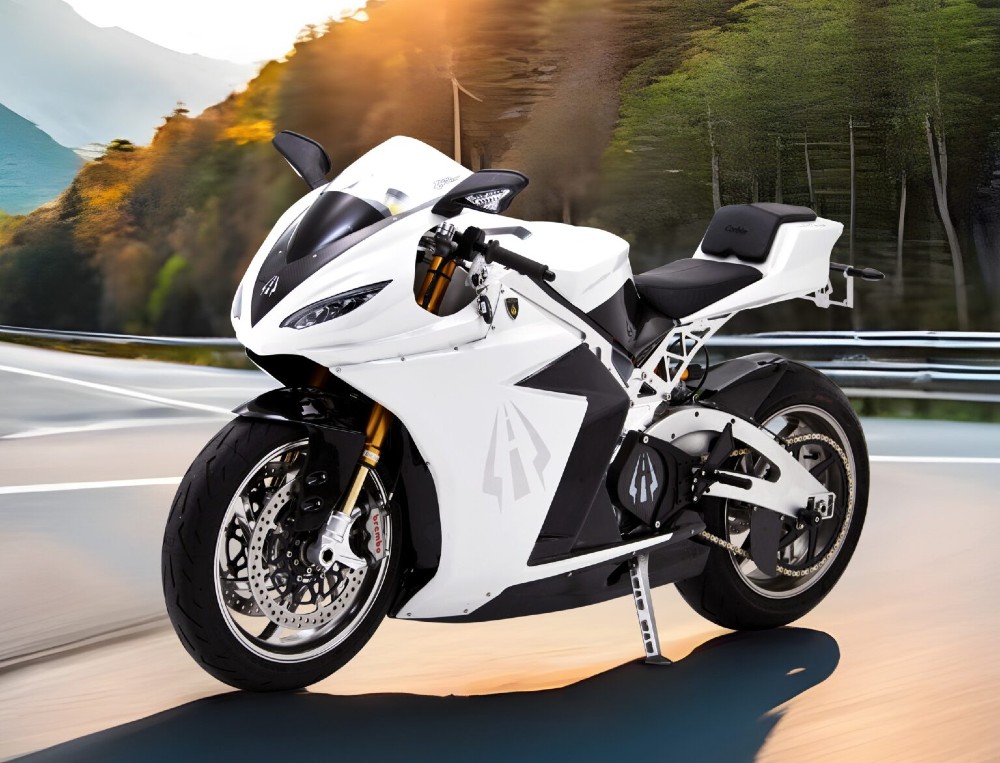
The LS-218 exists in small numbers, built in limited runs, closer in spirit to a race program than a consumer product line. Its production footprint is narrow, its ownership circle small, and its support model unapologetically niche. But that scarcity is part of the point. Lightning never set out to scale in the conventional sense. It set out to remove doubt.
By organizing the company around outright performance — sustained speed, acceleration under load, and competitive racing results — Lightning forced an uncomfortable recalibration. It demonstrated that electric propulsion was not merely efficient or responsible, but capable of operating at the outer edges of motorcycle performance.
Lightning’s significance lies less in how many bikes it builds than in what it made impossible to ignore. Once the LS-218 existed, “electric” could no longer be shorthand for compromise. The category had crossed a threshold — and it did so at full throttle.
KTM
Electrification, the KTM Way
KTM’s approach to electric motorcycles has been pragmatic rather than theatrical. The company did not arrive at electrification through manifesto or disruption rhetoric, but through terrain — places where torque delivery, controllability, and silence matter more than outright speed.
The Freeride E-XC remains the clearest expression of that philosophy. It does not pretend to replace combustion across the board. Instead, it occupies a specific and well-considered space: tight trails, controlled environments, and skill-driven riding where electric power’s immediacy becomes an advantage rather than a compromise.
But the Freeride was not an isolated experiment.
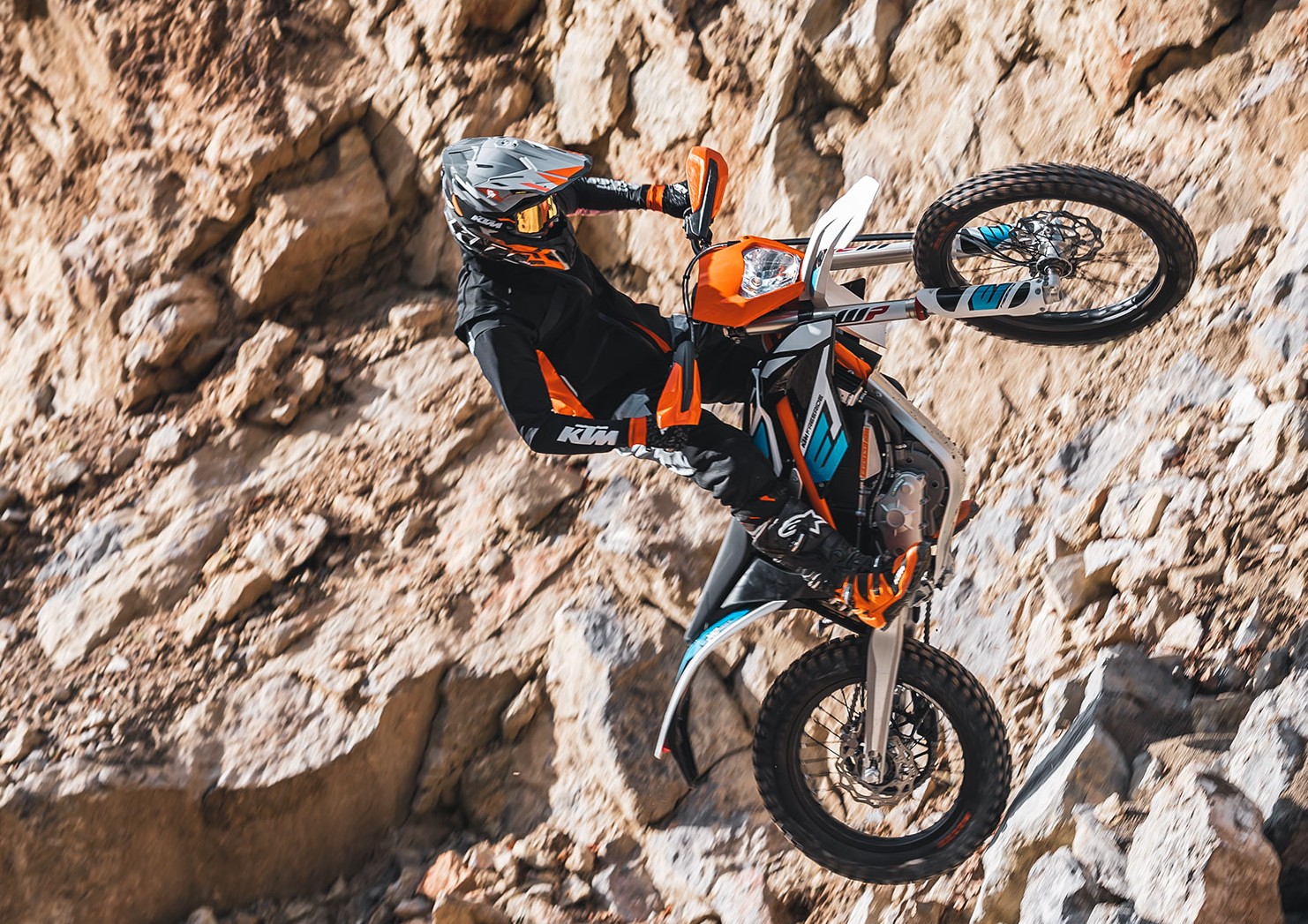
Long before electric road bikes entered serious discussion, KTM had been refining battery-powered platforms across its off-road and youth programs. Models such as the SX-E and Mini E-XC quietly introduced electric riding to younger riders and training environments — contexts where noise restrictions, maintenance simplicity, and controllable power delivery mattered more than nostalgia. These bikes were not framed as the future. They were framed as tools.
That framing persists. KTM’s electric development has been guided less by executive vision statements than by feedback from riders, race teams, and engineers working in real conditions. Battery updates extended usable ride time, but the company resisted adding mass simply to chase numbers. Weight, as always in KTM’s world, remained non-negotiable.
In this sense, KTM’s electric motorcycles feel less like departures than continuations. They carry forward the brand’s long-standing priorities — agility, precision, and rider involvement — while allowing electrification to enter where it makes sense, and stay out where it does not.
KTM has not promised a fully electric takeover. It has done something quieter, and arguably harder: it has integrated electric power where riding, not ideology, demanded it.
Kawasaki
Bridging, Not Leaping
Kawasaki approaches electrification the way it has always approached engineering: deliberately, with an eye toward longevity rather than immediacy.
As of today, Kawasaki’s fully electric presence is tangible but intentionally restrained. The Ninja e-1 and Z e-1 are in production and available in select markets, positioned as practical urban motorcycles rather than statements of technological bravado. Their role is not to compete directly with Zero’s mature electric platforms or LiveWire’s lifestyle-driven urban machines, but to establish a baseline — electric motorcycles built with the same manufacturing discipline as Kawasaki’s combustion lineup.
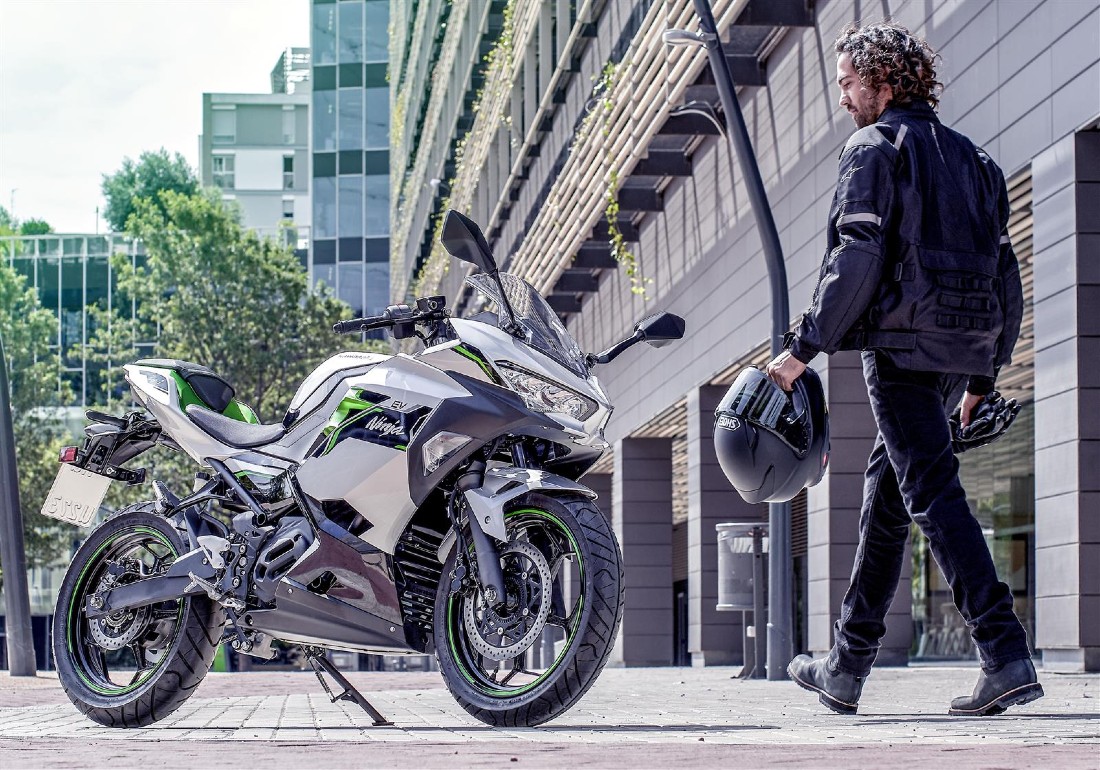
Where Zero committed early and refined relentlessly, and where LiveWire broke away to invent a new identity, Kawasaki chose a third path: continuity. Its electric motorcycles are designed to feel familiar, serviceable, and conservative by design — an invitation to riders who might otherwise resist electrification altogether.
This posture extends beyond current models. Kawasaki has publicly outlined a long-term roadmap that includes additional battery-electric motorcycles, hybrid systems, and parallel development of internal combustion engines. Rather than declaring a single future, the company is hedging across several — allowing infrastructure, regulation, and rider expectations to evolve before forcing a conclusion.
Kawasaki’s electric program reflects a belief that electrification will not replace motorcycling, but reshape it gradually. In a landscape often defined by disruption narratives, Kawasaki remains committed to something older and arguably more difficult: stewardship.
Cake
Designed Like Architecture
Cake’s motorcycles feel less like products than arguments made visible. Light, spare, and almost diagrammatic in form, they reject the assumption that motorcycles must perform theatrically. There is little ornament here — only structure.
Founded in Stockholm by Stefan Ytterborn, formerly CEO of POC Sports, Cake emerged from a background steeped in safety equipment and industrial clarity. Ytterborn’s experience in protective design — where material choice, weight, and form serve function before fashion — shaped the company’s philosophy from the outset. Cake did not attempt to electrify an existing motorcycle template. It started from a blank page.
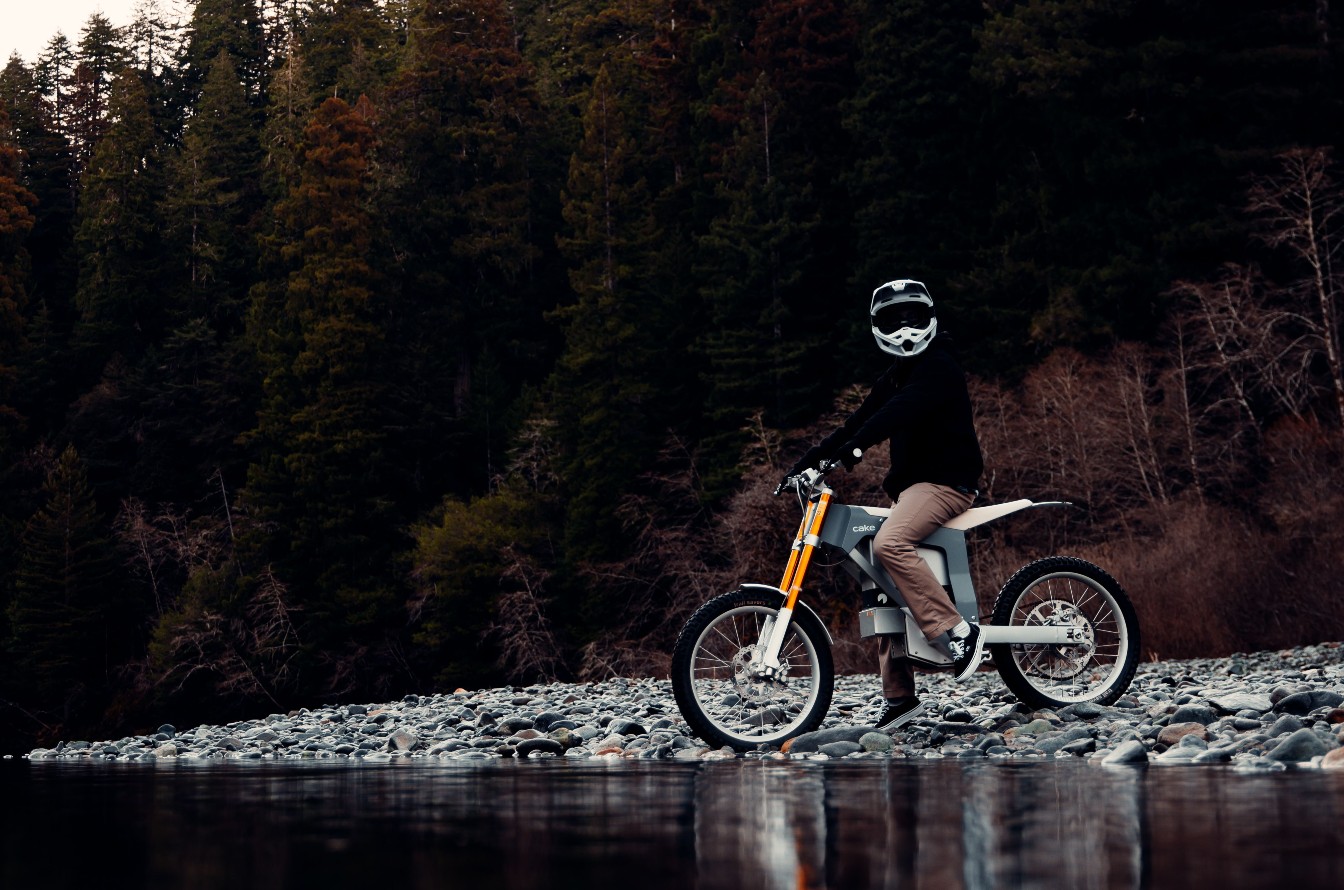
The result was a machine that prioritized mass reduction over brute capacity. Rather than chasing range through larger battery packs, Cake focused on efficiency, torque delivery, and control. Less weight meant less demand. Less demand meant smaller batteries. Smaller batteries meant agility preserved. It was an approach that treated energy not as spectacle, but as finite material.
The Kalk OR embodies this thinking. It is narrow, purposeful, and quiet — built for terrain where noise matters as much as traction. In certain contexts, electric power is not simply an alternative to combustion; it is an advantage. Cake leaned into that reality without promising universality.
Production, like the motorcycles themselves, remained intentionally limited. Cake’s ambitions were design-led rather than scale-led. That posture, while admired, has also placed the company in a precarious position as the economics of small-volume electric manufacturing have tightened. In recent years, Cake has faced restructuring and financial strain — a reminder that elegance does not exempt a builder from the gravity of capital.
Still, Cake’s contribution endures. It demonstrated that electric motorcycles could be distilled rather than embellished — reduced to essential lines, essential weight, essential purpose. In doing so, it widened the visual and philosophical vocabulary of the category.
“Cake treats energy the way good design treats space —
nothing wasted.”
NIU Technologies
Scale as Stability
NIU does not announce itself loudly. It rarely needs to. While much of electric motorcycling has been shaped by aspiration and edge cases, NIU approached the problem from the opposite direction: volume, durability, and everyday use.
Founded in 2014 by Li Yan and a team with backgrounds in technology and industrial manufacturing, NIU treated electric mobility not as a lifestyle statement but as infrastructure. Their early success came not from motorcycles at all, but from electric scooters deployed at scale across dense urban environments — places where reliability, battery longevity, and predictable performance matter more than top speed or silhouette.
That perspective shaped everything that followed. NIU’s battery strategy prioritized longevity and modularity over outright capacity, focusing on cells that could be swapped, monitored, and aged predictably. Range improvements arrived quietly through chemistry updates, power management, and software refinement — not through radical redesigns or inflated claims.
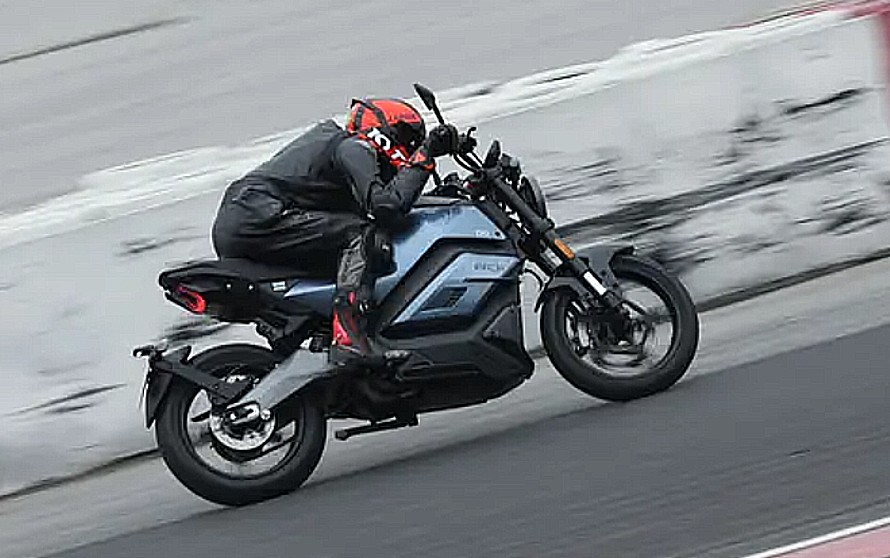
The RQi-Sport reflects that lineage. It does not attempt to redefine what an electric motorcycle should feel like. Instead, it adapts NIU’s hard-earned lessons in scale to a larger format: practical range, connected systems designed for maintenance rather than novelty, and a machine meant to live in cities where electric transport is already normalized.
NIU’s significance lies less in any single model than in what the company represents. It is proof that electric motorcycling does not have to begin at the margins. It can emerge from repetition, logistics, and restraint — built not to impress, but to endure.
“NIU doesn’t sell the future.
It manufactures the present.”
Post Production – When Promise Waits
In electric motorcycling, ideas often arrive before infrastructure. Prototypes appear complete long before assembly begins.
These builders sit between announcement and ownership — their futures shaped as much by time and capital as by engineering.
Damon Motorcycles
Promise Under Load
Damon entered the electric motorcycle conversation with uncommon visibility. The HyperSport arrived not quietly, but fully formed in imagery and ambition — a low, aerodynamic silhouette paired with claims of long range, extreme performance, and a technology stack intended to redefine rider safety. It was, from the outset, a future-facing proposition.
The company was founded in Vancouver by Jay GirEICMA: Where the Motorcycle World Comes Togetheraud, whose background spans electric mobility, automotive software, and advanced sensing systems. Damon’s stated objective was not merely to electrify a motorcycle, but to reimagine it as an adaptive platform — one that could alter ergonomics on the fly and extend rider awareness through its CoPilot safety system. In concept, it was compelling.
What Damon has not yet done is deliver a production motorcycle to customers.
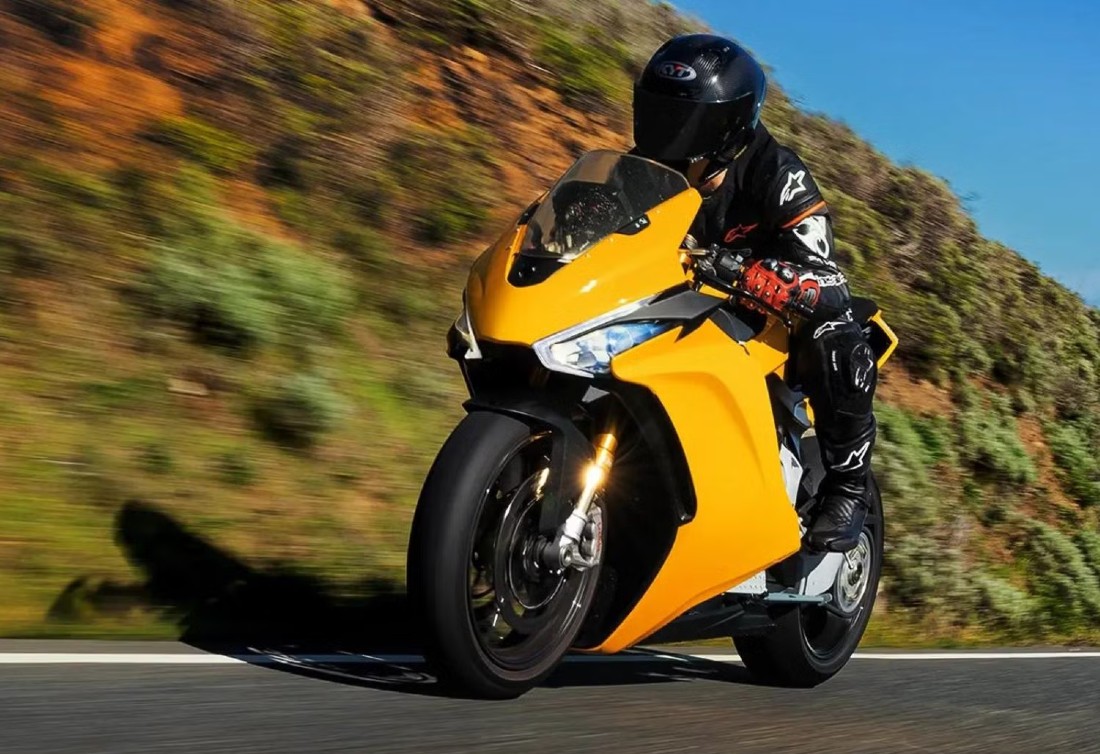
Public communications and investor materials have repeatedly pointed to revised production timelines, with 2026 most recently cited as a target for initial deliveries. Independent reporting and industry observation, however, have consistently noted the gap between prototype demonstrations and the realities of manufacturing at scale. As of now, Damon remains in a pre-production state, its technology demonstrated but not yet proven on public roads.
This does not render the project irrelevant. On the contrary, Damon illustrates a recurring truth in electric motorcycling: ideas often mature faster than factories. Aerodynamics can be modeled, software can be simulated, and press launches can be staged — but building motorcycles is capital-intensive, logistically complex, and unforgiving of delay.
In this light, Damon functions less as a cautionary tale than as a marker of friction. It shows where ambition meets gravity. Whether the HyperSport ultimately reaches production or not, the questions Damon raised — about safety, adaptability, and how much intelligence a motorcycle should carry — will not disappear. They will re-emerge elsewhere, refined by companies with the patience, capital, and time to carry them through.
Inactive Producers – When Vision Outruns the Factory
Not every builder survives the distance between prototype and permanence. Some leave behind machines. Others leave behind questions.
Johammer e-mobility
A Machine That Refused to Look Like One
The Johammer J1 arrived looking less like a motorcycle than a creature at rest. To our eye, its silhouette recalled the upper torso of a horse — forward-leaning, muscular, and self-contained. Where most motorcycles expose their mechanics like tendons, the J1 concealed everything beneath smooth, architectural bodywork. It did not appear engineered so much as sculpted.
Johammer’s ambition was total originality. The electric motor and controller were integrated into the rear wheel. The traditional instrument cluster vanished, replaced by circular rear-view mirrors that doubled as high-resolution displays. Information — speed, system warnings, battery status — hovered quietly at the rider’s periphery, as if the bike were communicating rather than broadcasting.
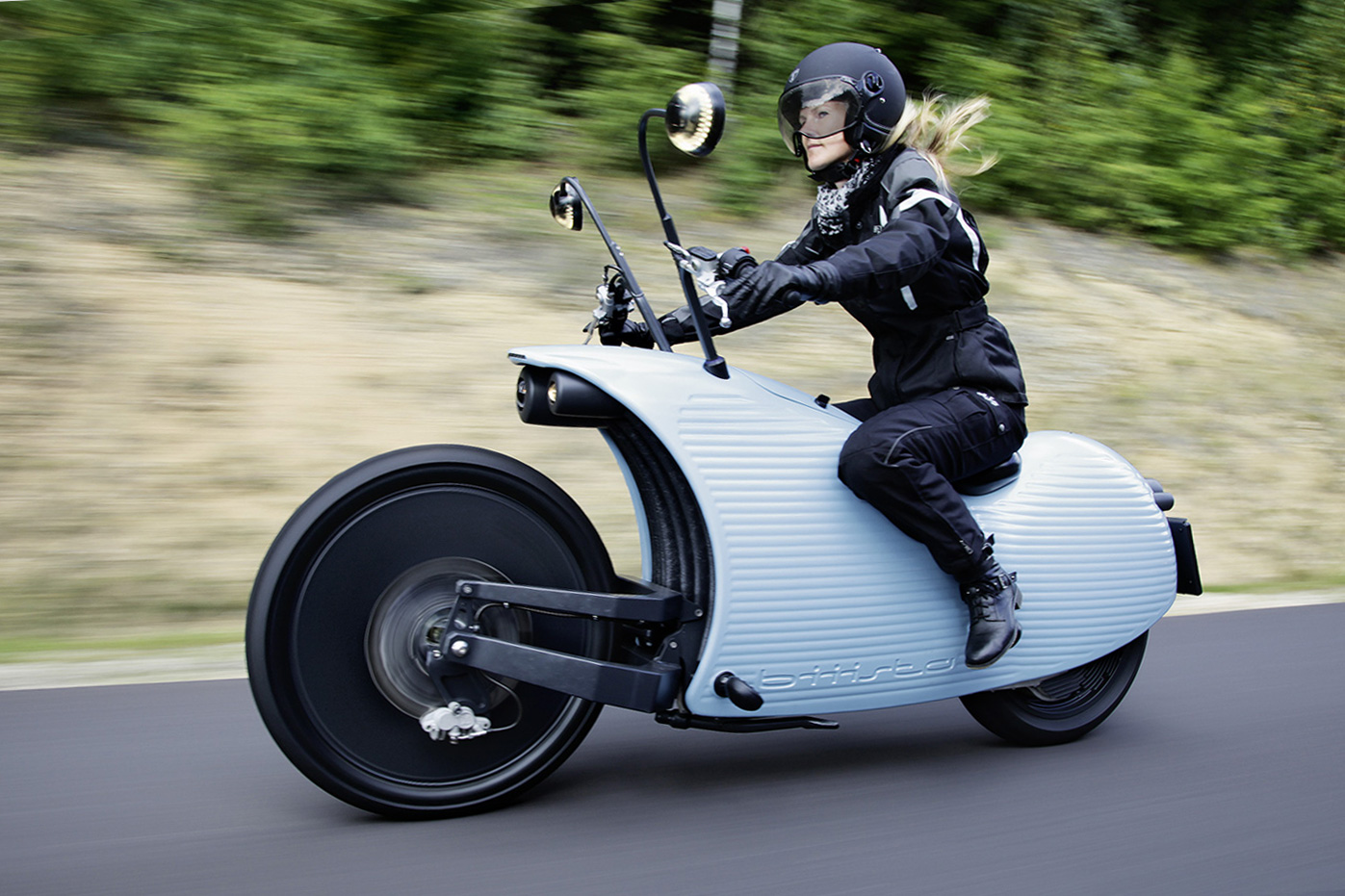
On paper, the J1 promised practicality: modest but sufficient power, a claimed range approaching 200 kilometers, and a sealed drivetrain intended to minimize maintenance. Charging times were reasonable for its era. The weight, though substantial, felt almost deliberate — a byproduct of enclosure and solidity rather than excess.
But the J1 was always more manifesto than marketplace.
Production remained extremely limited. Distribution never matured. As of publication, Johammer’s official website is inactive, and attempts to contact the company directly have gone unanswered. There have been no confirmed production updates or public communications in recent years. While no formal closure has been announced, Johammer no longer appears to be operating as an active motorcycle manufacturer.
What remains are early machines, scattered across Europe, and the memory of something that dared to ask whether an electric motorcycle could feel less mechanical — and more alive.
Johammer did not lack imagination.
It may have simply arrived ahead of the world it needed.
“Not every future survives long enough to be manufactured.
Some exist only long enough to change the conversation.”
Arc Vector
When Craft Outpaced Capital
The Arc Vector was conceived as the electric motorcycle elevated to artifact. Carbon fiber structures, bespoke components, sculptural surfaces — everything about it suggested rarity rather than access. This was not a commuter. It was a statement.
Arc’s engineers rejected legacy platforms entirely, developing a modular battery monocoque that treated structure and energy storage as one unified system. The Vector was to be handcrafted in the United Kingdom under what the company described as the “Arc code,” emphasizing sustainability, advanced materials, and ethical production.
A small number of motorcycles were completed.
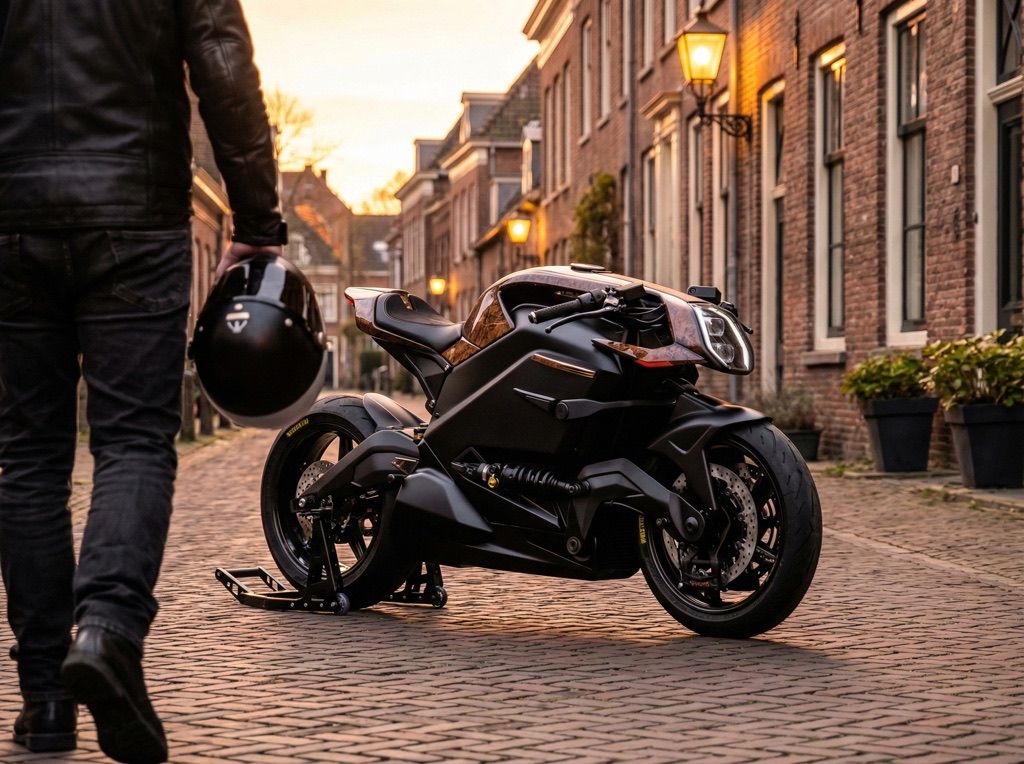
In March 2024, Arc Vehicle Ltd. entered voluntary liquidation in the United Kingdom. Fewer than a dozen Vectors are believed to have reached customers before insolvency. There has been no confirmed resumption of production.
Arc’s legacy now exists in fragments — in press images, in a handful of completed machines, and in the influence it exerted on how electric motorcycles might be constructed when freed from scale. The Vector demonstrated how far design and materials could be pushed. It also demonstrated how narrow the margin becomes when ambition runs ahead of capital.
Arc did not disappear quietly.
It left behind a clear message: the future may be electric, but it is still bound by gravity.