Olga Kevelos: The Woman Who Found Freedom on Two Wheels
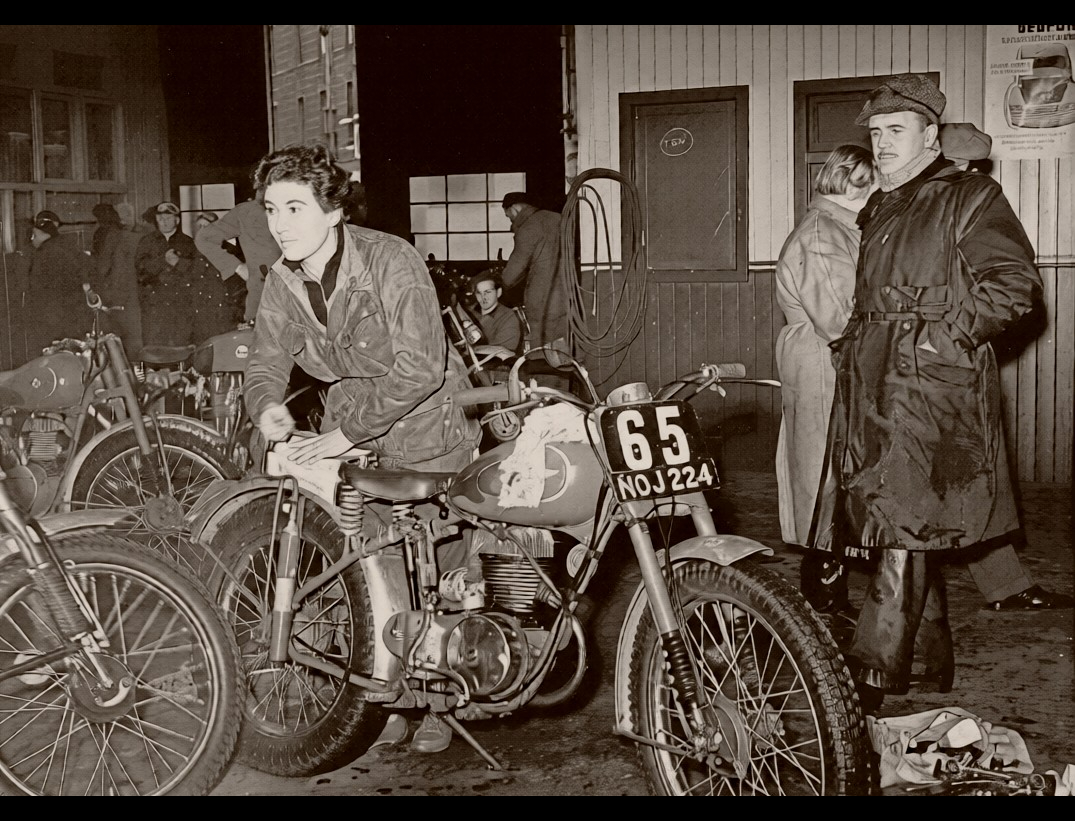
Born in Birmingham in 1923, Olga Kevelos lived a life shaped by endurance and independence. Best known as the only woman to win two gold medals at the International Six Days Trial, she built her reputation quietly—through long-distance reliability events, sustained competitiveness, and an unyielding commitment to riding on her own terms in an era that offered little space for women in motorsport.
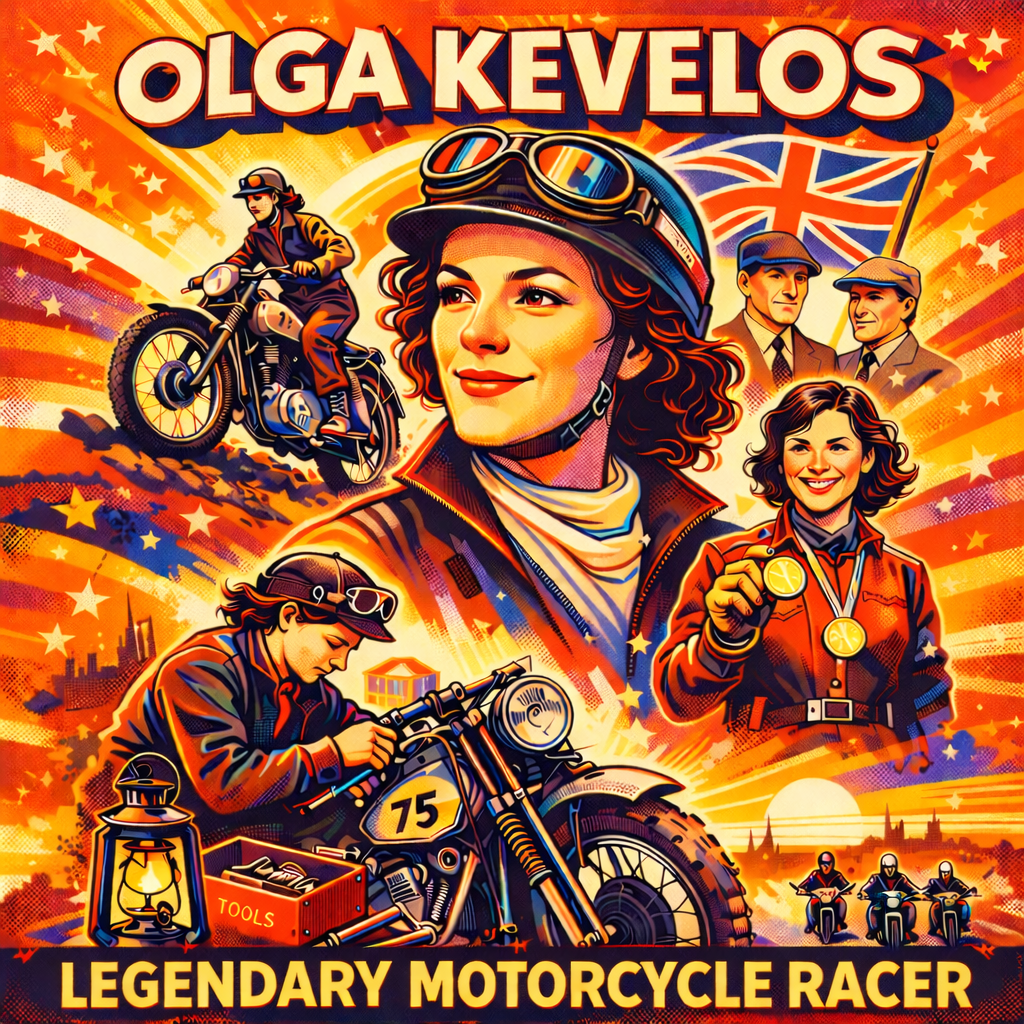
On race mornings, she preferred calm. While engines warmed and riders prepared themselves with visible tension, she was known for sitting quietly beside her motorcycle, helmet resting on the tank. Trials riding, she believed, demanded composure before movement.
“Once you start thinking about what might go wrong,” she once said, “you’ve already lost your balance.”
It was a view formed not through confidence alone, but through experience.
Early Life and Education
Olga Valerie Kevelos was born in Edgbaston, Birmingham, on 6 November 1923, the daughter of a Greek financier and his English wife. She grew up in a comfortable, middle-class household where education was taken seriously and curiosity was encouraged, even if independence was not always expected.
She attended King Edward VI High School for Girls, where she distinguished herself academically and displayed an early inclination toward competition and organisation. Her tendency to test boundaries surfaced early; she was once reprimanded for organising an unauthorised roller-skating race in the school hall, an episode remembered less for its outcome than for her willingness to initiate it.
After leaving school she studied metallurgy, and with Britain at war took work in the laboratories of William Mills, manufacturer of the Mills bomb. The work offered hands-on experience in industrial research, but years later she reflected on the period more broadly, acknowledging that the upheaval of wartime Britain had given her a freedom she might not otherwise have found.
Astronomy, however, remained her first intellectual passion. She moved to London to take up a position at the Royal Observatory in Greenwich, only for enemy bombing to force its closure shortly after her arrival. Evacuated with other staff to the Admiralty in Bath, she found herself assigned to largely clerical duties. There was little observation and a great deal of paperwork, a routine she found deeply unsatisfying.
Wartime Britain and the Canals
In 1943, at the age of nineteen, Kevelos responded to an advertisement placed in The Times by the Department for War Transport, calling for women to train for work on Britain’s inland waterways. She left the Admiralty and joined the Inland Waterways scheme, becoming one of a small group of female volunteers assigned to canal barges.
They became known as the “Idle Women”, a nickname derived from the IW initials on their badges. Officially, IW stood for Inland Waterways, but the name—coined by traditional canal families sceptical of the newcomers—stuck, despite bearing little resemblance to the reality of the work.
Kevelos later described the experience without embellishment:
“It was hard work with no respite at all. We worked an eighteen- to twenty-hour day, and nobody ever stopped.”
Unlike the better-known Land Girls, the Idle Women received no additional rations. Food was basic and scarce.
“We subsisted on cocoa with condensed milk, national loaf and peanut butter,” she recalled. “I was always hungry—all the time.”
Around forty-five women took charge of the canal boats, working in pairs of barges, each crewed by three women. After training, they navigated and maintained heavy vessels carrying aircraft components, machine parts, coal, and other strategic materials between London, the Midlands, and Warwickshire. Cargo was often disguised, with weapons—and occasionally gold—hidden beneath more innocent freight.
The work was physically demanding and could be disturbing. Kevelos encountered drowned infants in the canals, handled hazardous cargo, and worked through winters when boats became icebound. For someone raised in relative comfort, the canals offered an uncompromising education in responsibility, endurance, and manual labour.
Yet she later spoke of the camaraderie among the women and the satisfaction of being trusted with real responsibility. The canal years left her physically strong and mentally resilient, accustomed to sustained effort under pressure—qualities that would later define her approach to motorcycle competition.
Postwar Study and Independence
After the war, Kevelos was awarded a government grant in recognition of her wartime service. She spent a year in Paris studying French medieval history at the Cité University, cycling across the city and travelling widely through Europe at a time when independent travel was still uncommon.
She later described herself, with dry understatement, as:
“One of the first backpackers.”
On returning to Birmingham, she established her own travel agency, drawing on her language skills and practical knowledge of European routes. She also helped her family run the Cherry Orchard restaurant in the city centre, which brought her into regular contact with a wide range of people, including those involved in local motorsport circles.
Finding Motorcycles
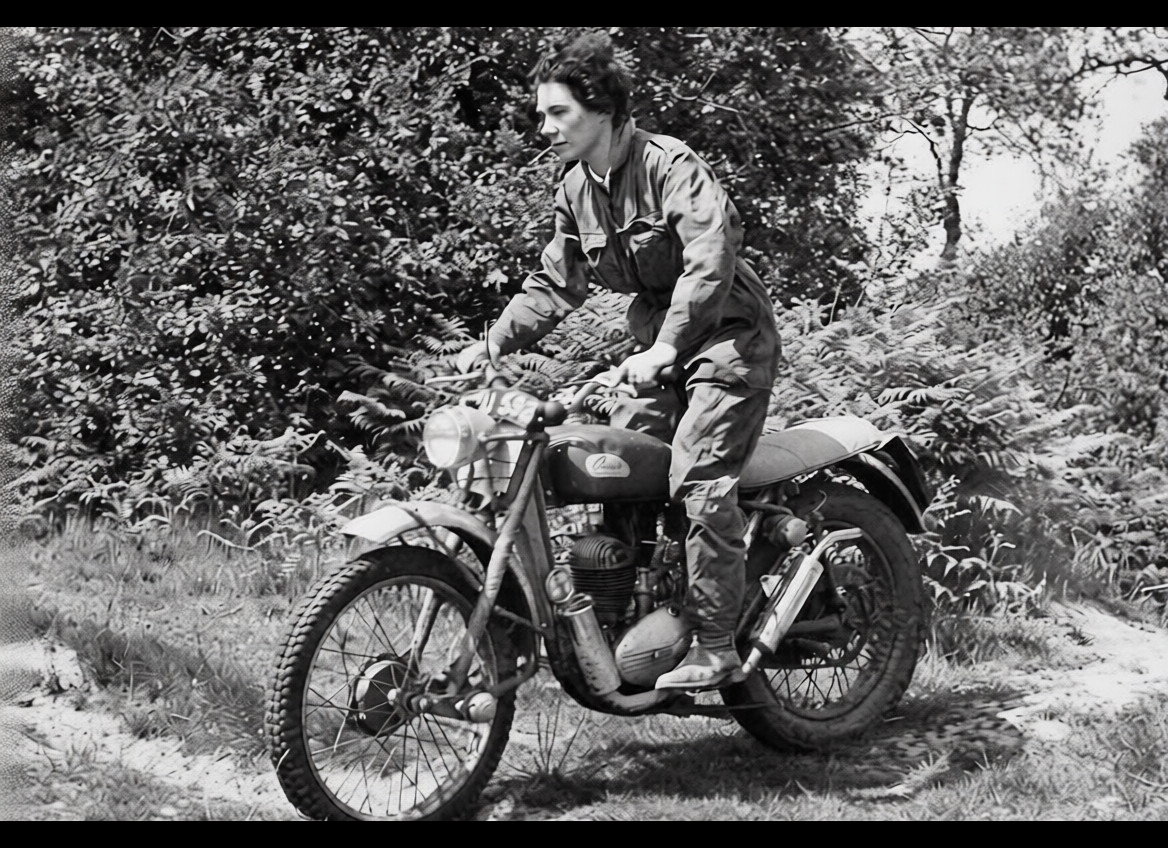
Kevelos did not set out to become a motorcycle competitor. She began riding for a simple, practical reason: her boyfriend at the time raced motorcycles at weekends, and she learned to ride so she could accompany him to events.
What surprised her was how quickly the motorcycle itself began to make sense. After only a few basic lessons, she realised she enjoyed riding—and that she was unexpectedly good at it. Balance came naturally, as did the quiet concentration the machine demanded. She later acknowledged that while the motivation to begin had been personal, the satisfaction of riding quickly became its own reward.
Seeing her confidence grow, her boyfriend encouraged her to take it more seriously. What had begun as accompaniment began to resemble competition. Others noticed it too. She rode calmly, without theatrics, precise where others were forceful.
She later described the essentials of riding simply:
“Balance, anticipation, concentration—and fearlessness.”
She was soon offered a motorcycle and support by the James Motorcycle Company, an unusually swift endorsement for a newcomer. The offer marked the point at which riding ceased to be incidental and became central to her life.
International Motorcycle Competition
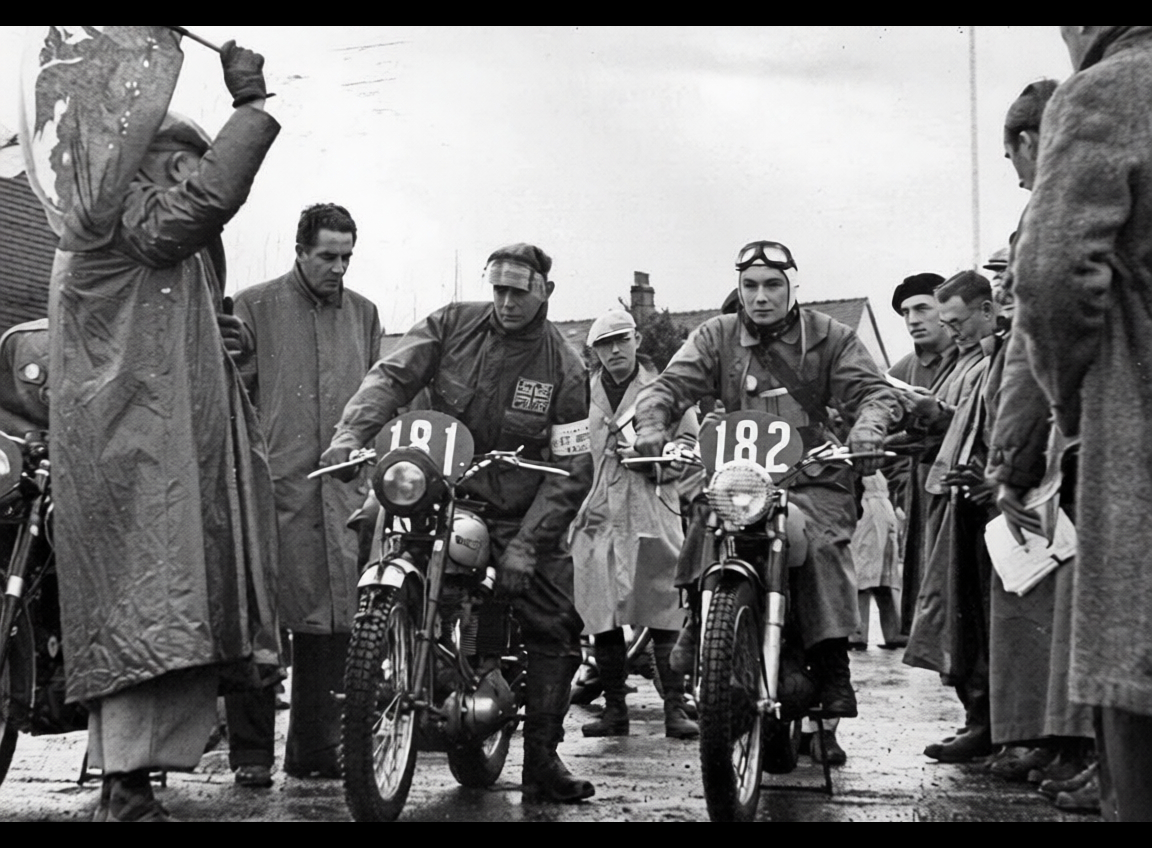
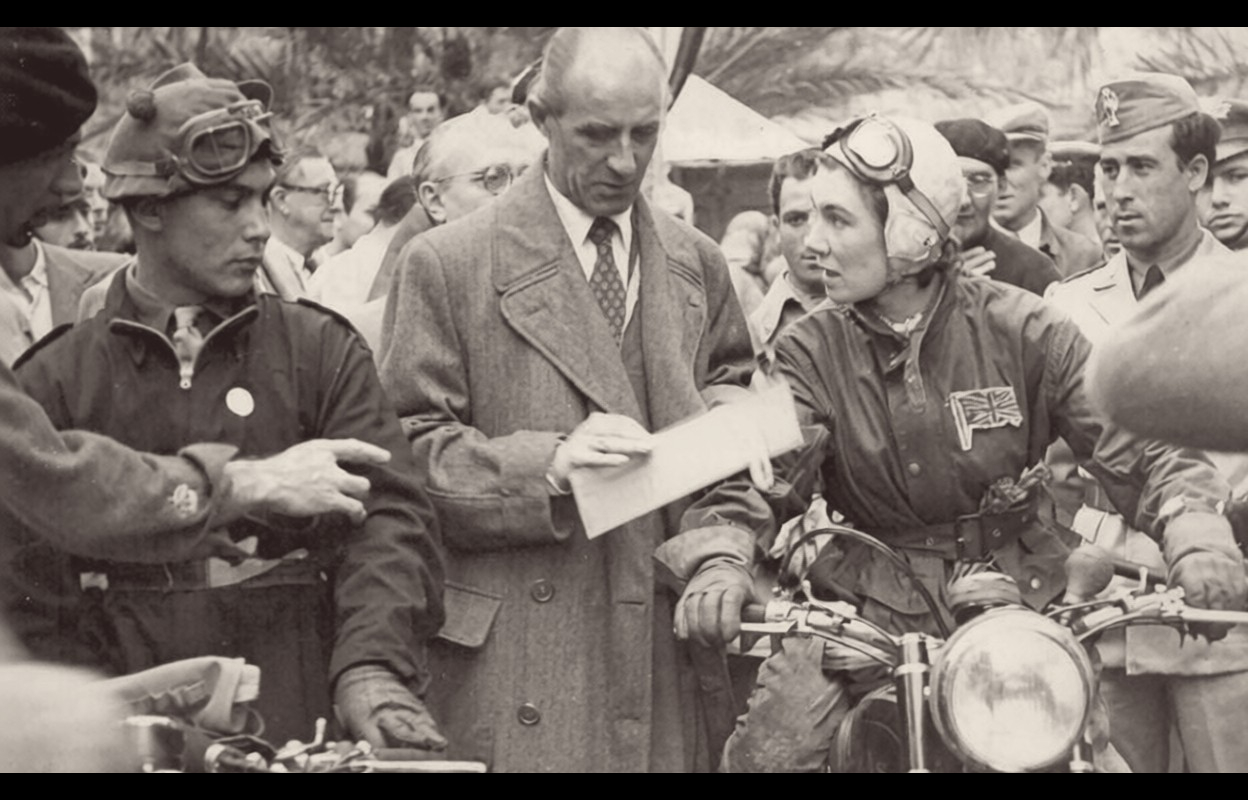
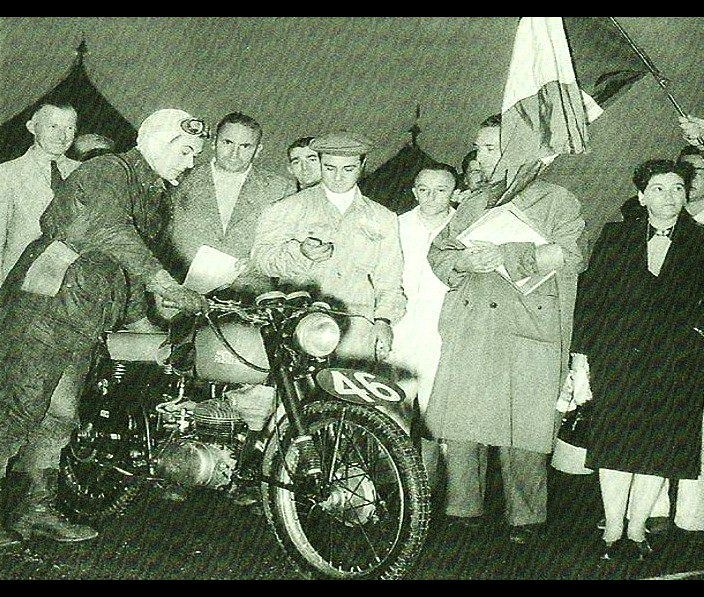
In 1948, Kevelos rode from Britain to San Remo, Italy, to compete in her first International Six Days Trial. During the event she crashed heavily, breaking both her wrist and ankle. She completed the trial regardless, then rode the motorcycle back to Britain with both limbs still in plaster—an episode that quickly became part of trials lore.
Looking back, she treated the incident without drama.
“You fix what you can,” she said, “and you ride again.”
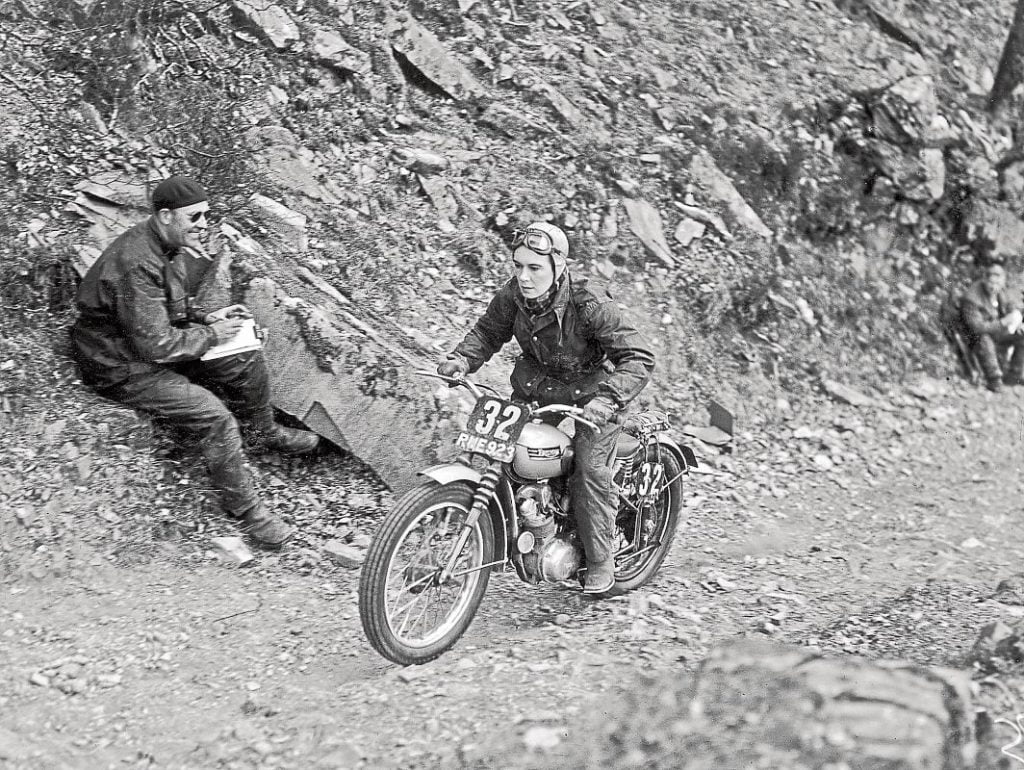
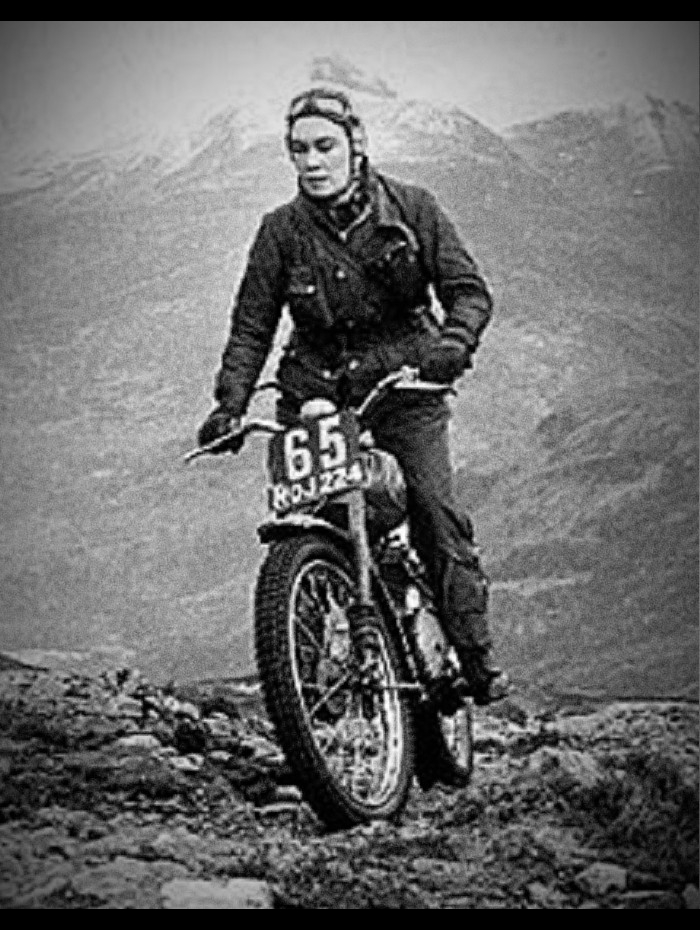
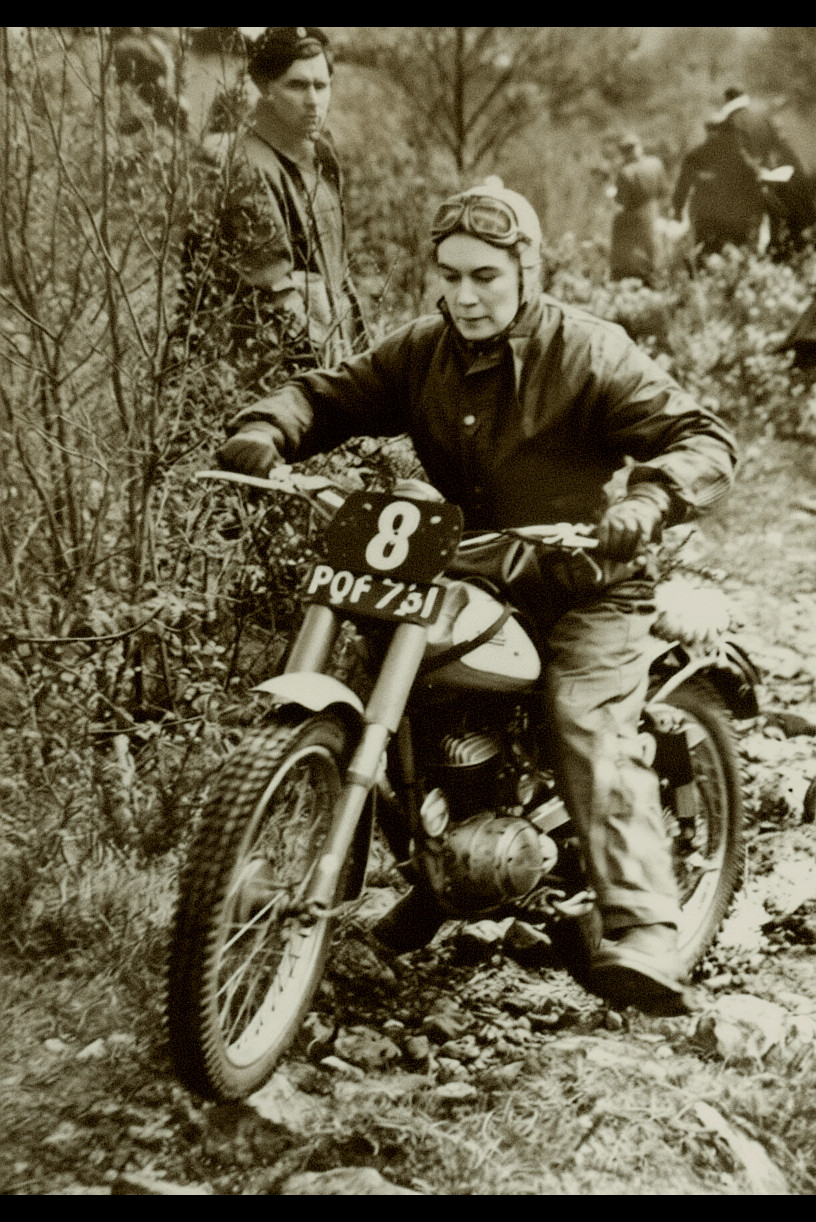
The following year marked a turning point. Despite the previous year’s accident. Kevelos returned riding a 500cc Norton, and won her first International Six Days Trial gold medal in Wales. It was a decisive achievement, earned in an event widely regarded as the most demanding in motorcycling—six consecutive days of long-distance riding over severe terrain, with riders responsible for maintaining and repairing their own machines.
She went on to win a second gold medal in the International Six Days Trial, an accomplishment that placed her in a category of her own. Her two gold medals remain unmatched by any other woman in the history of the event.
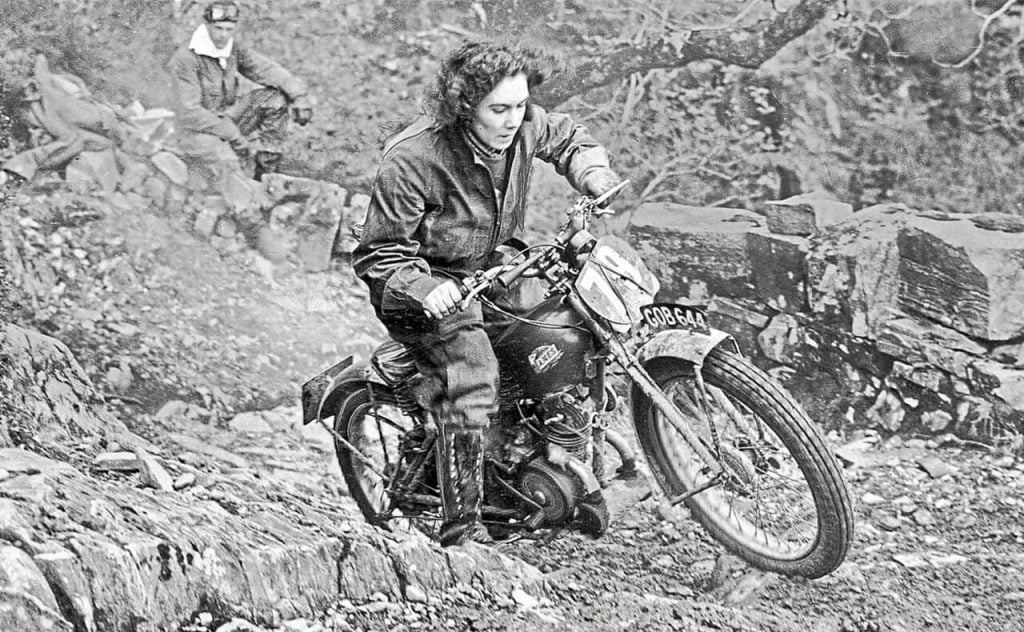
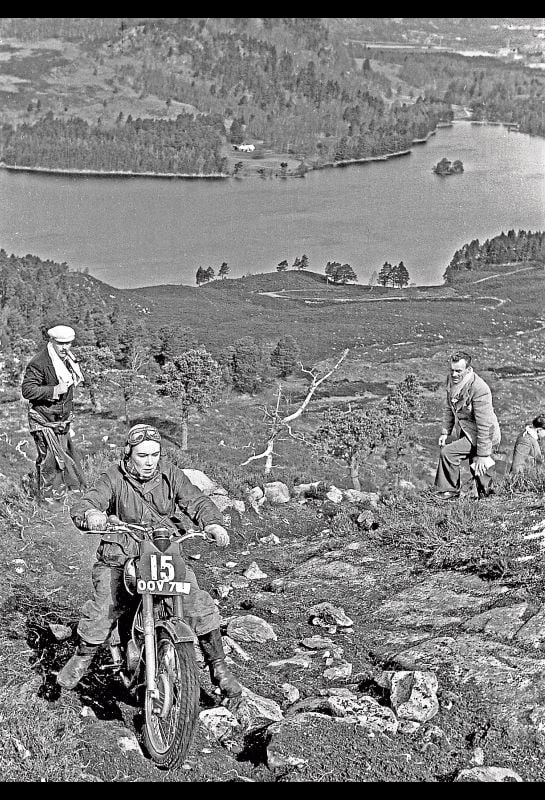
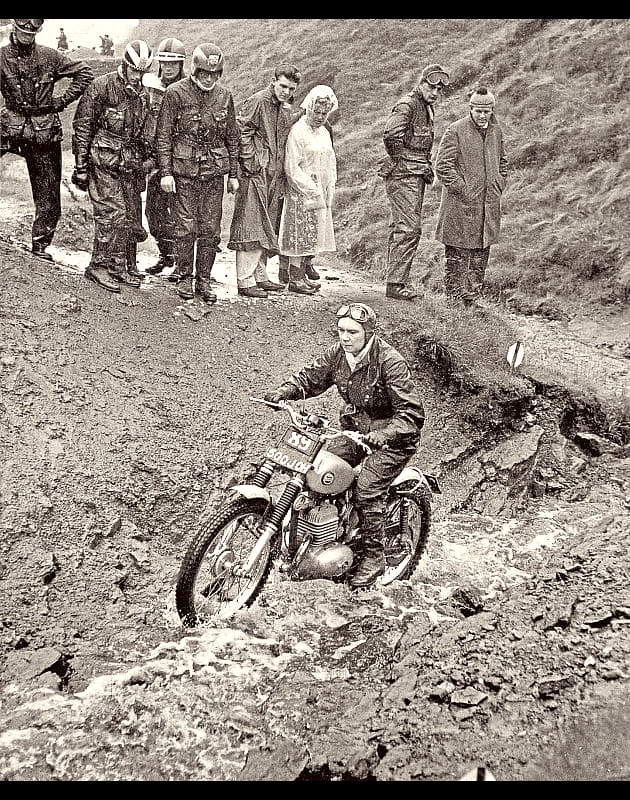
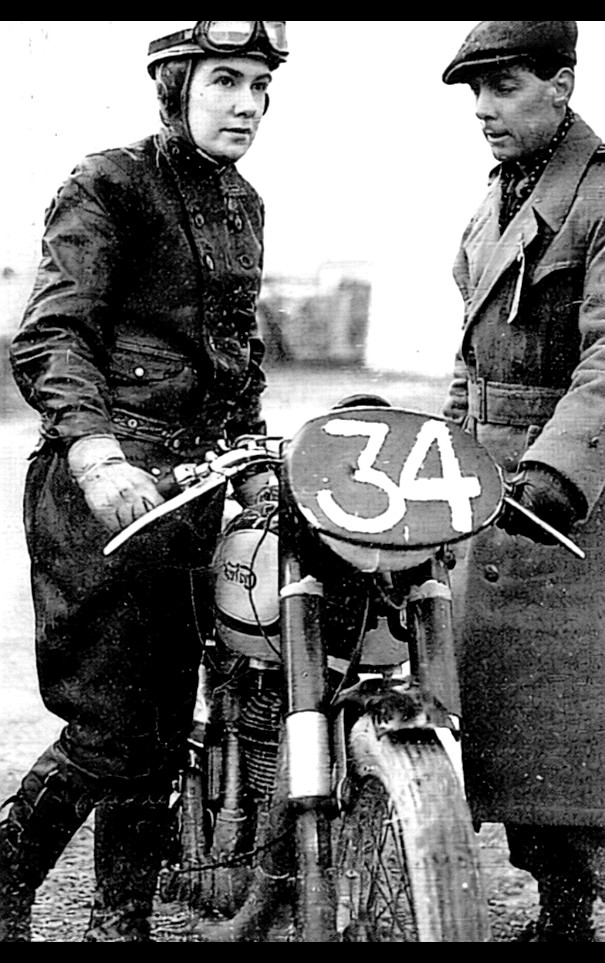
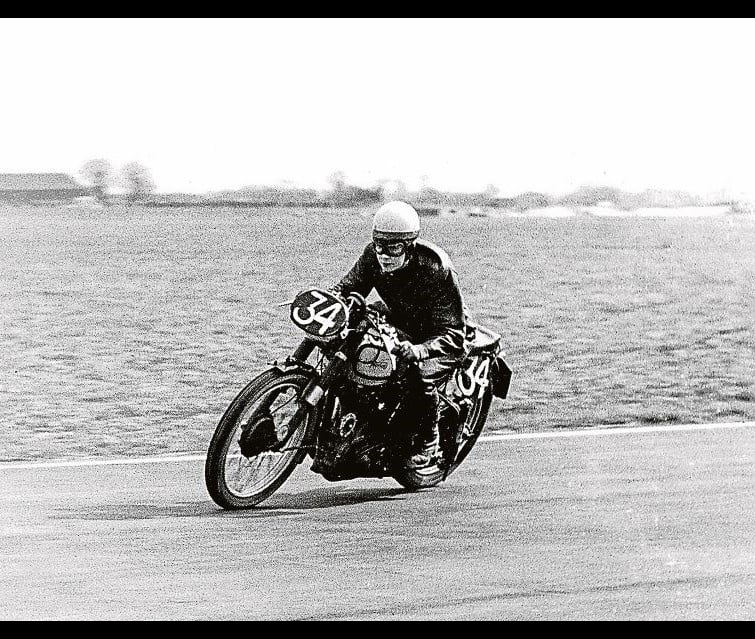
From 1949 until 1966, Kevelos competed in every International Six Days Trial, an extraordinary span in a competition defined by attrition. She also rode regularly in the Scottish Six Days Trial, returning year after year to events that tested balance, judgement, and endurance rather than outright speed.
During this period she rode for nearly every major British trials manufacturer, as well as Italian and Czech firms including Parilla and Jawa/CZ. Her riding took her across Europe and behind the Iron Curtain, to countries including Poland, Czechoslovakia, Russia, and East Germany, where competition unfolded under conditions far removed from the British club scene.
Her career was marked by resilience as much as results. At an International Six Days Trial at Lake Como, she drove her Italian Parilla motorcycle over a cliff, losing two teeth and destroying the bike. The following morning, an Italian newspaper ran the headline: “Olga has lost her smile.” She returned to competition regardless.
Fellow riders remembered her as calm and methodical, uninterested in spectacle. On one occasion during the Scottish Six Days Trial, a competitor came upon her stopped at the roadside. Nothing was wrong, she explained; she had simply paused to admire the view.
Racing on Four Wheels
Alongside her motorcycle career, Kevelos also competed in motor racing during the early 1950s. She drove Kieft Formula III cars at circuits including Brands Hatch and Thruxton, and raced machines designed by Rex McCandless, the engineer behind Norton’s influential Featherbed frame.
A surviving Pathe News film from 1950 provides the only known moving footage of this phase of her career. Contemporary commentary failed to note that she led the race from start to finish, losing only after being signalled by her pit crew to slow in order to protect the engine.
Although her car-racing career was brief, it reflected the same willingness to test herself that characterised her riding on two wheels.
Later Life and Community
Kevelos retired from motorcycle competition in 1970 and settled in King’s Sutton, Northamptonshire, where for twenty-six years she helped her younger brother Ray run the Three Tuns pub. She became a central figure in village life, known for her intelligence, dry humour, and formidable general knowledge.
She served as an active parish councillor, contributed to local publications, and remained deeply engaged in community affairs.
“When you’ve run a village pub,” she once remarked, “you know better than anybody what issues the community is most concerned about.”
In 1978, she appeared on the BBC’s Mastermind, specialising in Genghis Khan, and continued to compete seriously in quiz competitions for many years.
Decades after her racing career had ended, she attended a Foreign Office reception marking the Czech Republic’s accession to the European Union, where she met Prime Minister Tony Blair. The two discussed Genghis Khan. Afterwards, she commented:
“He probably wanted a few tips on how to invade other people’s countries successfully.”
What Endures
Those who knew Olga Kevelos in later life recalled a woman of firm conviction and mischievous humour, quick to laugh and uninterested in self-importance. She remained engaged with the world, shaped by experiences that ranged from wartime canals to international motorcycle competition, and retained a sympathy for people living under hardship long after her racing days were over.
She was an astronomer, an “Idle Woman”, a motorcycle racing champion, a car racer, a pub landlady, a parish councillor, and a quiz contestant. What connects these chapters is not notoriety, but a consistent refusal to be confined—by expectation, convention, or fear.In every muddy trial section, every canal lock, and every carefully chosen line through uncertainty, Olga Kevelos pursued something quieter than victory: the freedom to move under her own

The Daily Telegraph obituary (Requires Subscription)
A contemporary obituary reflecting on her achievements in British and international motorcycle competition.
The Independent obituary (Requires Subscription)
A wide-ranging account of Kevelos’s life, from wartime canal work to international trials competition.
Barbour’s tribute to Olga Kevelos
A local remembrance celebrating her life beyond racing and her enduring connection to community.
BBC Radio 4 — “Last Word” obituary
A broadcast reflection on her life and legacy, featuring voices from the worlds she moved between.
Olga Kevelos – “Idle Woman”, international motorcycle champion and pub landlady
Article is based on the eulogy for Olga Kevelos written by David Bridson and delivered by him at her funeral in November 2009