Mutt Motorcycles — A Name That Explained Everything
The name never tried to impress. It described exactly what the bikes were — assembled from different origins, shaped by intent rather than pedigree. For just over a decade, that was enough.
Birmingham, 2013
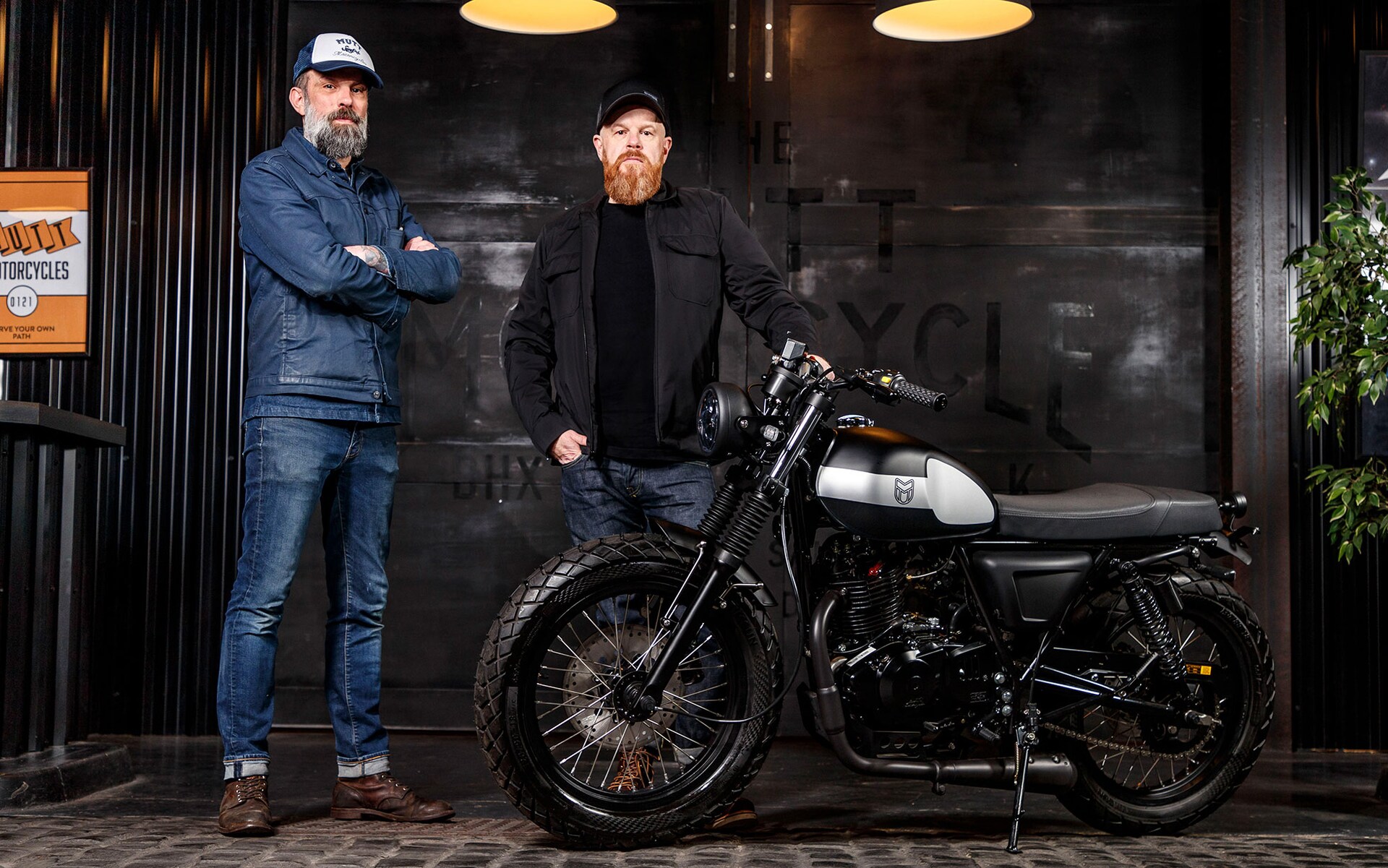
Mutt Motorcycles began in Birmingham in 2013, not as a conventional manufacturer, but as a small custom workshop building individual machines shaped by a specific visual language — British singles, flat-track influence, and the quiet utility of older motorcycles that carried their purpose without excess. When production followed, that language remained intact, even as the process moved beyond one-off builds into something repeatable. The motorcycles did not become more complex as a result; if anything, they became more deliberate.
The mechanical side was always pragmatic. Small-capacity engines — 125cc and 250cc — based on long-proven architecture, chosen less for innovation than for reliability and ease of use. Components were sourced globally, with final assembly and finishing reflecting the sensibility of the workshop rather than the scale of a factory. Nothing about this approach was disguised, and the name itself made that clear from the beginning. A “mutt” is not a pure breed. It is a mix — assembled rather than inherited, defined not by lineage but by how well its parts come together. There is a risk in naming something that way, a suggestion of compromise, but here it felt closer to accuracy than self-deprecation. The motorcycles were exactly that: a combination of known parts, familiar ideas, and a deliberate attempt to make them feel cohesive.
The Range
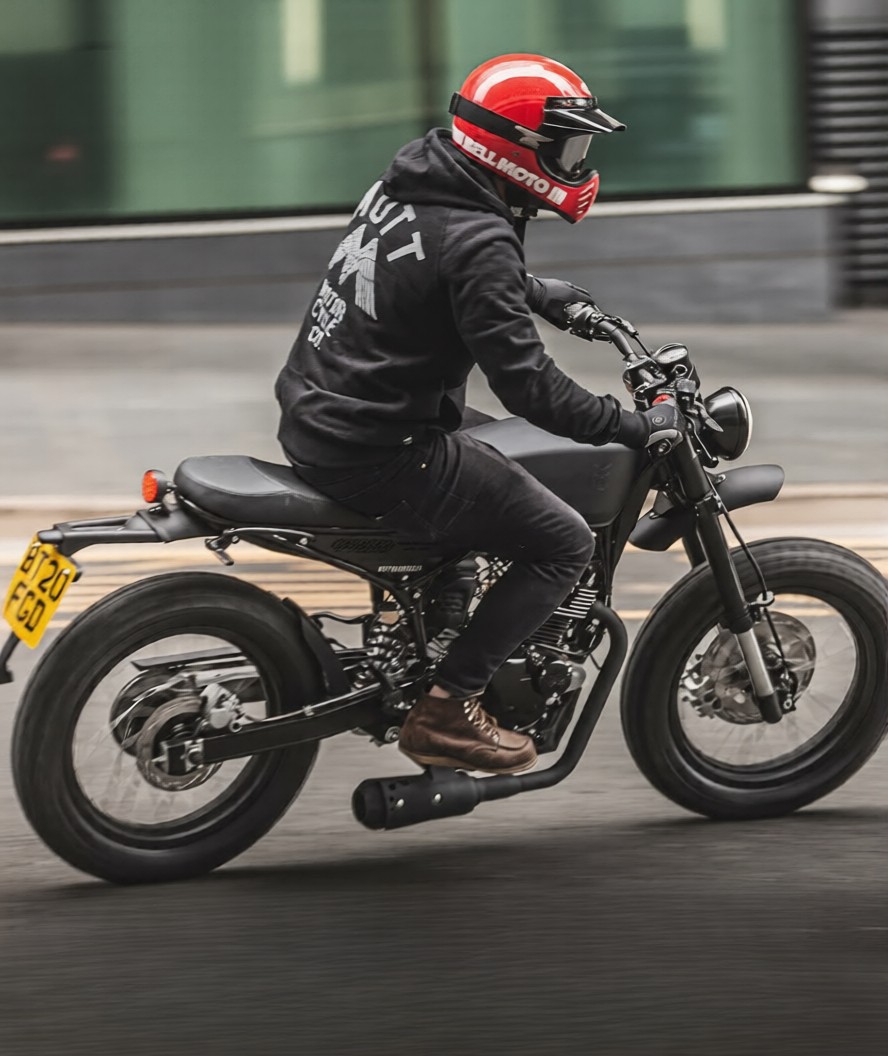
For most of its life, Mutt stayed within a narrow and deliberate range. Small motorcycles, built for accessibility rather than reach, where the experience was shaped less by performance than by how the bike felt at everyday speeds. The 125s and 250s defined the brand, and within that space the idea held together with consistency. The riding position made sense immediately, the controls required little adjustment, and the bikes felt manageable in a way that removed friction between rider and machine.
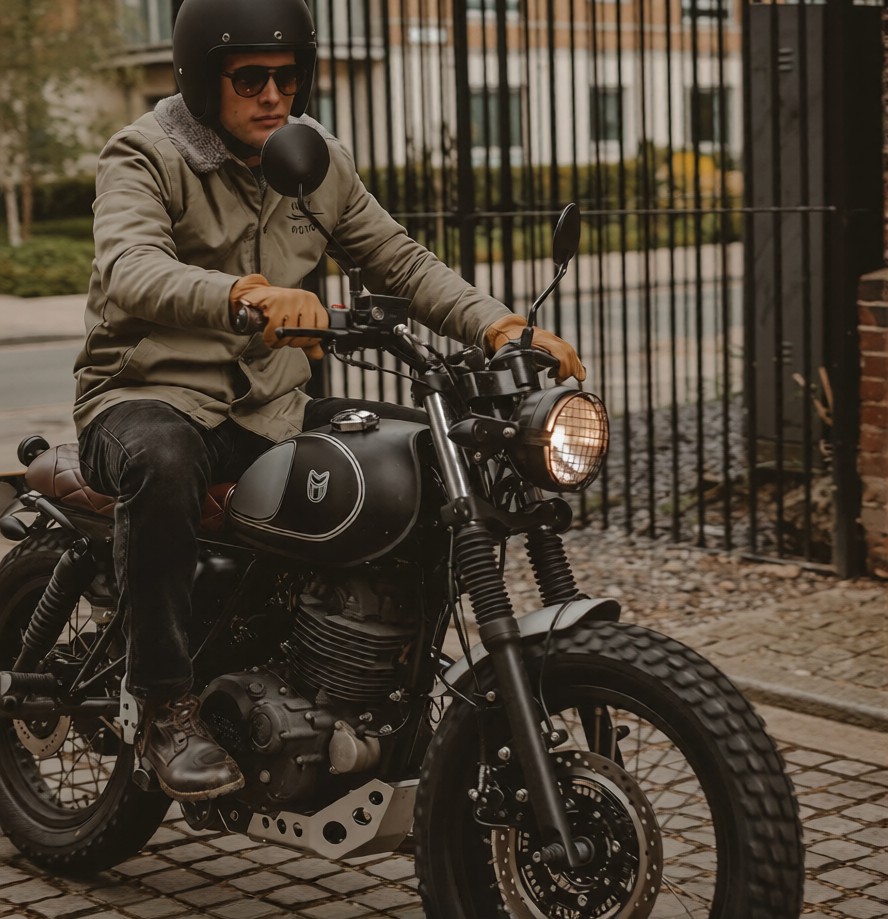
It is only when the ride begins to extend — in speed, distance, or expectation — that the limits become more apparent. The engines, reliable but modest, reach their ceiling early. Acceleration softens rather than builds. Vibration, initially distant, becomes part of the experience at higher speeds. Suspension and braking remain functional, sometimes good, but rarely refined in a way that invites you to push further. None of this feels like failure. It feels like a boundary being reached — one that had been there from the beginning.
That sense of ease is not imagined. Writing for Bennetts BikeSocial, reviewer Michael Mann described the smaller Mutts as having “zippy performance in town,” a quality that defines their natural environment more clearly than any specification sheet. Read the full review.
A Late Expansion
Near the end, that boundary shifted, or appeared to. The release of the 401cc Stravaig marked a move outward — toward something larger, more versatile, and more aligned with the expectations of a broader market. An adventure-styled motorcycle, positioned differently from the rest of the range, suggesting a willingness to move beyond the narrow space Mutt had occupied for most of its existence.
Whether it was a natural evolution or a necessary response is harder to say. What is clear is that it arrived late, at a point where the conditions around the brand had already begun to change.
“Zippy performance in town.”Michael Mann, Bennetts BikeSocial
The Balance
The appeal of Mutt motorcycles was always easy to understand, but more difficult to justify in conventional terms. These were not machines built to outperform their competitors, nor to offer the strongest value on paper. What they offered instead was clarity — a motorcycle that felt considered, visually resolved, and uncomplicated in its use.

In the city, over short distances, in unhurried riding, that clarity made sense. The simplicity became an advantage. The experience felt direct.
Outside of that context, the conversation changed. Performance became part of the question. Value followed. Comparisons, once irrelevant, became harder to avoid. And the same qualities that defined the motorcycles — their modest engines, their simplicity, their restraint — began to read differently, not as intention, but as limitation.
The balance never shifted within the bike itself.
Only in how far you expected it to go.
That emphasis on feel over output is consistent across more detailed road tests. Reviewing the GT-SS 250 for RideApart, Jonathon Klein noted the bike arrived with “some personality in tow,” which feels accurate—provided you accept that personality, here, replaces outright performance rather than complementing it. Full review here.
March 2025
On March 3, 2025, that balance proved difficult to sustain. Mutt Motorcycles entered administration following a period shaped by declining demand, increased competition in the small-capacity retro segment, and the kind of financial pressure that smaller, independent brands rarely absorb easily. Operations ceased. The Birmingham site closed. Eighteen redundancies followed. Administrators were appointed to manage what remained — stock, parts, and the brand itself — while discussions began around a possible acquisition.

Since then, very little has changed outwardly. The website remains, but without activity. Social channels have fallen silent. Dealers have attempted to support existing owners, sourcing parts where possible and maintaining continuity where they can. There has been mention of interested parties, of a potential buyer, but no confirmed outcome.
For now, the company exists in suspension — not entirely gone, but no longer present.
After
What remains is not a catalogue of models or specifications, but a clearer understanding of what Mutt was trying to do. It did not reshape the industry, and it did not attempt to. What it offered was smaller and more specific — the idea that a motorcycle, even at the lowest end of the displacement range, could carry intention in its design, and that simplicity did not have to mean anonymity.
The irony of the name holds. A mutt is not defined by purity, but by combination. When that combination works, it feels complete. When it is pushed beyond its natural range, the individual parts begin to show.
That was always the balance.
It did not change.
Only the conditions around it did.
Closing
It wouldn’t take much to bring it back. The idea is still intact, and the motorcycles themselves were never complex enough to depend on scale alone. What they required — and still would — is clarity. A willingness to build something that does not try to be everything, and to accept the limits that come with that decision.
Whether that happens is uncertain.
But the name still fits.
And when the road does return, it begins the same way — quietly, as it always does in the first ride of the year.