Where the Roads Converge: Inside the World of Motorcycle and Scooter Rallies
From alpine passes to coastal towns and improvised fields of chrome and canvas, rallies are less about destination than convergence—machines, stories, and the quiet rituals of arrival.
It usually begins before dawn, and not at the rally itself.
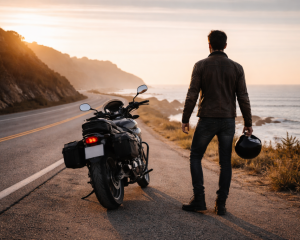
A garage door lifting into that thin, uncertain light. The muted click of a helmet strap. The low, deliberate rhythm of an engine warming against the cool of the morning. Somewhere between leaving and arriving, between the first turn of the throttle and the moment the road opens, the rally has already begun.
Because rallies—real ones, the kind that stay with you—are not events in the conventional sense. They are not simply dates on a calendar or pins on a map. They are points of convergence. Temporary worlds assembled out of motion, where riders arrive not just from different places, but from different rhythms of life.
And for a brief time, those rhythms align.
The Shape of Arrival
There is a moment, difficult to describe but instantly recognizable, when the road begins to change.
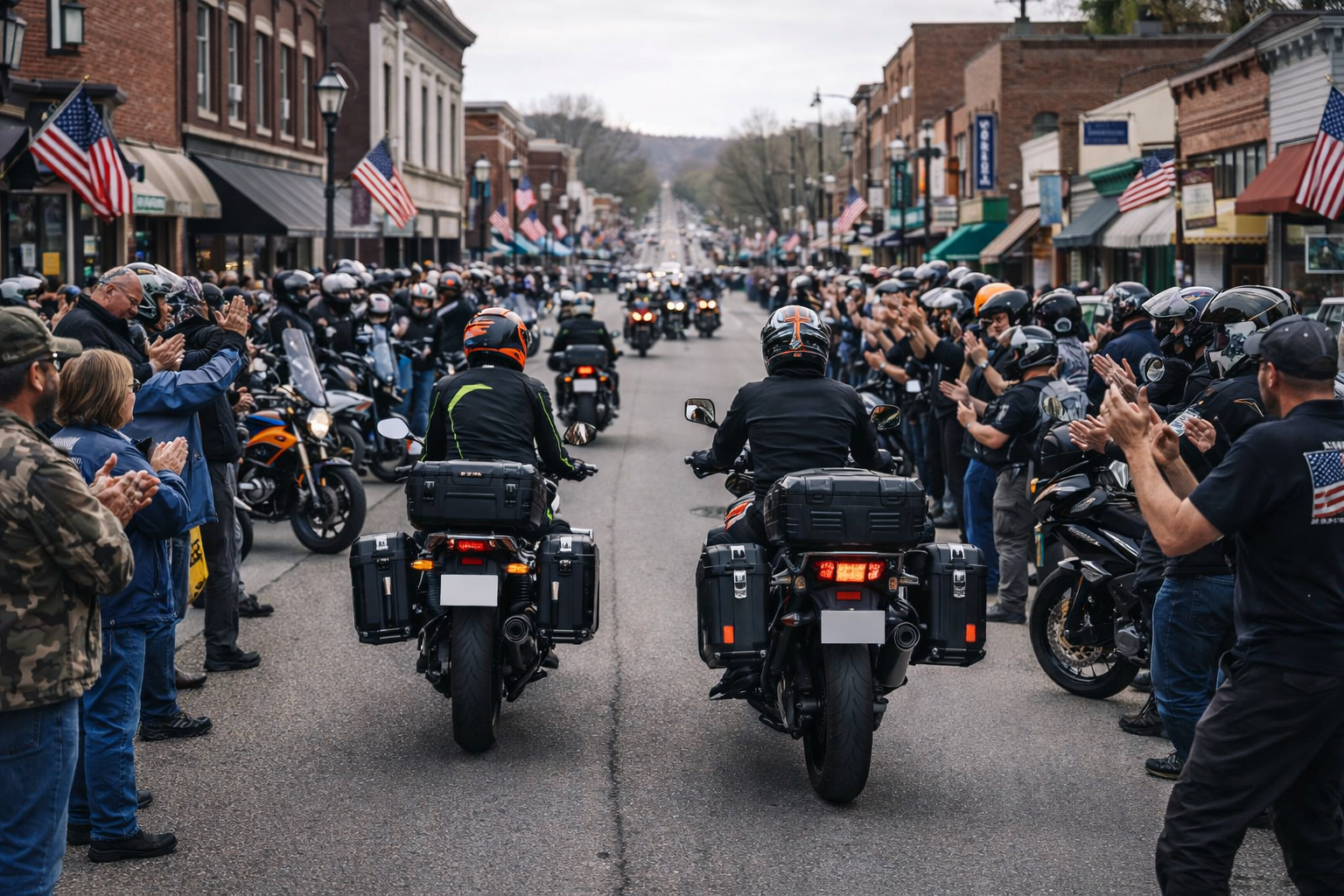
It may be subtle at first. A passing rider who nods with just a little more intention. A petrol stop where the bikes seem to linger longer than usual. A road that, almost imperceptibly, begins to carry more machines in the same direction.
At gatherings like Elefantentreffen (Elephant Rally), that realization often comes through cold. Deep, biting cold. Engines idling in snow-covered clearings, riders huddled around fires that burn low and steady against the Bavarian winter. It is not comfort that defines the arrival there, but commitment—the shared understanding that the road demanded something, and that everyone present chose to give it.
Elsewhere, the arrival feels different. Lighter, perhaps, but no less deliberate.
At Wheels and Waves, the road spills toward the Atlantic. Salt in the air, surfboards strapped beside custom builds, the hum of engines blending with the steady break of waves. Here, the convergence is cultural as much as mechanical—a meeting point of design, music, and movement.
Different landscapes. Different machines. But the same quiet recognition:
You have arrived somewhere that only exists because others chose the same road.
Small Wheels, Long Roads
If the image of a rally is often framed by displacement—large engines, long suspensions, distance made effortless—then scooter gatherings quietly undo that assumption.
At Vespa World Days, the scale shifts. The machines are smaller, yes, but the journeys are not. Riders cross borders, climb passes, and trace coastlines on engines that, by most standards, were never meant for such distances.
And yet they do.
There is something deeply compelling in that contradiction. A kind of refusal to accept that capability is defined by size. The road, after all, does not measure displacement. It measures intent.
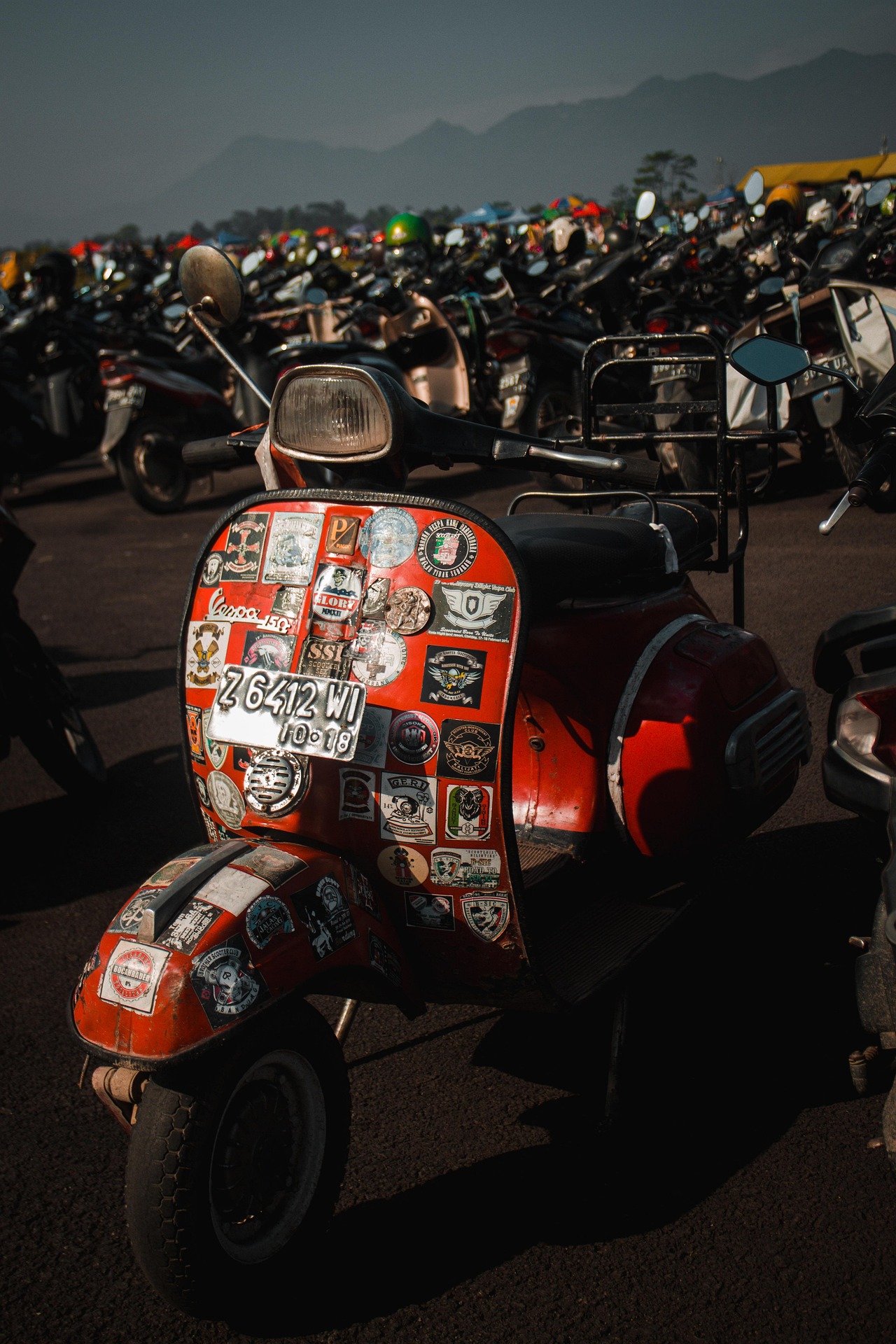
In town squares filled with colour and chrome, among rows of meticulously kept scooters and well-worn touring machines, the atmosphere feels less like spectacle and more like continuity. A lineage of riders who have always understood that the experience is not diminished by simplicity—it is often clarified by it.
You begin to see that rallies are not defined by what arrives, but by how.
The Road Before the Crowd
For all the energy of a gathering, it is often the solitude beforehand that gives it meaning.
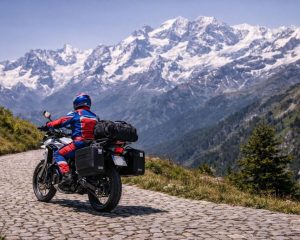
The long stretch of road where nothing happens. The steady cadence of movement. The small adjustments—gloves, posture, throttle—that become second nature over distance. These are the moments that rarely make it into photographs, but they form the quiet architecture of the experience.
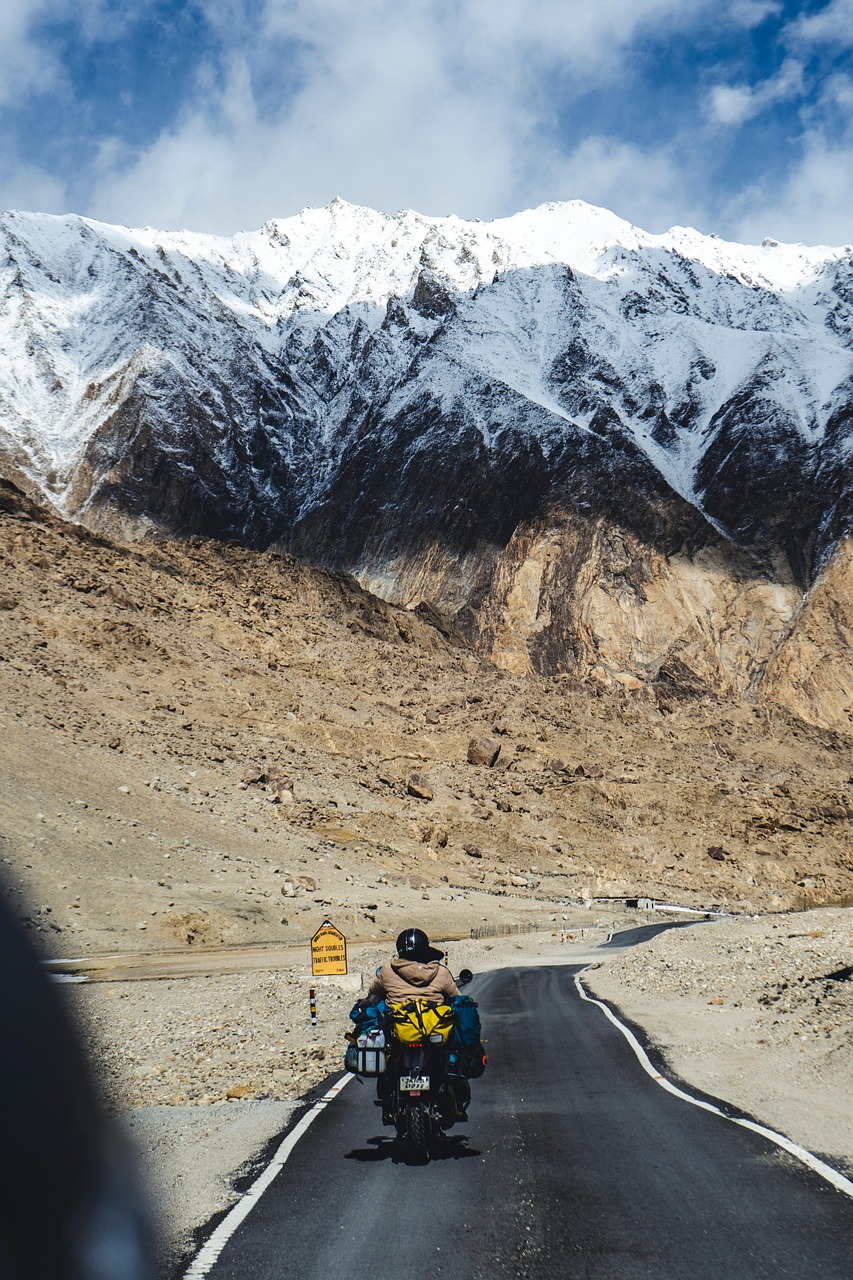
There is a reason riders speak about the journey with a certain reverence.
Because the road does something that the rally cannot.
There are no schedules to follow, no expectations to meet. Just distance, time, and the simple requirement to continue. And somewhere within that repetition, something settles. Thoughts that felt urgent begin to dissolve. The noise of daily life fades into the background. What remains is not emptiness, but clarity.
It strips things back.
So that when the rally finally comes into view—when the first clusters of bikes appear, when the sound builds, when the temporary city reveals itself—you arrive not just physically, but differently.
More present. More aware. Ready to join something larger, precisely because you spent time alone.
Rituals Without Rules
Walk through any rally, and patterns begin to emerge.
Not formal rules—there are few of those—but rituals. Small, repeated gestures that give shape to the gathering.
The way riders circle a newly arrived bike, not with judgement, but with curiosity. The quiet exchange of stories that begins with a simple question—Where did you come from?—and unfolds into something far more layered. The shared understanding that it is not the specification that matters, but the journey behind it.
At events like The Distinguished Gentleman’s Ride, those rituals take on a different tone. Suits replace leathers. Classic lines and considered details come forward. But beneath the aesthetic, the structure remains the same: a gathering built not just on machines, but on intention. In this case, one that extends beyond the ride itself, toward a broader purpose.
Elsewhere, at high-altitude meetings like Stella Alpina, the ritual is simpler, almost elemental. The climb. The thin air. The shared effort of reaching a place that feels, in every sense, removed.
Different expressions. Same underlying language.
Rallies do not need strict definitions because they are held together by something less rigid and more enduring: participation.
Preparing Without Overthinking
There is a tendency, especially before a first rally, to prepare as if for an expedition.
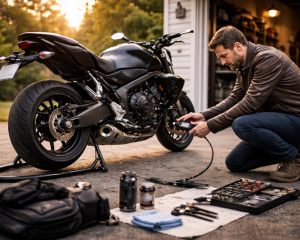
Lists are made. Gear is checked, then checked again. Contingencies are considered, expanded, and reconsidered. It is a natural instinct—the desire to control what can be controlled before setting out into what cannot.
And yet, speak to those who have done it for years, and a different perspective emerges.
Preparation matters, but not in the way one might expect.
Yes, the essentials are there: tools, layers, a basic awareness of the machine beneath you. But beyond that, there is a quiet understanding that over-preparation can become its own kind of burden. Too much weight, too many variables, too many things to manage when the road itself is already asking enough.
What experienced riders tend to carry is not more equipment, but more familiarity. With their machine. With distance. With the simple act of continuing when conditions shift.
The rest is adjusted along the way.
Because rallies, like the roads that lead to them, rarely unfold exactly as planned.
A Temporary World
And then, almost as quickly as it formed, it begins to dissolve.
Tents come down. Engines start. Conversations that stretched late into the evening give way to early departures and quiet goodbyes. The temporary world—so vivid, so immediate—folds back into the landscape.
This is part of the experience, too.
The understanding that it does not last.
That what made it meaningful was not permanence, but presence. A shared moment in time, held together by movement, that cannot be replicated in quite the same way again.
And so the road opens once more.
Not as a return, exactly, but as a continuation. The same machine. The same rider. But something has shifted, however subtly. A new reference point has been added. A memory that will, in time, draw you back toward another gathering, another convergence, another stretch of road that leads somewhere you have not yet been.
Why They Matter
It would be easy to frame rallies as escapes. Breaks from routine. Moments of indulgence set apart from the responsibilities of everyday life.
But that would be an incomplete reading.
What rallies offer is not escape, but recalibration.
A reminder that movement still matters. That distance, when chosen deliberately, can bring clarity rather than fatigue. That community can form not through proximity alone, but through shared direction.
In a world that increasingly compresses experience—reducing journeys to endpoints, interactions to transactions—rallies resist that compression.
They insist on the value of the in-between.
Of the road taken not because it is efficient, but because it is meaningful.
Of arrival not as an end, but as a moment within a larger continuum.
And so, somewhere ahead, there is always another gathering.
Another road bending toward it. Another morning where the light is just beginning to shift, and the engine settles into that familiar rhythm.
The details will change. The location, the landscape, the machines that gather.
But the structure remains.
You leave.
You ride.
And somewhere along the way, without quite noticing when it happened, you begin to arrive.