EICMA: Where the Motorcycle World Comes Together
Inside the world’s largest motorcycle gathering, where scale reveals perspective, machines start conversations, and what you carry home has as much to do with people as bikes.
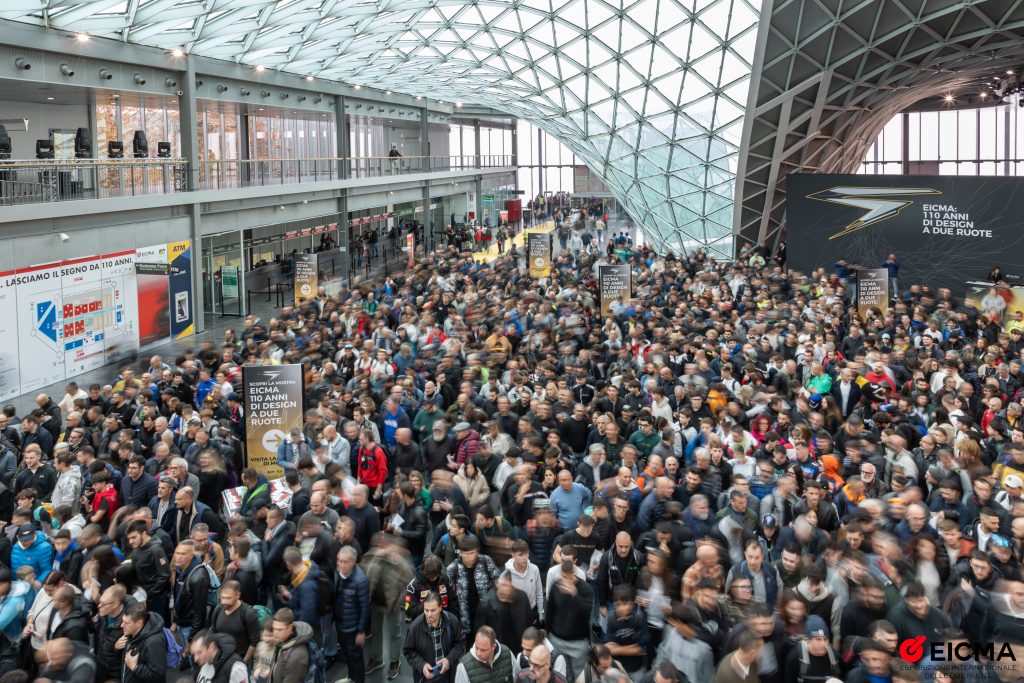
To walk the halls of EICMA is to feel the motorcycle world at full scale—its ambitions, contradictions, and shared obsessions moving past you all at once.
The Scale Is the First Thing You Feel
There is a particular hour at EICMA when the show hasn’t quite begun but is already fully alive. The lights are on. The machines are in place. Coffee cups collect along temporary counters. Languages overlap in low anticipation—Italian, German, Japanese, English—all spoken with the same quiet urgency. Outside, the scale of the venue remains abstract. Inside, it becomes physical. You start walking and don’t stop for a long while.
It doesn’t take long to understand the magnitude of what you’ve stepped into. By any meaningful measure—floor space, attendance, number of manufacturers, global reach—EICMA is widely regarded as the largest motorcycle show in the world. Once you are inside it, the claim feels less like promotion and more like observation. The halls stretch beyond comfortable walking distance. The crowd is not regional or even continental; it is unmistakably global.
EICMA didn’t arrive at this scale by force. It grew the way durable institutions do—gradually, almost inevitably—alongside the motorcycle itself. What began as a contained industry gathering evolved as riding expanded beyond borders, beyond necessity, into culture. Each generation of machines added another layer: performance, touring, commuting, electrification, heritage. Rather than narrowing its focus, the exhibition widened it. Today, when the doors open, the sense isn’t that something new has been erected, but that something long in the making has reached full dimension.
Who Comes—and Why They Keep Coming Back
People arrive with different intentions, and that diversity is part of the show’s gravity. Early in the week, the floor belongs to professionals. Engineers move with intent, pausing only to gesture at suspension geometry or intake placement. Journalists cluster quietly before press launches, comparing notes. Dealers walk with purpose, weighing what they see not against desire, but against reality—markets, margins, logistics.
As the days pass, the audience opens up. Riders arrive from across Europe and well beyond—some alone, some with friends, some with children perched on shoulders, wide-eyed at the size of it all. You see aging racers who stop often, studying machines the way musicians study instruments. You see first-time visitors who don’t yet know what they’re looking for, only that they are in the right place to find it.
Over the course of a single week, hundreds of thousands of people pass through these halls. On paper, it’s a statistic. In person, it feels like a living cross-section of motorcycle culture.
Why Visit the World’s Largest Motorcycle Show
People come to EICMA to see new motorcycles first—but that’s only part of it. The deeper value is perspective. Nowhere else allows you to see the entire motorcycle world at once. Sportbikes beside adventure machines. Electric commuters beside heritage builds. Global manufacturers beside smaller brands quietly refining an idea.
This compression matters. Design directions become visible before they harden into trends. You begin to understand not just what will be sold next, but how the industry is thinking—what it’s confident about, and where it’s still uncertain.
The Machines That Shift the Conversation
EICMA rarely invents direction. More often, it brings existing ideas into focus. From time to time, a motorcycle appears here that doesn’t ask for attention or attempt to define the moment. It simply arrives, and only later does it become clear that something has shifted—not on the show floor, but in the thinking that follows.
These were not curiosities or crowd-pleasers; they were signals.
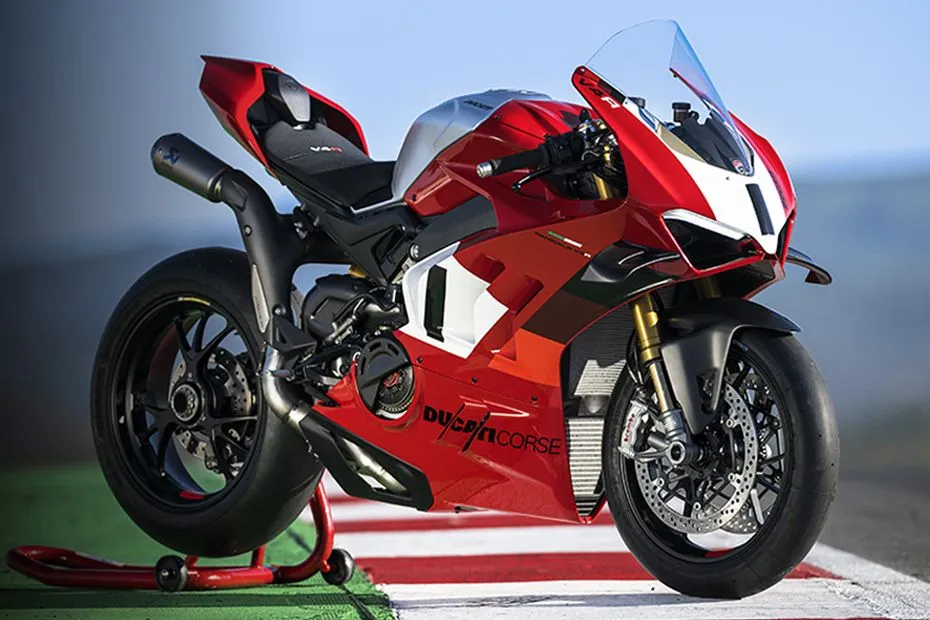
Ducati Panigale (2011)
When Ducati unveiled the Panigale at EICMA, it signaled a fundamental rethink of the superbike formula. Frameless construction, extreme mass centralization, and a focus on precision over brute force reshaped expectations for high-performance motorcycles and influenced competitors across the segment.
BMW R nineT (2013)
The R nineT’s appearance at EICMA marked BMW’s public embrace of heritage, customization, and emotional design. More than a single model, it validated a movement—one that repositioned modern retros as credible, factory-supported motorcycles rather than niche indulgences.
Honda Africa Twin (2015)
Honda’s return of the Africa Twin reframed the adventure category. Presented at EICMA not as an arms-race machine but as a balanced, durable long-distance tool, it helped steer the segment back toward usability, reliability, and real-world riding priorities.
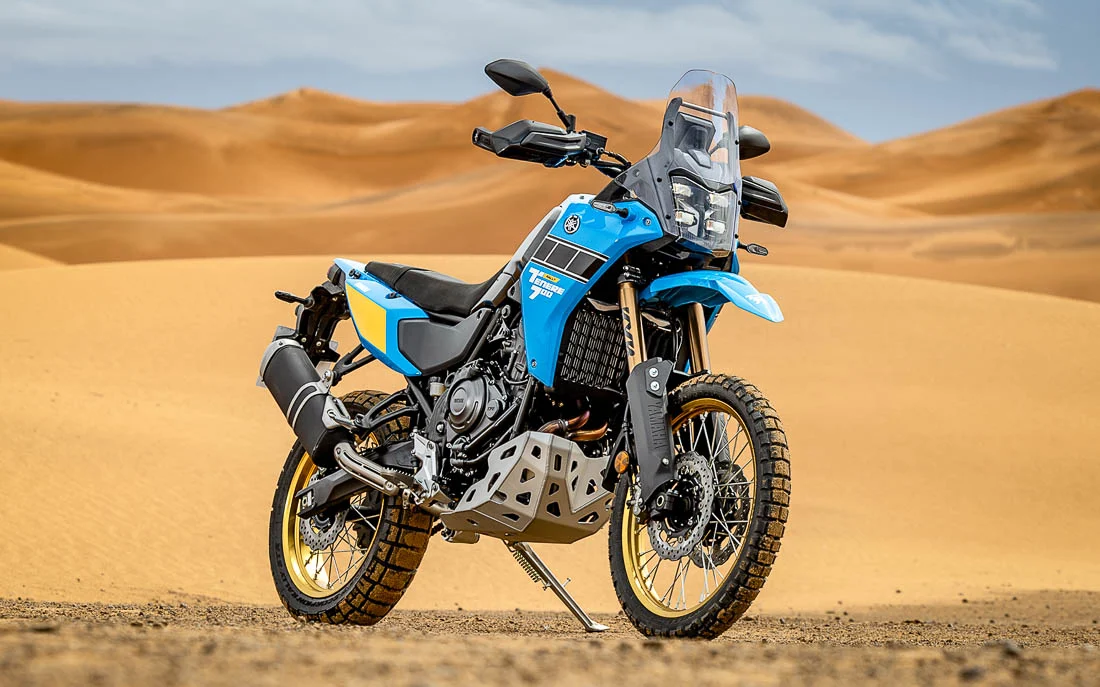
Yamaha Ténéré 700 Concept (2016)
Shown first as a concept, the Ténéré 700 demonstrated how rider response could shape production reality. Its emphasis on simplicity, manageable weight, and mechanical honesty anticipated a broader shift toward “right-sized” adventure motorcycles.
Electric motorcycle concepts (multiple manufacturers)
Rarely the loudest or most celebrated displays, electric motorcycles nonetheless became a recurring presence at EICMA. Their gradual evolution—from tentative experiments to production-ready machines—charted an unavoidable trajectory for the industry, one revealed incrementally rather than announced outright.
Beyond the Halls: Motion Made Visible
Outside, the sound changes. Engines bark, then stretch into full voice. Flat-track races slide sideways in controlled chaos. Trials riders balance impossibly. Stunt riders draw crowds that lean forward together.
None of it feels ornamental. These are not distractions added for spectacle—they are expressions of the same impulse that brought everyone here. Motion, risk, control.
Getting to EICMA: Planning the Journey
If you’re considering a visit to EICMA, timing and logistics matter more than first-time visitors often expect. As the world’s largest motorcycle show, EICMA places real pressure on Milan’s transport and accommodation networks. Booking early isn’t simply about cost—it’s about maintaining control over where you stay, how you arrive, and how your days unfold.
The exhibition is held at Fiera Milano, a vast, purpose-built venue in Rho, northwest of the city. While often referred to as “EICMA Milan,” the show is not in central Milan itself, a distinction that becomes important when choosing accommodation and planning daily travel.
Most international visitors arrive via Milan Malpensa Airport, the city’s main long-haul airport. From Malpensa, direct rail connections link into Milan’s central rail network, making onward travel straightforward. Milan Linate Airport serves mainly short-haul European routes and sits closer to the city center, while Bergamo Orio al Serio Airport is a common entry point for low-cost carriers and a practical alternative for flexible travelers.
Once in the city, rail is the most efficient way to reach the show. Trains from Milano Centrale and Milano Porta Garibaldi connect directly to the Rho-Fiera station, which opens almost onto the exhibition grounds. During EICMA week, these routes effectively become moving corridors of the show itself—crowded with riders, media, and industry professionals, badges already visible.
Accommodation strategy shapes the experience. Hotels near the venue offer convenience but little sense of place. Staying in central Milan means longer mornings, but it gives you evenings back—space to decompress, talk, and process what you’ve seen. Many returning visitors choose the city, accepting the commute as part of the rhythm rather than an inconvenience.
The key advice is simple: plan early, expect movement, and allow the journey to set the pace. EICMA is not a brief stop—it’s an immersion. The logistics work best when you accept that from the outset.
When to Go—and How Much Time to Allow
EICMA typically runs for nearly a full week, and how you time your visit matters. The early days are trade-focused—quieter, more concentrated, and better suited to industry professionals or those seeking space to look closely. The later days open fully to the public and bring energy, crowds, and atmosphere. For first-time visitors, two full days is a minimum to absorb the scale without fatigue; three days allows the show to unfold at a humane pace. Anything less risks turning the experience into a checklist. EICMA rewards time—both on the floor and between visits, when the impressions have room to settle.
A First-Time Visitor’s Lesson
For my first visit, the temptation was to rush. The halls are vast, the noise constant, the visual input relentless. It feels, at first, like stopping means missing something important.
That instinct is wrong.
After a few hours, fatigue set in—not physical, but mental. Too many machines, too many ideas arriving at once. I slowed down. I spent longer with fewer bikes. I listened more than I photographed. I noticed how some stands drew people in quietly, while others struggled despite their scale.
EICMA isn’t meant to be completed. It rewards patience.
What You Take Away Isn’t Just the Bikes
Yes, a handful of motorcycles will stay with you. But what lasts longer are the conversations. Talking with a brand representative who actually rides. Trading observations with a stranger from another country. Discovering a shared vocabulary that crosses language and geography.
Motorcycling, at its core, is social. EICMA makes that visible.
When you finally leave—tired, overstimulated, carrying more impressions than you can sort—the memory that stays isn’t a statistic or a single launch. It’s the realization that, for a few days, the entire motorcycle world gathered in one place. Not to agree. Not to simplify. But to look closely at itself.