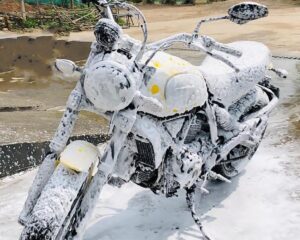
Early Season Checks Worth Your Time
Before speed returns in earnest, there is a quieter obligation. Early-season riding is less about proving readiness than restoring trust — between rider, machine, and the road waiting beyond the driveway.
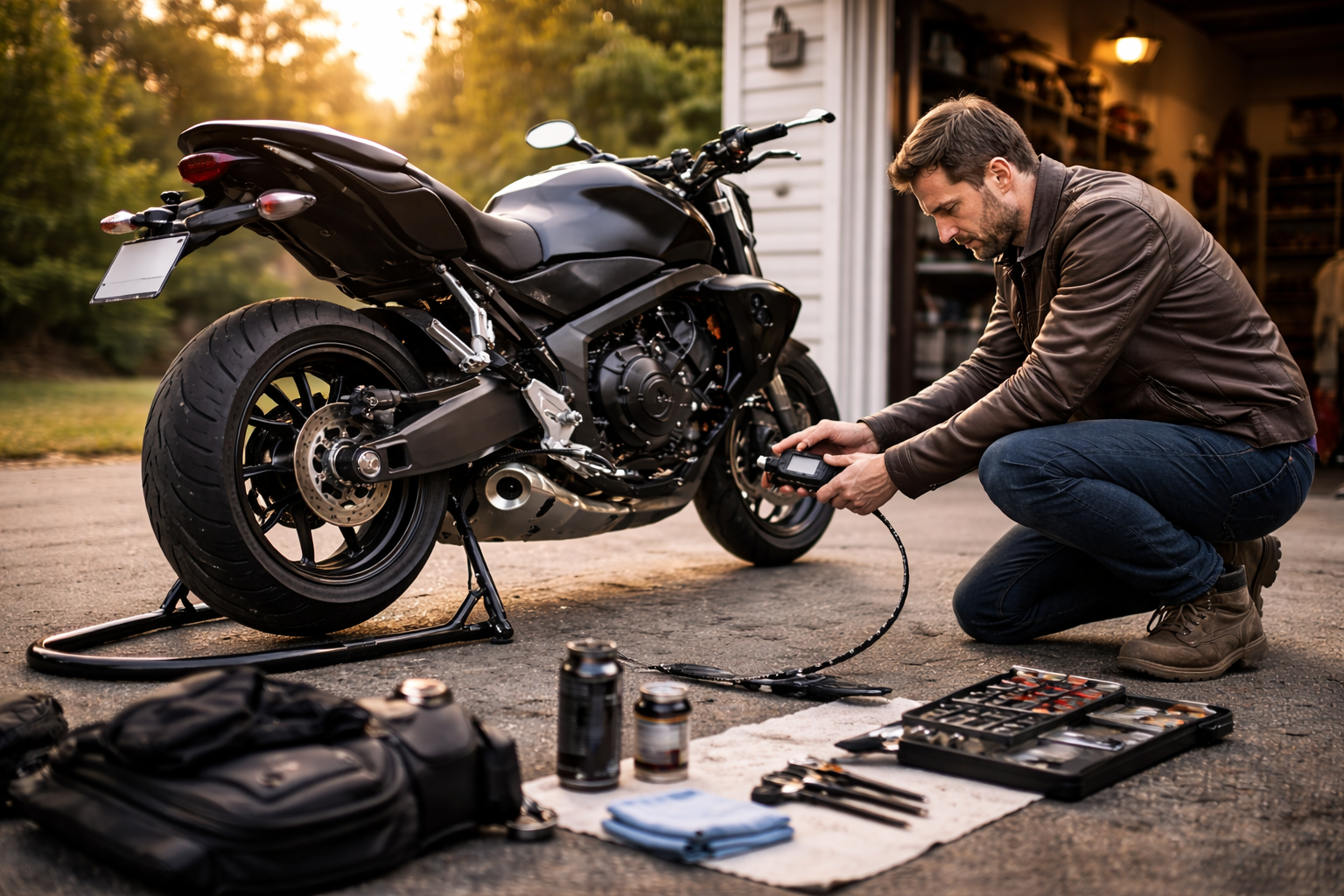
The first warm afternoon of March carries a particular kind of optimism.
The light stays a little longer than it did a week ago. The air softens just enough to suggest that winter might finally be losing its grip. Somewhere nearby a motorcycle starts, the sound briefly echoing through the neighborhood like a signal.
It’s easy, in that moment, to assume the season has simply resumed.
But motorcycles do not quite work that way.
Machines that have been standing for weeks — sometimes months — wake slowly. Fluids settle. Rubber ages quietly. Electrical systems remember the cold in ways that aren’t immediately visible.
The engine may start without complaint, but readiness is something else entirely.
Early-season riding, if it is approached thoughtfully, begins not on the road but in stillness. In a driveway, perhaps. Or a small garage where the door has just been rolled open to let the March light fall across the machine again.
There is no rush.
The first checks are simple, almost modest, but they carry a certain weight. They shape the tone of the rides that follow.
Where the Season Really Begins
Tyres
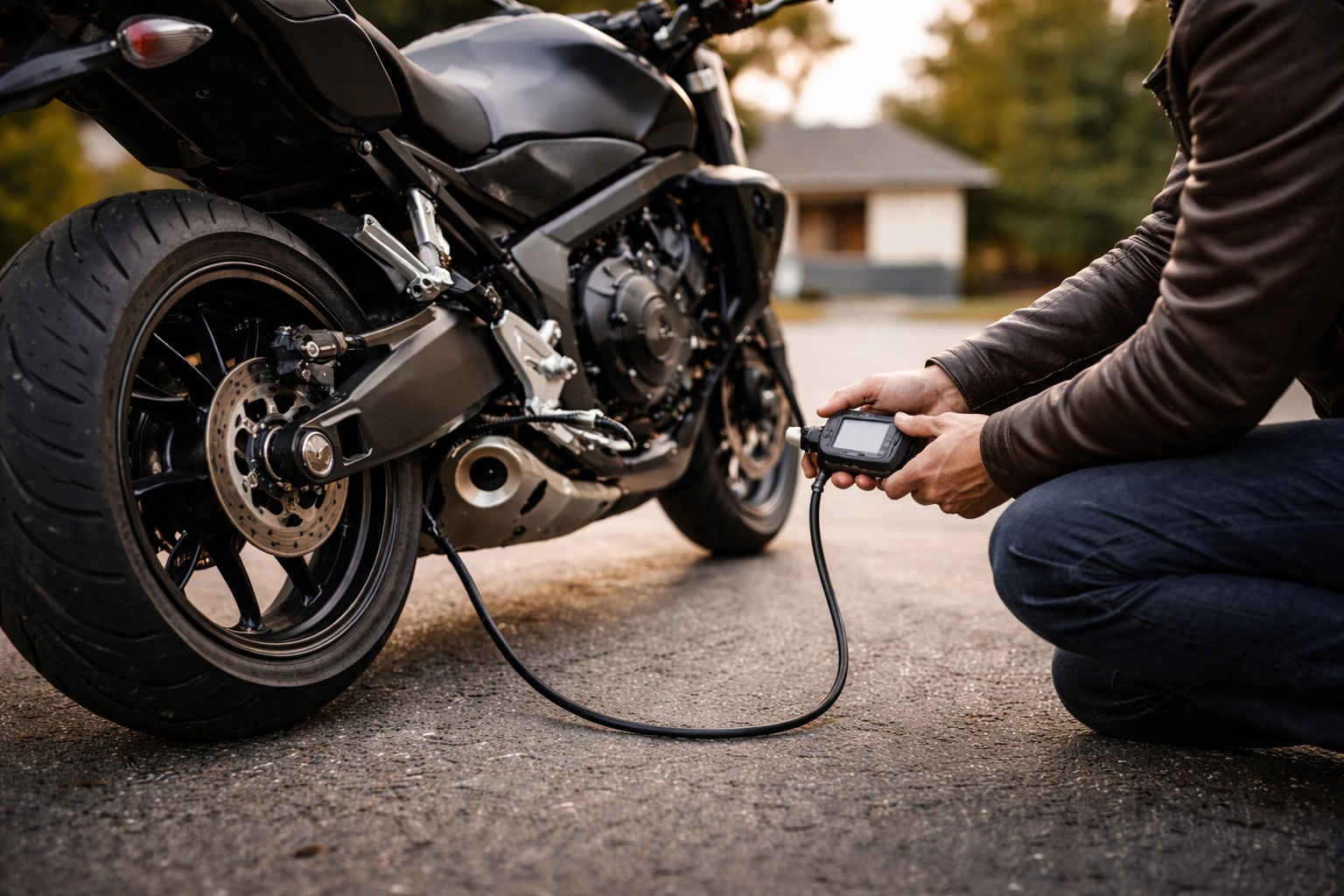
Everything a rider feels passes through two small patches of rubber.
No larger than the palms of your hands.
Through those two surfaces come the texture of asphalt, the subtle lean of a corner, the difference between cool pavement and warm. They translate the world beneath the motorcycle into sensation.
After winter, tyres often carry a quiet memory of stillness.
Pressure drifts. Air contracts in the cold months. A tyre that felt normal in October may now sit several pounds lower than intended.
It’s a small number on a gauge, but a motorcycle notices.
Steering becomes slightly slower. The bike settles differently into turns. The feedback that normally feels crisp and immediate softens around the edges.
So the first step is simple.
Check pressure while the tyres are cold. Set it carefully. Not by feel, not by guess, but by the numbers the machine was designed around.
Then pause for a moment and actually look at the tyres.
Run a hand across the tread surface. Rubber that has aged quietly over the winter sometimes feels different — slightly harder, less supple. It may still carry plenty of tread depth, yet lack the elasticity that once made it communicative.
The road will tell you this eventually.
But early spring is a good moment to listen first.
Brakes
Brakes rarely demand attention in obvious ways.
They work, until one day they feel slightly less certain than they once did.
Brake fluid ages in the background of riding. It absorbs moisture gradually, lowering its boiling point and changing the way pressure travels through the system.
You may not notice it pulling away from the house. But a rider eventually notices how a brake lever builds pressure — whether it feels immediate and firm, or slightly delayed, almost elastic.
Before the first longer ride of the season, it’s worth taking a second to squeeze the lever slowly.
Feel how it responds.
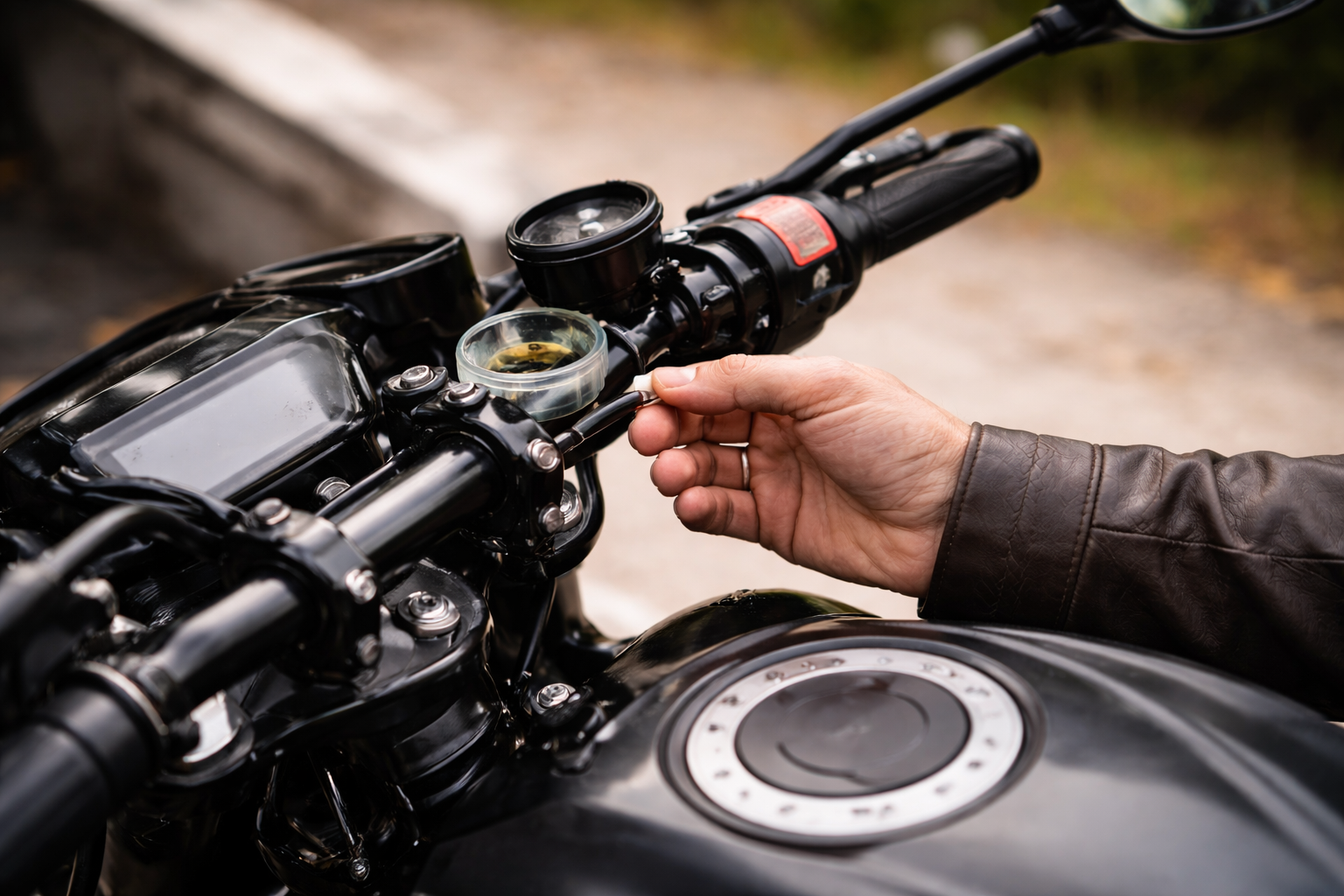
Look at the reservoir window. Fresh brake fluid carries a pale clarity. Older fluid darkens over time. The change is rarely urgent, but it’s informative.
Replacing brake fluid is not the sort of maintenance riders brag about. It doesn’t add horsepower or change the silhouette of the machine.
What it restores is something quieter: certainty.
And certainty, on a motorcycle, is invaluable.
Chain
Chains are wonderfully honest pieces of engineering.
They don’t hide much.
After weeks of sitting still, lubrication that once coated each link evenly begins to settle or evaporate. A chain that moved silently in autumn may now speak a little more clearly when the wheel turns.
Put the motorcycle on a stand if you have one, or simply roll it forward slowly.
Watch the chain pass across the rear sprocket. Listen for dryness. Feel for tight spots — those small sections where tension changes slightly as the wheel rotates.
Check slack with care. Too tight places unnecessary strain on bearings and sprockets. Too loose invites a different kind of imprecision.
Once the adjustment is correct, clean the chain and apply fresh lubrication evenly along its length.
The effect on the road can be surprisingly noticeable. Throttle transitions smooth out. Gear changes feel calmer.
It’s a small task, but it restores a certain refinement to the entire motorcycle.
Battery
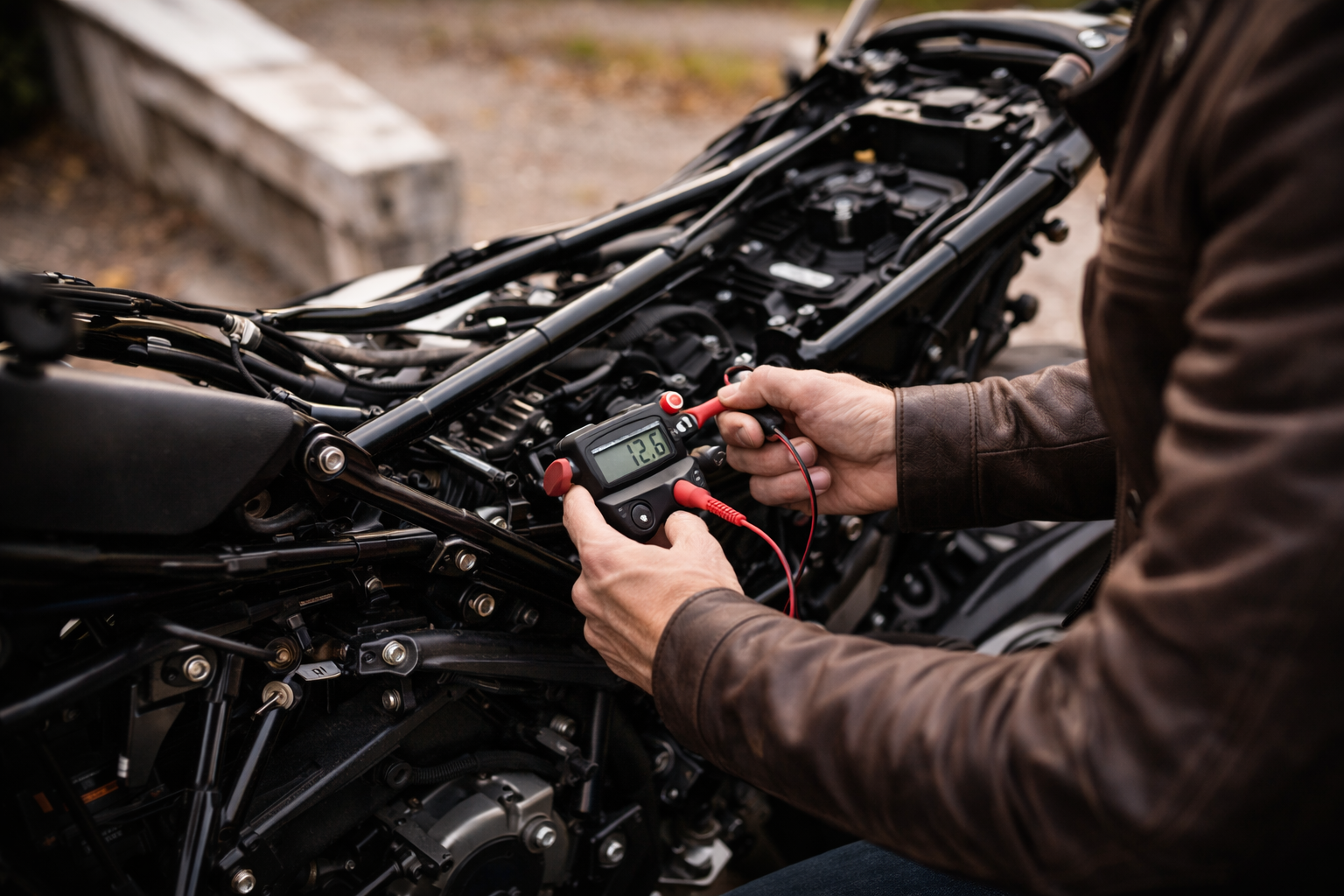
Batteries rarely fail dramatically.
More often, they hesitate.
The starter motor spins just a little slower than usual. The dashboard lights flicker a fraction longer before settling. The engine starts — but without the crisp certainty that once defined it.
After winter, that hesitation is worth paying attention to.
A quick voltage check with a multimeter offers reassurance. If the motorcycle spent the colder months connected to a tender, confirm that the terminals remain clean and tight.
Modern motorcycles depend on stable electrical systems for far more than ignition. Fuel injection, sensors, traction systems — all operate within a delicate electrical balance.
A battery that feels uncertain in March will not improve with warmer weather alone.
Replacing one before the season gains momentum often proves easier than discovering its limits in the middle of a ride.
Small Rituals, Long Roads
Small Fasteners, Familiar Controls
There is one final step that tends to receive less attention than it deserves.
Motorcycles vibrate. Over thousands of engine revolutions, small components gradually settle into their places.
Before the first longer outing, it’s worth spending a few quiet minutes moving methodically around the machine.
Axle nuts. Brake caliper bolts. Handlebar clamps. Footpeg mounts.
Nothing dramatic — simply confirming that everything remains exactly where it should be.
Then sit on the motorcycle for a moment.
Adjust the clutch lever so it falls naturally under your fingers. Roll the throttle open and closed. It should snap back cleanly, without hesitation. The front brake lever should feel solid and predictable.
These small touchpoints matter.
They reconnect the rider to the machine in ways that are difficult to measure but immediately felt on the road.
The Quiet Beginning of a Season
None of these checks take long.
Forty minutes, perhaps. An hour if the afternoon light invites lingering.
What they create is something more important than mechanical certainty.
They restore familiarity.
The rider who begins a season this way approaches the first miles differently. Not cautiously, but attentively. The machine feels known again. Its small movements and responses make sense.
And when that familiarity returns, attention moves outward — toward the rhythm of the road, the changing light of early spring, the simple act of riding itself.
Speed will arrive soon enough.
But the season begins here, in the quiet space between the driveway and the road.