Ducati 916 Range
A Short Guide to the Motorcycle That Changed Everything
This is not a torque-curve autopsy or a concours checklist. It’s a human-scale guide to the Ducati 916 family—why it mattered, how it evolved, which versions are most sought after today, and what it’s like to live with one now.
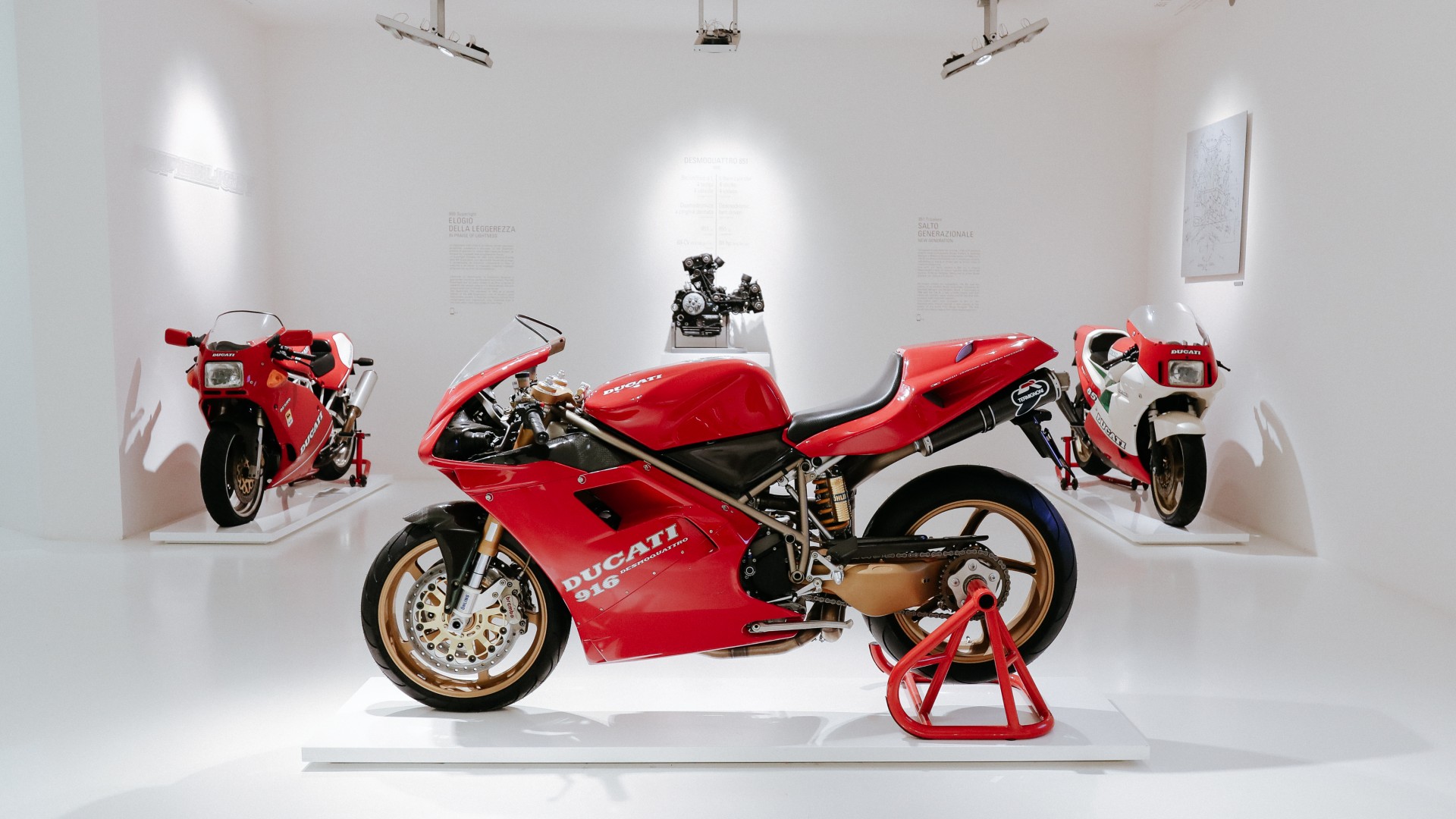
Before values spiked and opinions hardened, the 916 was simply a motorcycle built with uncommon clarity—drawn to win races, refined in public, and left largely alone once it got things right. This is a look at how that clarity carried through a decade of change.
The Five W’s
Who
Every era-defining machine begins with a point of view. For the 916, that view belonged to Massimo Tamburini, whose background spanned Grand Prix racing, frame design, and a long apprenticeship in solving problems with limited means. Tamburini was not interested in novelty. He believed that if proportions were right and the machine worked honestly, beauty would follow without persuasion.
Around him was a small, highly pressured team operating inside Ducati’s Cagiva-era uncertainty—designers, engineers, and race staff working with the understanding that the company’s future depended on this motorcycle succeeding both on track and in showrooms. The 916 is inseparable from those circumstances. It was not conceived as an icon; it became one by necessity.
“A motorcycle must first work well. If it works, beauty comes naturally.”
— Massimo Tamburini
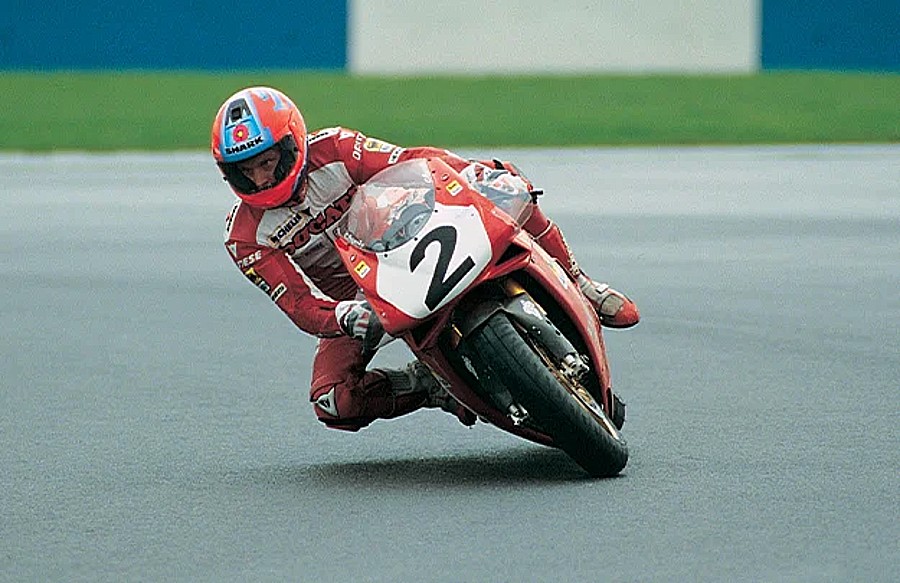
On track, the bike’s reputation was forged by riders who trusted its feedback, most memorably Carl Fogarty, whose physical, uncompromising style matched the bike’s character.
“The 916 was not designed to impress. It was designed to work—and allowed to become beautiful.”
What
The Ducati 916 range is best understood not as a series of replacements, but as a single idea exposed to time. From the original 916 through the SP and SPS, into the 996 and finally the 998, Ducati resisted cosmetic reinvention. Instead, displacement increased, airflow improved, internals were lightened, and electronics refined—quiet changes layered onto a stable foundation.
This continuity matters. It allowed Ducati to refine handling and feedback rather than relearn them. Owners moving from a 916 to a 996—or from a 996 to a 998—did not need to adapt to a new philosophy. They were stepping further into the same conversation.
When
In October 1993, the Ducati 916 made its public debut at the Milan Motorcycle Show, arriving as something unmistakably different from the superbikes surrounding it. Production began the following year, in 1994, at a moment when the category was accelerating in performance but losing distinct identity.
Over the next decade, while competitors cycled through visual updates and technical resets, Ducati held steady. The silhouette endured because it continued to work—on the road, under race conditions, and in the public imagination.
By the time production ended in the early 2000s, the design had outlasted trends once considered inevitable. What began as contemporary quietly became foundational.
Where
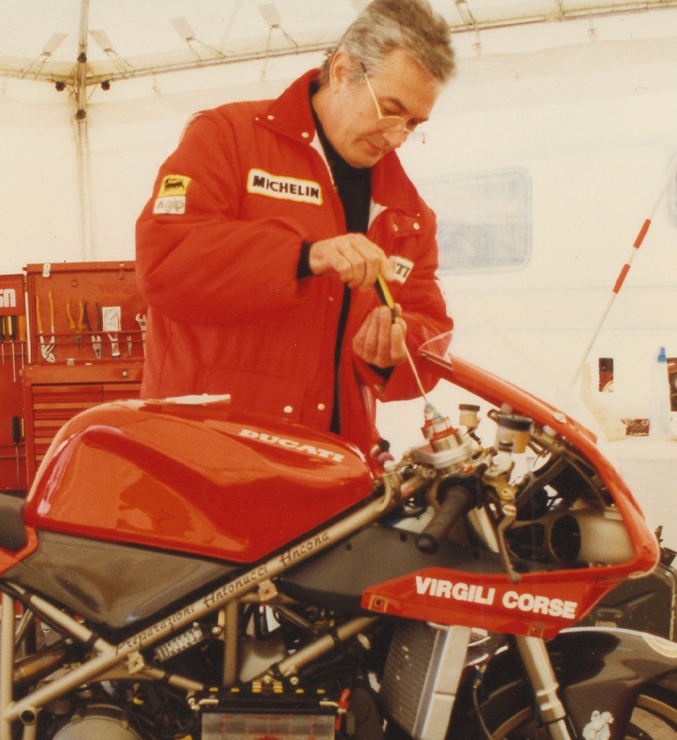
Designed and built in Bologna, and proven globally in the World Superbike Championship—a series that rewards balance as much as outright speed.
“Across a decade of racing, the 916 family didn’t spike—it endured.”
Why
The 916 exists because Ducati understood something fundamental: riders respond to coherence. Power, handling, braking, and feedback need to arrive together, not in isolation. The bike was shaped to reward commitment rather than overwhelm it, offering stability under braking and traction on exit that encouraged trust.
That trust translated beyond racing. On the road, it gave riders the sense that the motorcycle was working with them rather than demanding to be managed. The 916 didn’t flatter everyone—but for those it suited, it felt inevitable.
Why It Still Looks Right
The 916 didn’t chase trends. It resolved problems.
Underseat exhausts shortened pipe runs and centralized mass. The single-sided swingarm simplified rear-wheel changes while exposing the wheel as both mechanical element and design statement. A narrow waist reduced frontal area and allowed the rider to move naturally across the bike. None of this was ornamental. Form followed necessity, and proportion followed form.
In 1994, Ducati reached a moment of unusual coherence. Under the direction of Massimo Tamburini, the 916 distilled what the company had been circling for years—design restraint, mechanical sophistication, and race-bred performance held in balance. Two decades later, Motorcycle News would describe it as “the most beautiful bike of the last 50 years,” not as a statement of fashion, but as recognition of proportion resolved.
The 916 did not invent Ducati’s identity. It clarified it. From the mid-1990s onward, the elements associated with the marque—underseat exhausts, compact mass, purposeful minimalism, and competition intent—were shaped, in large part, by this motorcycle.
That is why it hasn’t aged. The 916 wasn’t styled for a moment. It was finished.
Engines & Evolution: From Muscle to Precision
The evolution is quiet but meaningful.
- 916: visceral, demanding, and physical—an engine with presence that rewards commitment.
- 996: increased displacement and torque, improved durability, fewer rough edges without losing character.
- 998: the arrival of the Testastretta head brought cleaner combustion, better airflow, and a sense of completion.
Each step is evolutionary, not disruptive. You feel the intent.
Production Disruption: The Fire and Varese
Early in the 916’s life, Ducati faced adversity. A fire at the Bologna facility forced a temporary relocation of production to the Cagiva plant in Varese. As a result, some early 1994–1995 916s were assembled there before production returned to Bologna.
For collectors, “Varese-built” has become a point of conversation—sometimes mythologized. Mechanically, these bikes are not inferior. In market terms, they do not command an automatic premium. Any added interest comes only when Varese assembly overlaps with already desirable variants (very early 916s, SP or SPS models) and exceptional originality. Varese adds context, not value.
The 916 was born under pressure. That detail matters.
Special Editions & the Pull of Rarity
Some limited models exist for marketing. The 916’s most desirable variants exist because racing demanded them.
- 916 SPS: true homologation intent—higher compression, lighter internals, closer to the track than the street.
- 916 Senna: mechanically standard but emotionally charged; its grey bodywork and red wheels now inseparable from Ducati lore.
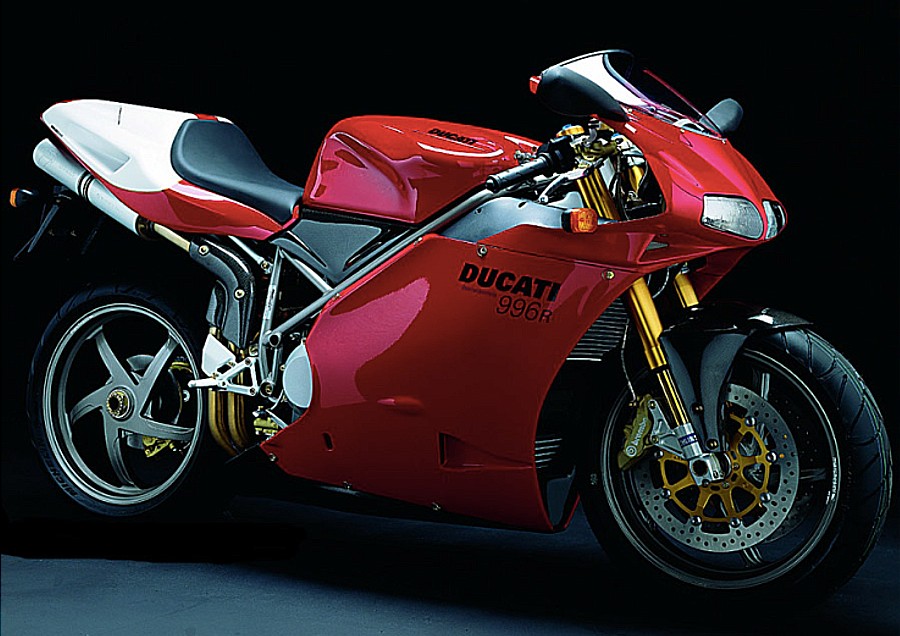
- 996R / 998R: factory race bikes with lights, built to satisfy regulations rather than comfort owners.
The 996R, introduced in 2001, quietly marked a turning point—its Testastretta engine and race-focused internals effectively bridged the original Desmoquattro era and the 998 generation that followed.
These bikes are sought after not simply because they are rare, but because they represent moments when Ducati leaned fully into its convictions.
Racing: Titles, Riders, Machines
The 916 platform didn’t overwhelm rivals with peak figures. It won with balance and belief.
- 1994 – 916: Fogarty wins the World Superbike Championship.
- 1995 – 916: Fogarty repeats the title, confirming the platform’s dominance.
- 1996 – 916: Troy Corser takes the championship, proving consistency beyond a single rider.
- 1998 – 916 SPS: Fogarty claims another title on the homologation special.
- 1999 – 996: Fogarty wins again as displacement and torque increase.
- 2001 – 996R / early 998 development: Troy Bayliss secures the championship, bridging the Desmoquattro era and the Testastretta future.
“The 916 gave you confidence. You could brake later, turn harder, and trust it would hold.”
— Carl Fogarty
The 998R did not add a rider title, but it stands as the homologation apex—the final sharpening of a blade forged in 1994.
Buying One Today: A Grounded View
Owning a 916-series Ducati now is less about acquisition than alignment. Over time, the range has separated into distinct lanes—some models valued for rarity and provenance, others for how well they still work as motorcycles.
At the top of the desirability scale sit the 916 SP (1995–1996) and 916 SPS (1996–1998). Built to satisfy homologation requirements during Ducati’s most competitive Superbike years, they remain the closest road-legal links to the factory race effort. Higher-spec internals, limited production numbers, and clear ties to championship-winning machinery place them among the most sought after. Here, originality and documentation matter more than mileage.
The 916 Senna models (produced across several limited series between 1995 and 1998) occupy a different space. Mechanically standard, their appeal is cultural rather than technical—rooted in association, finish, and period identity rather than performance advantage. Values reflect that distinction.
“These motorcycles reward care. They do not tolerate neglect.”
For riders rather than archivists, the 996 (1999–2001) and 998 Biposto (2002–2004) are often the most balanced choices. Both benefit from incremental refinements in durability, fueling, and electrical systems, while preserving the essential feel established by the original 916. As a result, they remain comparatively undervalued given their capability and completeness as road bikes.
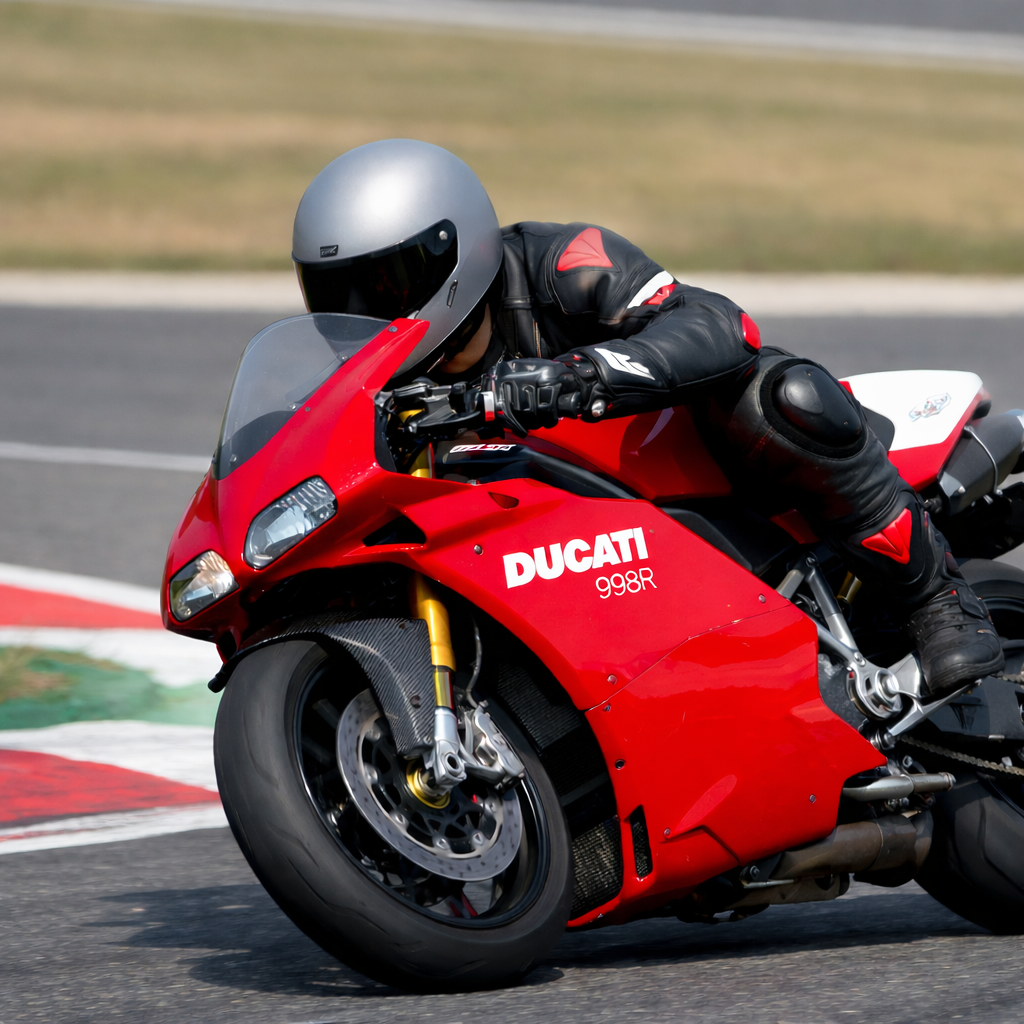
At the summit sits the 998R (2002–2004). Built in very small numbers with titanium internals and race-focused specification, it represents the final and most resolved expression of the lineage. Its value is driven by rarity and homologation relevance rather than nostalgia.
Across all variants, originality outweighs everything else. Matching numbers, service history, and unmodified bodywork matter more than production year alone. The clearest advice remains unchanged: buy the most complete, best-maintained example you can afford, regardless of badge.
Known Issues (and Why They’re Part of the Story)
Rocker arm wear, charging systems, heat management, timing belts—none of this is hidden knowledge, and none of it is accidental. These motorcycles were engineered at a time when Ducati prioritized mechanical intent over convenience, and racing feedback over long-term domestic ease.
Early Desmoquattro engines are known for rocker arm surface wear, particularly on bikes that missed oil changes or sat unused for long periods. Charging systems, especially regulator–rectifier units, reflect the electrical limitations of the era rather than negligence. Heat, too, is a byproduct of compact packaging and underseat exhaust routing—an engineering decision made in service of mass centralization, not rider comfort in traffic.
Timing belts demand regular attention, not because the design is fragile, but because Ducati chose precision over tolerance. Belt intervals are short by modern standards, but they are predictable, documented, and manageable when respected. Suspension components, likewise, reward servicing rather than endurance neglect; these bikes were built to be maintained, not ignored.
None of this suggests unreliability. It suggests participation. Ownership requires mechanical sympathy, routine inspection, and an understanding that these machines were conceived closer to the paddock than the parking lot.
For many owners, that relationship is not a compromise. It’s the appeal.
The Lasting Wake
The 916 didn’t just influence Ducati—it reshaped expectations across the industry. Design became inseparable from performance. Feedback mattered as much as power. Even today, superbikes chase the balance the 916 achieved almost by instinct.
That it still resonates isn’t nostalgia. It’s proof.
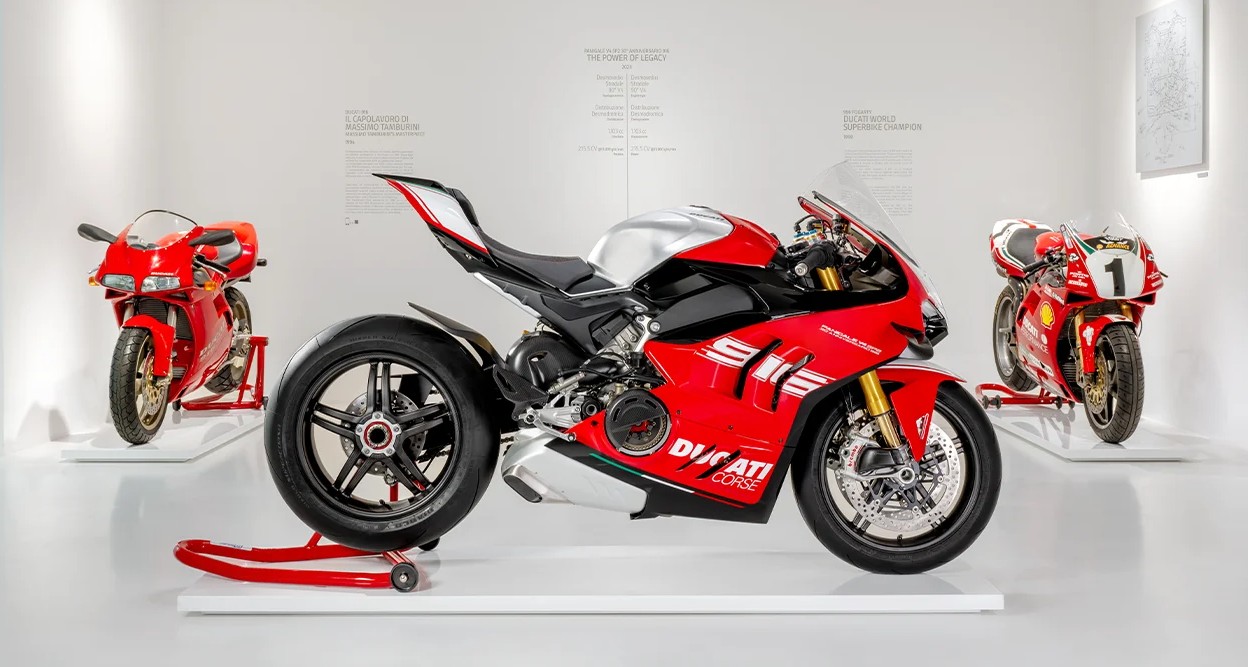
In recent years, Ducati has acknowledged the 916’s influence without attempting to recreate it. Both the 25th and 30th anniversaries were marked through official heritage features and museum curation rather than commemorative production models. The restraint was deliberate. Rather than reissuing the form, Ducati treated the 916 as a reference point—something to be understood, not replicated.
Disclaimer
This article is a general editorial guide. It is not a substitute for professional inspection, specialist advice, or individual due diligence when buying or maintaining Ducati 916-series motorcycles.